

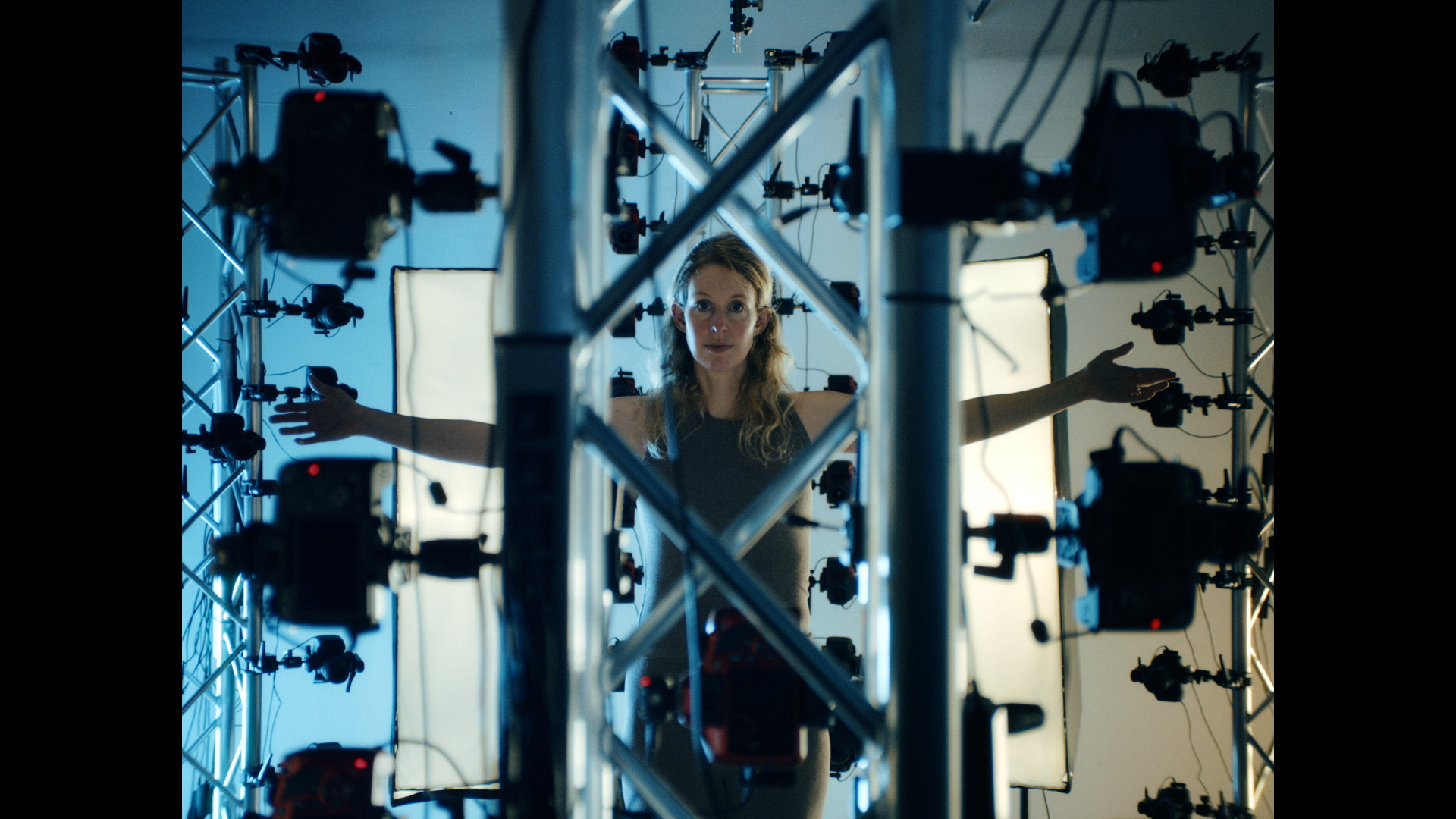

The 98th Academy Awards could be an historic year for documentaries. On the heels of this weekend’s smashing success for You Can See Everything, which raked in a whopping $15 million USD at the North American box office across 855 theatres, the Oscar race has its first official shake-up for the year. It’s a big one, too, since the documentary by Nathan Fielder and Lance Oppenheim marks one of 2026’s true word-of-mouth hits. (Read our review of the film here.)
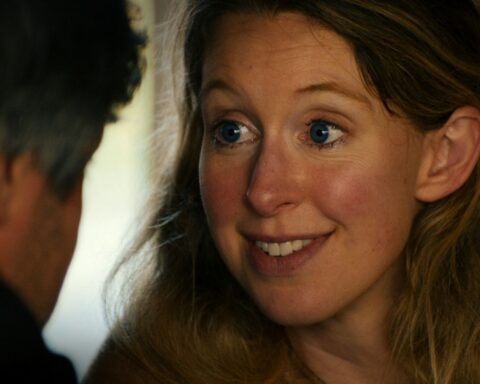
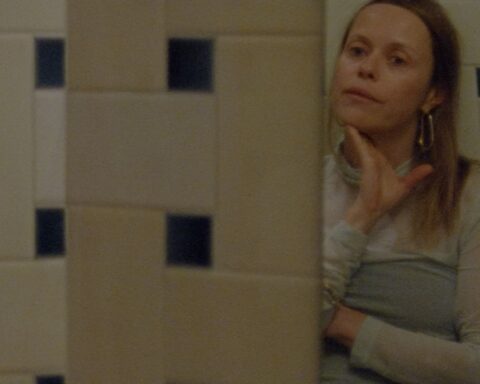
After debuting as the secret screening at Telluride over Labour Day weekend and hitting the festival like a bomb, You Can See Everything inspired major FOMO among anyone who wasn’t there. Rapturous reviews evoked a sense of urgency to see the film, even while saying relatively little beyond some cryptic lines describing a movie about Elizabeth Holmes during the 34 days before she heads to prison on charges of defrauding investors.
Now that everyone can see it, cinephiles are taking to social media and they can’t get enough. Reviews are overwhelmingly positive with 98% of critics approving on Rotten Tomatoes and a staggering 99/100 score from Metacritic as of press time. Critical consensus hardly poses an Oscar bellwether, but it indicates what You Can See Everything represents at this point in the fall cycle: that original masterwork that gets people excited about movies. I haven’t seen so many people discuss a film with such enthusiasm since Parasite.
Much like Parasite broke the glass ceiling for international films, the success of You Can See Everything has many fans, writers, and awards pundits wondering: Could this mark the first time in Oscar history that a documentary cracks the Best Picture race? It’s a question we’ve asked before, most recently in 2020 when documentaries were getting more airtime during the forced theatrical closures of 2020. That hypothesis didn’t pan out and the doc that inspired the query, Boys State, didn’t even make the cut in the documentary category.
Following the film’s Telluride premiere, Scott Feinberg at The Hollywood Reporter confirmed You Can See Everything’s eligibility across the board at the Oscars. However, the film isn’t eligible at the Actors Awards and, technically, documentaries are not eligible at the Golden Globes. However, the Globes have exceptions to the rule, like Taylor Swift’s The Eras Tour scoring a nomination for Cinematic and Box Office Achievement because it hit the threshold to qualify and Flee earning a nomination in the animation category.
U.S. distributor A24 could presumably get funny by making a pitch for voters to consider You Can See Everything in the Comedy category, just as many strategists do with horror movies. That play could get especially meta by leaving voters to consider where documentary ends and comedy begins, if a line separates the two at all. Making a case for a documentary to compete in the Best Drama race seems impossible by design. In either case, the Globes has a committee that reviews any such bids.
Chances are, however, that this film is in uncharted territory and won’t have those key precursors to help it gain some traction. The first hurdle for You Can See Everything may be the Academy’s documentary branch itself. The members tend to be traditionalists. Scan the processes behind previous nominees and winners, and you’re most likely to see a field of vérité-driven driven docs and interview-heavy films, plus some archival, filling the nominee bracket year after year. Most fields contain one artistic, poetic, or hybrid film, although no such documentary has won in the feature category. (Some docs like Ryan and Heaven Is a Traffic Jam on the 405 prove exceptions to the rule in the shorts bracket though.) Hybrid films and docs with re-enactments traditionally don’t land, although that’s changing in recent years with nominations for films like Four Daughters, The Mole Agent, and The Act of Killing.
The group traditionally turns its nose up at box office hits and, much to the ire of awards campaigners, increasingly goes rogue and votes with an activist’s sensibility, favouring underdogs, hot-button issues, and films seeking distribution—although one could make an activist pitch to spotlight such ambitious auteur-driven documentary at a moment when the field overwhelmingly insists upon formulaic celebrity docs and true crime films. Admittedly this film checks both those boxes in its own peculiar way, but the doc branch hasn’t been kind to either field lately, either.
When it comes to Best Picture, the challenge for You Can See Everything mostly remains the same as it was for Boys State in 2020. The nature of the Academy Awards voting process simply stacks the ballot against documentaries. Members vote branch by branch in the nomination round: actors vote for actors, cinematographers choose the cinematography nominees, writers vote for screenplays, and the documentary members pick the final five documentary nominees. Particularly with actors posing the largest branch of the Academy, that’s a lot of Oscar voters who don’t need to watch documentaries in the pivotal first round to get films on the final ballot.
The film could benefit from the return to an expanded Best Picture field of ten nominees since 2021. Passion votes in the number one spot can help a film break through the main category. Other fields, like directing, may be tough with the smaller bracket of five nominees, especially since the directors’ branch generally pertains to people working in scripted cinema.
Docs rarely crack below the line categories outside of Best Original Song, while a few recent successes in the Best International Feature and Best Animated Feature, particularly with Flee scoring all three nominations, have made docs more present at the ceremony. It’s clear from the absence of docs in categories like Best Film Editing and Best Cinematography that voters outside the doc branch don’t watch many non-fiction films. Just consider the number of archival films that came to life in the editing suite, but went unacknowledged.
No doc has ever really been seriously in the conversation for Best Director, either, even though auteurs like Werner Herzog, Barbara Kopple, Frederick Wiseman, Steve James, and Michael Moore probably have more influence on cinematic history than many of the Best Director Oscar winners combined. However, You Can See Everything and the discourse that surrounds it challenges the notion that documentaries are branch-specific viewing come voting time.
Please note that the rest of the article contains “spoilers.”
Scan the commentary surrounding You Can See Everything are there are two overwhelming consensus points: artistic vision for its comedic, shape-shifting nature, and high praise for Amanda Seyfried’s performance with many social media users wondering if “she” or [redacted] can score an unprecedented acting nomination for a documentary. Admittedly, much of the chatter also concerns Billy Evans’ penis, which makes a surprise appearance in the film. While it has generous screen presence, it’s far less likely to crack the supporting field in the Oscar race than Seyfried is, although it ultimately does a disservice to You Can See Everything that fans have an easier time talking about the endowment of Holmes’ husband than the performer whose deeply empathetic interpretation turns the film on its head.
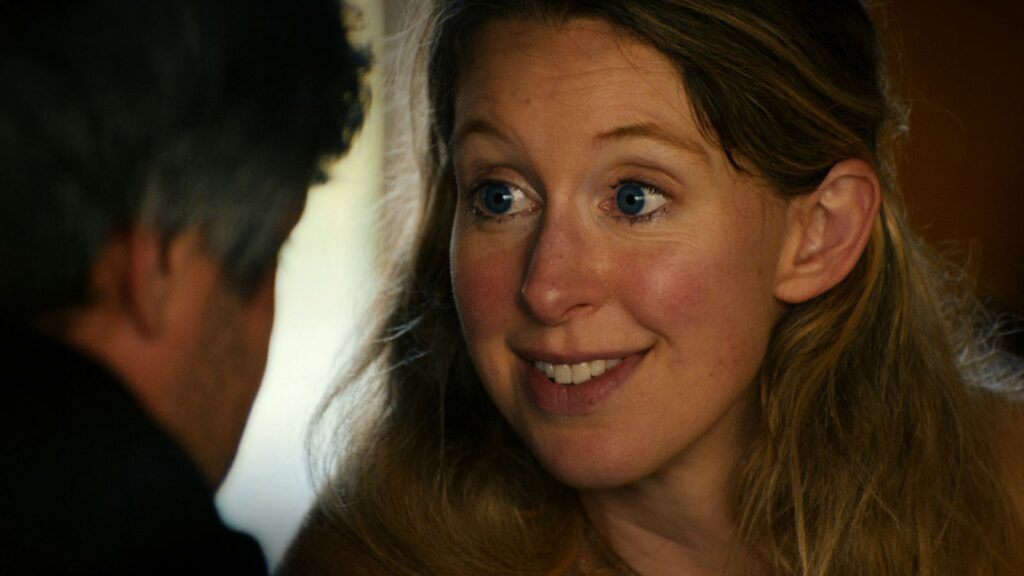
Seyfried appears in the second act of the film once Holmes goes to prison. The actress, who won an Emmy and Golden Globe for portraying Holmes in the limited series The Dropout reprises her role when Fielder’s access to the entrepreneur becomes impossible.
Having actors in documentaries isn’t anything new. Even conventional docs recreate scenes, while hybrid films increasingly give more license to dramatic space. Many exciting documentaries make drama part of their design, from Errol Morris’s pioneering work with The Thin Blue Line to more recent cases like Joshua Oppenheimer’s nominated The Act of Killing and Sarah Polley’s egregiously overlooked Stories We Tell. Moreover, compared to some of the great performances in documentary, like Brandy Burre’s sensational turn in Actress, she isn’t playing herself. She’s playing Elizabeth Holmes. Hybrid films are also generally by design niche festival films that can barely mount Oscar campaigns for Best Documentary, so having a star of this calibre in this role with such a major awards player behind it sets a new precedent.
What’s different about You Can See Everything, though, is the screentime and substantive material given to Seyfried to interpret with dramatic license. What makes the performance so extraordinary, too, is one’s ability to see Holmes herself in the first act and Seyfried’s interpretation of her in the second. It’s fascinating to see the uncanny parallels, but also the obvious feats of artistic license.
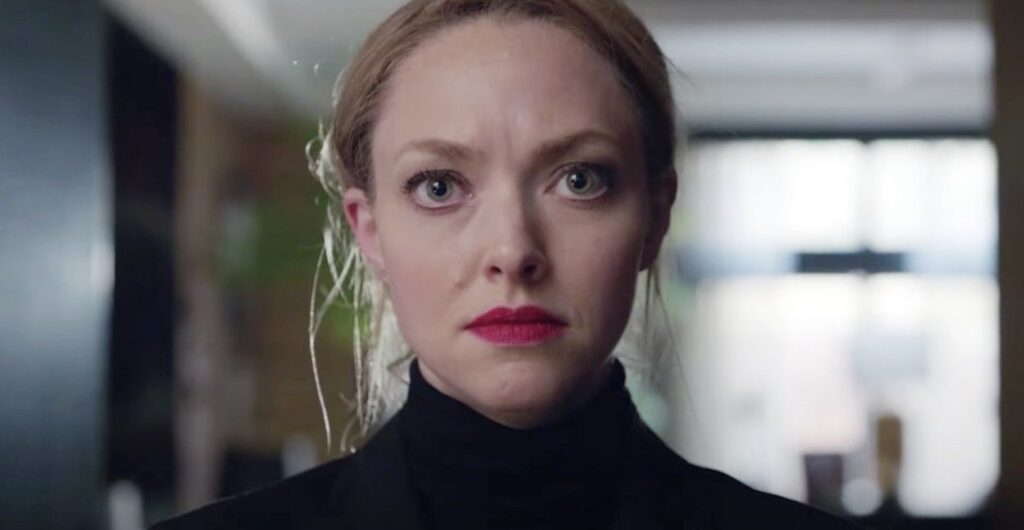
Moreover, You Can See Everything gets especially delicious as the art of performance becomes key to the film’s dramatic energy. Fielder wonders how much Holmes puts on an act. She herself challenges a line attributed to her in the New York Times, allegedly saying Seyfried and others are “playing a character [she] created.” Fielder wonders how much his interactions collide with Holmes the character or Holmes as the real deal. Seyfried helps him confront that paradox.
At some point, A24 needs to own this performance. Seyfried, who is credited in the film, isn’t billed in the its campaign materials as of press time, but the costume designer is. (No shade. That’s just an observation!) Awards predictions site Gold Derby further confirmed Seyfried’s eligibility today, but can’t say whether any campaign is planned.
It’s a risky move. For example, one could look back to Miramax’s bid for 1992’s The Crying Game in which the distributor campaigned Jaye Davidson’s mesmerising turn as transwoman Dil for Best Supporting Actor. The push inevitably undermined the film’s key dramatic twist, but Davidson was ultimately nominated. Admittedly, how much one positions Seyfried’s participation in the film really depends upon one’s relationship to documentary going in.
For example, I knew of Seyfried’s role in the film before seeing it, generally thought nothing of it, and was really surprised that colleagues considered it a spoiler. Moreover, I don’t feel that my appreciation for You Can See Everything was in any way diminished by the fact that Seyfried’s appearance contained no element of surprise. However, I would argue that the specifics of Seyfried’s discussions with Fielder are best kept a secret. (Interestingly, many reviews that go out of their way to avoid mentioning Seyfried spill the beans on that front.)
Moreover, bringing Seyfried’s performance into the film’s arsenal allows everyone to discuss what makes You Can See Everything so brilliant: its interrogation of performance and the fine line between our authentic selves and the characters we create.
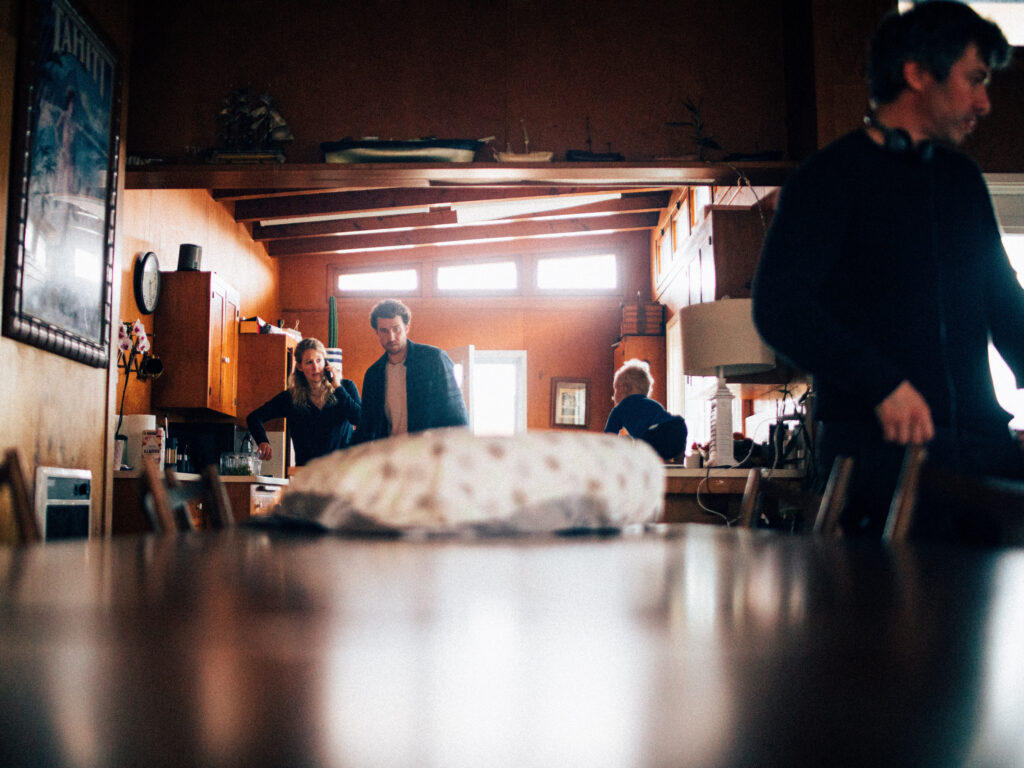
The film features several scenes between Fielder and Seyfried in which they workshop scripted material. He draws much of it from memory so that Seyfried can dramatically interpret moments that he couldn’t film. Seyfried’s actorly psychology explodes as she and Fielder sit around her fireplace and debate the material. Her experience spending time in Holmes’ head inspires some passionate responses. However, amid the stylish lighting of Seyfried’s ranch, one can’t help but wonder how much these exchanges themselves are an act. Even if Seyfried ad-libs the material with dramatic flair, improvisation is still another form of acting. This observation further calls into question everything that transpires between Fielder and Holmes in the more traditional vérité scenes. But it also makes a great case for Fielder and Oppenheim in the directing category as they explore new terrain in non-fiction and we in turn question the authenticity of everything that transpires.
It’s a great performance and one that helps the film create something altogether new. But it’s also a performance that everyone is hiding in roundabout reviews. Even a recent interview with Seyfried over the weekend saw her evasively talk about olives and apple pie. Funny stuff, but not the best campaign material—or is it, if it gets everyone talking?
Now whether they list Holmes on the campaign materials alongside Seyfried in the Supporting Actress field is another kettle of fish. At least this year’s Oscar race finally has some excitement!