


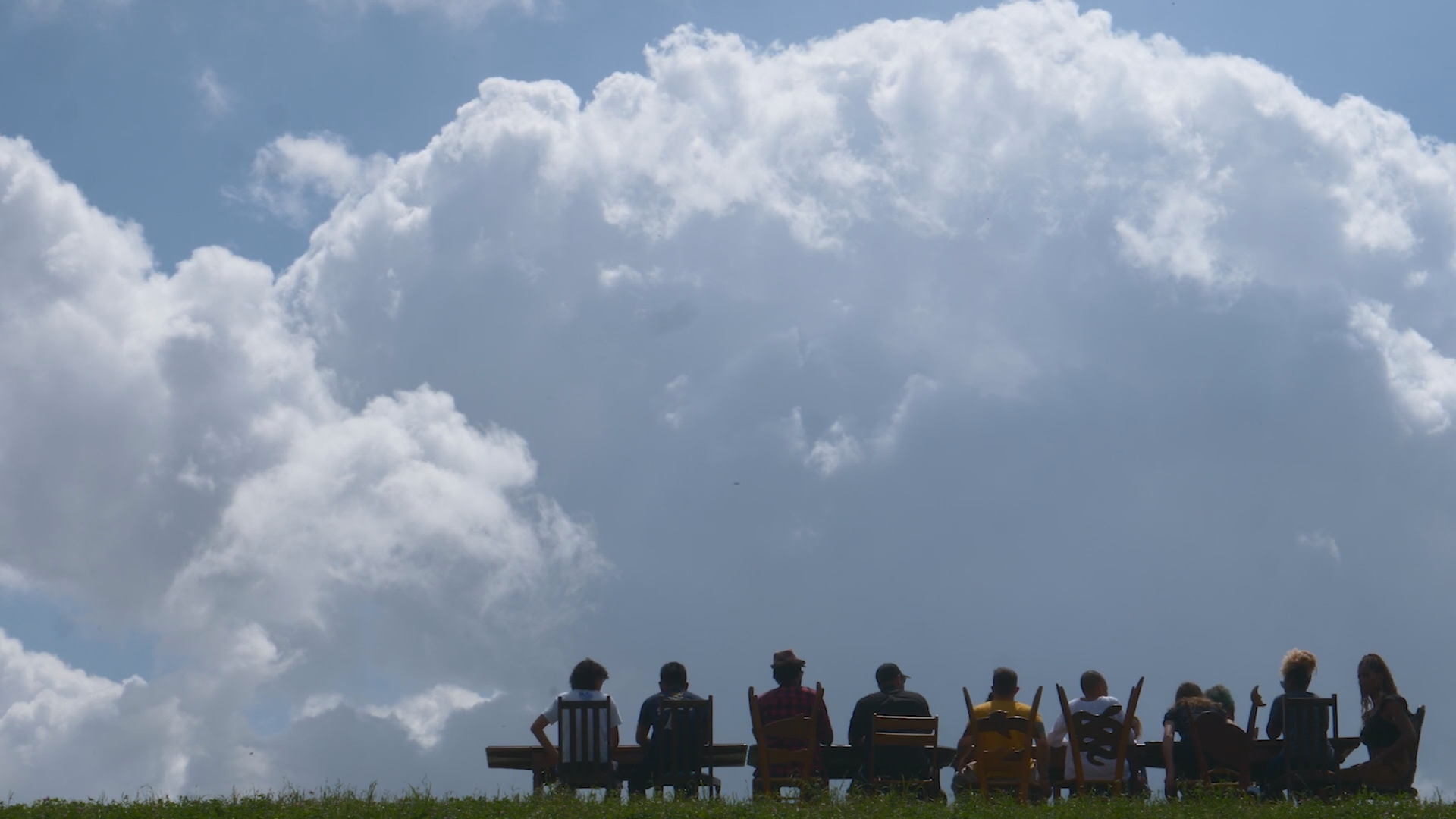

The Welcome Table
(USA, 132 min.)
Dir. Josh Fox
Prod. Josh Fox, Gabrielle Alicino, Doug Chapman, Molly Gandour, Darren Dean
It comes as no surprise that the HBO documentary The Welcome Table concludes by visiting the location that inspired one of the cable giant’s best series. The film by Josh Fox (Gasland) ends by bringing the audience to the site of its spiritual predecessor: the Treme neighbourhood of New Orleans. The Welcome Table frequently evokes the life-force of David Simon’s Treme. It weaves a tapestry of voices united in the aftermath of natural disasters. Much like the series—a realist human epic seemingly about absolutely nothing and everything with equal measure—The Welcome Table considers the often untold tragedies that coms in the wake of catastrophes triggered by climate change. This thoughtfully jazzy film connects environmental concerns to urgent matters of human flow that bring the world closer to its inevitable tipping point.
Fox devises a novel approach to this story of mass displacement. He erects a 1000-foot dinner table on the New Orleans levee and invites climate refugees to participate in a global gathering. People from all over the world take a seat at the site where Hurricane Katrina upended countless lives. The documentary builds towards Katrina as a ground zero of sorts for an era in which stranding people devastated by climate-related disasters became the norm. Participants share their stories while musical interludes offer an elegy for lost lives and a celebration of people coming together. It’s a strange affair—part depressing climate doc, part uplifting variety show—yet it’s provocatively effective in its own charming, empowering, and meandering way.
The Welcome Table zeroes in on case studies of people who relocated amid this mass forced migration. There are stories of families devastated by the 2018 Paradise fires. A couple remembers the terror of grabbing their baby and whatever possessions they could before escaping the flames. They recall the panic they experienced when police told them to exit their vehicle and find the nearest parking lot. Evidently, these havens in urban landscapes offer the safest spaces during wildfires since the concrete doesn’t burn. The family, however, still shakes while remembering how flames engulfed the safe haven of a parking lot for a grocery store that no longer exists.
However, they bring Fox to what remains of their home. The charred remains of appliances and mattresses mark a familiar sight. Fox witnesses such residue regardless of where a home was destroyed by fire, flood, or mudslide. On the coast, meanwhile, the former site of a home offers nothing in the wake of Hurricane Irma save for a piano that was too heavy to blow away.
In Brazil, Fox meets three queer activists who’ve experienced significant loss and work as part of the collective effort to rebuild. In the Peruvian Amazon, he fishes with a guide who shows him the consequences of resource extraction, but also demonstrates restorative elements of the rain forest. Down in Australia, he meets families who were forced to leave perfectly sound houses that were spared during floods because they were built on stilts.
Meanwhile, in Riace, a corner of Calabria, Italy that’s been virtually abandoned by human flow as Italians left in search of better prospects in America, he meets a mayor facing a lengthy jail sentence. Is crime? Using empty facilities while trying to re-invigorate the local population by making the community welcoming to migrants.
Fox, whose own family left Calabria years before, notes the irony of a country that closes its mind to newcomers when many of its own people left for better elsewhere. Cuts to ICE agents waging terror throughout the USA show the paradox of the migration crisis on both sides of the ocean. As Fox takes the musical lead in Calabria and strums his guitar while walking through cobblestone streets full of vacant houses, the acoustic interlude gives pause to consider the human forces that complicate the consequences of these climate disasters.
The segment in Italy echoes scenes from Kenya-Jade Pinto’s The Sandbox and Gianfranco Rosi’s Fire at Sea as it looks at the growing disaster brewing in the Mediterranean. The film explores how the European Union empowers Libyan forces (basically pirates) to retrieve asylum-seekers as they flee Africa, often for factors related to climate change, food scarcity, and poverty. The film uses these cases studies to provocatively situate the stories of climate refugees within larger political battles related to borders, surveillance, and migration. It’s another case of powerful forces creating barriers instead of taking a humane approach to a global crisis.
The film, however, sometimes digresses too much. The conversations veer into broader theoretical analyses that lead to inquiry back to colonialism, the birth of the United States, the creation of the Declaration of Human Rights in 1948, and the subsequent convention in 1951 about the rights of refugees. These points are all fair and relevant, but the impact of the human stories sometimes gets lost amid the sprawl. The recurring motif at the welcome table inevitably induces this narrative ping-ponging as everyone speaks their truths and airs their feelings.
More effective are segments that directly connect stories of displacement with contemporary power imbalances. Donald Trump’s notorious wall becomes a key metaphor throughout as Fox examines borders and divisions. He sees a wall as the inverse of a table. Moreover, the film notes that one third of the world’s population will become climate refugees if the trend continues. Fox connects the stories with the contrasting images of intimidating walls and welcoming tables to ask whether one would rather face a barrier or an invitation when the storm comes. As large clouds create a picturesque, if foreboding, backdrop for the Welcome Table, the film evokes a gathering storm.
The expansive gathering site in New Orleans serves as a powerful expression of togetherness, community, and interconnected stakes in a healthy planet. As the camera frequently cuts to wide shots to reveal the sheer scope of the Welcome Table and the caravan of people in communion, Fox finds an incredibly effective image. It strikes just the right emotional tenor as the jazzy Treme rhythms fuel the gathering.
As musician John Boutté joins the fray and shares his story about writing the theme song for Treme and sadly having to leave the titular quartier, the film brings all the participants back to the levee in a powerful illustration that everyone deserves a seat at the table. Buoyed by great music that connects the tapestry of stories united by the table, this documentary offers a rich chorus united in a quest for a note of optimism. The film leaves it to us whether that note is beyond reach.