



Honest conversation matters deeply to Lacey Schwartz Delgado.
The Re/Pair director was raised Jewish and didn’t find out she was Black until she was in college. And then she couldn’t bring herself to ask her mother what happened. And when she finally found out she was the spawn of an affair her mother had with a Black man, Schwartz Delgado resisted talking about it with the man she thought was her father, the man who brought her up. All this she documented in her fine first feature Little White Lie (2014).
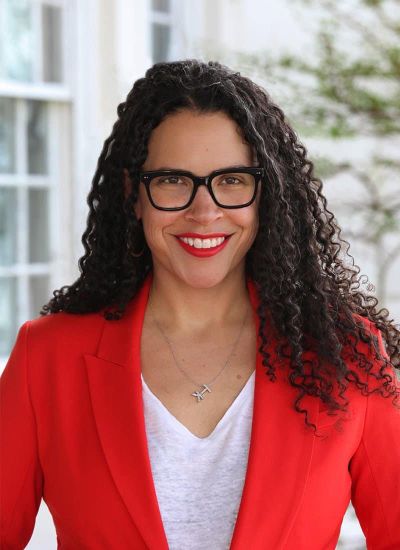
“What I have realized,” she says about her own experience, “is that a lot of times conversations can feel harder in our mind than they are in reality. Avoiding them can make them more challenging. I’m not minimizing that they can be difficult, but once you actually dig in to have them, so much comes out of it. I’ve seen it personally, in my community setting and beyond.”
This is the inspiration for her follow-up, Re/Pair, which screens at TIFF this year. It’s an ideas-laden film designed to demonstrate the benefits of difficult dialogue not in a family context, but rather in today’s complicated political clmate.
Using archival footage of civil rights demonstrations, where Jews took to the streets alongside Black activists; Louis Farrakhan spouting anti-Semitic rhetoric; Black parents clashing with strikings teachers (mostly Jewish) in New York City; Hasidic Jews living peacefully alongside Blacks in Brooklyn and more, Schwartz Delgado spans the breadth of Black-Jewish relations since the ’60s.
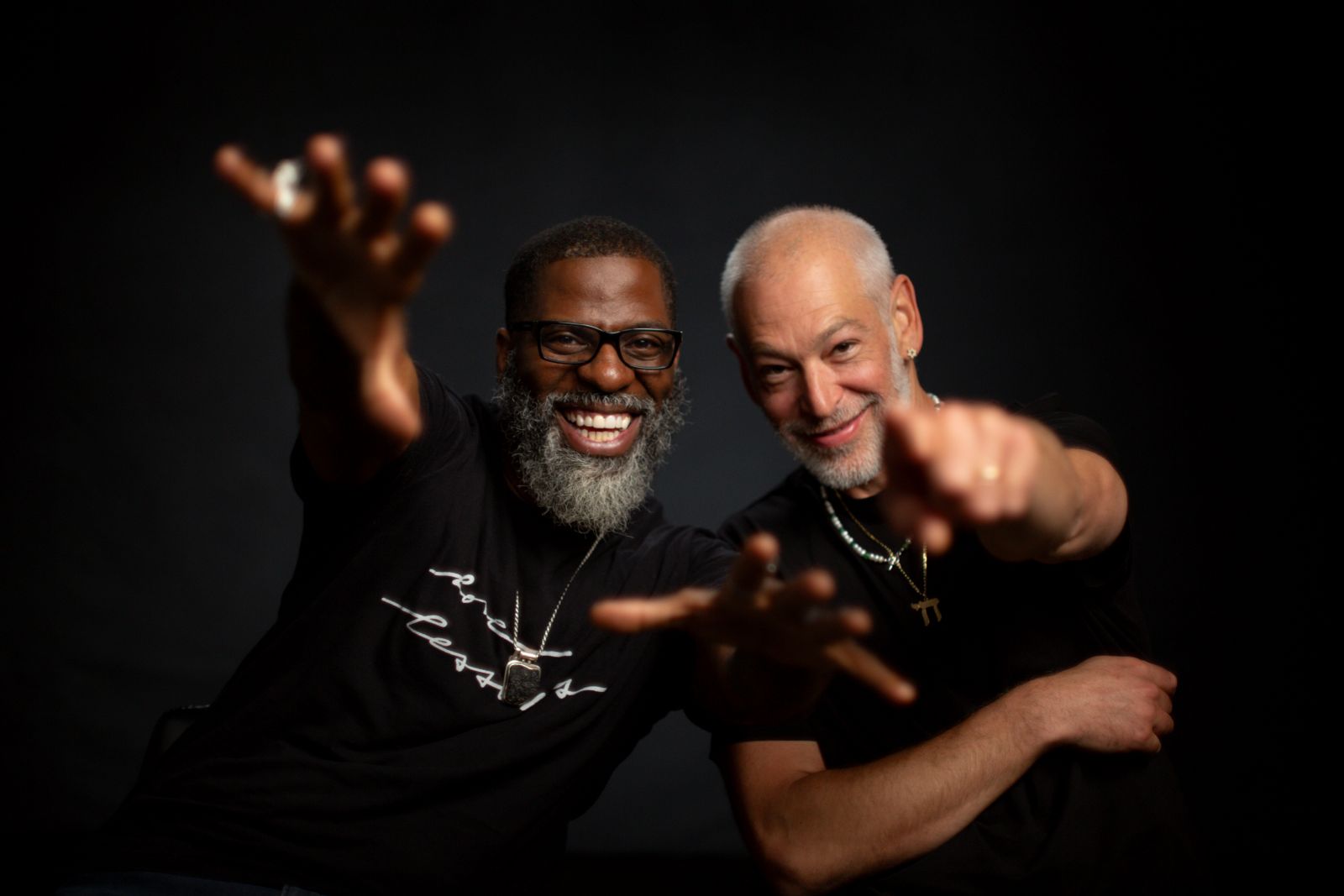
With that as a backdrop, we witness conversations undertaken by 19 pairs of interlocutors, one Jewish and one Black, who, animated by an unseen Schwartz Delgado, sit down in studio to talk about the tensions, both historical and current, between their peoples, as well as—and this is the important part—how they feel about them.
The speakers are diverse, from rappers to rabbis, academics to entertainers to activists. Among them are Patrice Cullors, co-founder of Black Lives Matter; CNN journalist Van Jones; former Friends star David Schwimmer; activist Ashley Jackson, daughter of civil rights icon Jesse Jackson; and comedian Robert Klein.
The hope embedded in the film is that people can find a way to build bridges, to listen and to respond without escalating the tension. These days, sadly influenced by internet discourse, people giving their opinions are more interested in escalating conflict than easing it.
“Too often people are going at each other or not talking to each other,” bemoans Schwartz Delgado. “I continue to be curious enough to ask, ‘What is the happy medium? How can you represent yourself and respect somebody else’s opinion at the same time?’”
To be sure, the level of polarization is one thing that makes the conversations hard, but often the difficulty arises from the simple fear of saying something terribly wrong.
“People are absolutely afraid of making mistakes and who can blame them?” she asks, “People have said things and had consequences for misspeaking or saying something they regret. We’ve seen that play out. And it’s not just what they say, it’s what they ask. How can we agree to create speech where people can speak with humility and curiosity?”
It wasn’t an easy documentary to make. Finding her 38 subjects was a challenge in and of itself. She and her team of researchers reached out to people they knew and beyond. When they finally landed on a subject, they asked that person to suggest another they’d want to be paired with. There were some duos who knew each other quite well and were interested in working through things in that space, and others who were meeting each other for the first time.
Schwartz Delgado acted as a guide during the shooting. She had questions prepared and knew what each participant would be able to speak to.
“We found that I’d get them started and they could go on for about an hour. There was an incredible connection with people who didn’t know each other. We also made sure that people were speaking from their own personal experiences rather than being a representative of one group. This also helped people open up,” observes the filmmaker.
Most of the topics are heavy, but there are also moments of levity. In a hilarious conversation, radio personality Peter Rosenberg and former DJ Ebro Darden argue about who are the major players in the comedy world, Blacks or Jews. But they come to agree when Rosenberg quips, “Without Jews and Blacks in comedy, we’re left with Bob Hope and Johnny Carson.”
Wrangling 19 conversations covering a huge range of issues could have become an editor’s nightmare, but Schwartz Delgado found someone extremely skilled to do the job.
“These were lengthy conversations and we had to bring out the strongest moments. My editor Seth Bomse was able to find moments of connection and levity and depth,” she explains. “We wanted an arc, a string of conversations that we could build on. Sean had a knack for finding what was relatable and didn’t speak down to viewers, so you feel like you go on a journey with these people. We had to do that and also make sure to get a diversity of voices represented.
“By examining the moments of tension and coming together that can be relatable to not only Blacks and Jews, Sean kept to the mission of the film, which was to see conversation as a means to build trust.”
Re/Pair starts off with an awkward conversation between Black rapper Che “Rhymefest” Smith and Jewish rapper Matisyahu, who makes the bald statement that he loves his people and that he doesn’t care about anyone else.
Smith doesn’t rise to the bait, but says, “The minute you say, ‘All I care about,’ you’ve already cut out your ally.” And then he adds. “Nobody where you’re from is gonna listen to me, but they will listen to you talk about me. But if I can’t find anyone that I relate to to speak to our people about what’s happening with your people, how do we ever get to peace?”
“They’d never met before and yet you could see how real they were able to be with each other,” Schwartz Delgado marvels. “And there, Matisyahu can be honest and, later, really reflective. He says, ‘I’m concerned about what Jews are experiencing and what they’re doing to other people.’ He lets you know from the beginning that he’s going to be real but also thoughtful.”
Distance makes it relatively easy to assess and comment on past relations between Blacks and Jews. But tensions going on in Israel-Palestine right now are another thing altogether, infinitely more difficult to process. When Black Lives Matter came out in full-throated support against the occupation and Israel’s actions against Gazans post the October 7 massacre by Hamas, Zionists and BLM clashed bitterly in the streets.
“Something really bad is happening between our communities. We’re living in a shit show,” says Black Lives Matter’s Patrice Cullors. She goes on to emphasize Schwartz Delgado’s point about the quality of the current dialogue. “We’re witness people being trained by the internet so that the muscle of deep engagement and asking questions versus, ‘I’m gonna tell you what you should think,’ that muscle is largely lost.
“We knew we weren’t going to avoid October 7 and what happened after in Gaza,” says Schwartz Delgado. “And we knew we couldn’t fully represent the issue. We had that humility going into it. Our perspective was that it was important for people to sit down and talk about it. There’s so much at stake.”
She makes sure to say, though, that there’s a diversity among Jews about the current situation in Israel-Palestine.
“I’ve gone to synagogue on the same weekend in the same city and there are rabbis who are conservative and rabbis who are incredibly progressive,” she observes. There isn’t one Jewish perspective. Even within families it’s been hard to wrestle with it. It’s creating a divide within the most intimate spaces. Can we disagree on something and still love each other?”
Her experience making the film did make her hopeful. She was touched by how vulnerable and honest people were in these conversations.
“It felt like an honour to hear people wrestle with things, to have them share what they inherited from their family, how memory played out within their family and what they had to do to process all of it. It was a gift,” she notes.
“Sometimes it can feel like things are depressing and we don’t have the basis to make connection. But these people in the studio? You can feel that connection between them.