



Folktales
(USA, 106 min.)
Dir. Heidi Ewing, Rachel Grady
The “gap year” proves a time-honoured tradition for many students. Some young adults take the year off after graduating university or college. They use the time as a breather to recalibrate and assess their goals before applying for work. Other students might take the gap year right out of high school, especially if they’re unsure about career paths. Regardless of when one takes it, the gap year offers hands-on learning and life experience, sometimes combined with travel.
In Scandinavia, though, the gap year often takes the form of folk high school. These schools offer something like an arctic and outdoorsy comparable to Quebec’s CEGEP. They’re a transitional year for education as students graduate from teenage years to adulthood.
In Folktales, directors Heidi Ewing and Rachel Grady (One of Us, Jesus Camp) observe a year of classes at Pasvik Folk High School. The lessons play out in the snowy forests, dog parks, and frozen tundra over 200 miles north of the Article Circle. Kids learn the art of survival in ways that TikTok can’t tell them. They must rely on the original influencers: the norns, powerful deities in Norse mythology who entwine the threads of peoples’ futures.
Folktales follows three students as they embark on this chilly, challenging, and transformative gap year. The film introduces Hege, for example, who hopes that folk school will help her grieve the death of her father. His loss gives her fresh emotional scars, but also practical ones as she craves a father figure. She hopes that the school can afford her independence and survival skills while giving her space to grow.
Bjørn Tore, meanwhile, struggles with confidence. He expresses concerns that he’s too awkward and wasn’t particularly popular at school. He hopes that harnessing the call of the wild will give him the inner harmony to stop caring about what people think.
Then there’s Dutch student Romain. He shares Bjørn Tore’s confidence issues, but his self-consciousness bleeds into his lessons at Pasvik. Doubts envelop him more strongly than the winter chill does as he fumbles while making fires and pitching tents.
As Folktales observes the daily instructions at Pasvik, it gleans the wisdom of teachers Thor-Atle and Iselin. Each class offers double meanings as the teachers deftly intertwine the survivalist aspect of outdoor education with the larger takeaways that will help these young minds thrive in the paths they choose. But their classes unfold in such an accessible manner that anyone watching can soak in the education. Folktales offers an understated lesson in putting down the phone. The film conjures a sense of serenity as these students and their classmates learn how to take care of themselves in ways that people used to explore before the answer was just a quick Google search away. They learn what it means to be self-directed.
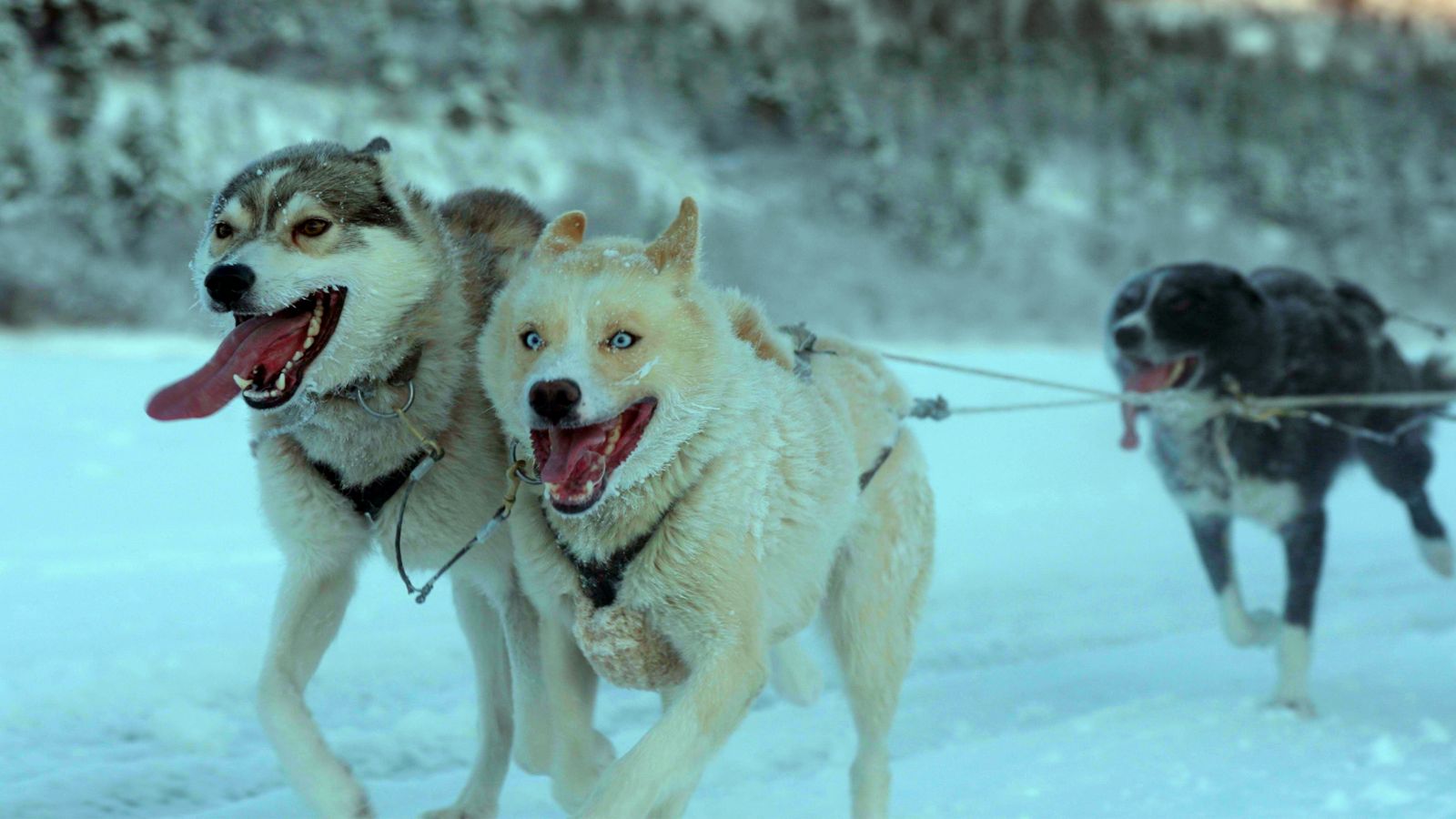
Besides learning how to start a fire, make water from snow, and stay warm through a winter’s night, folk school has another essential lesson: care. The secret weapon on the syllabus is the school’s dog park. Folktales introduces a class of majestic huskies who serve in the cohort alongside Bjørn Tore, Hege, and Romain. Each student receives an assigned dog, like a year-long lab partner. They care for the animal, learn its rhythms and needs, and understand how to work with it to fulfill the course’s survivalist aims.
“Dogs teach us to be more human,” Thor-Atle advises the class. One sees the instructor’s aged wisdom as the dogs bring a calming presence. The students learn what it means to be responsible for another life. But as they bond with the dogs, their social skills among fellow humans also improves. Romain, for example, struggles with the practical lessons the most among the class. However, he and Bjørn Tore become friends and recognize that mutual awkwardness simply fades in the passage from adolescence to adulthood. Their friendship helps them shake the isolating imposter syndrome they hoped to escape through the school.
Hege, meanwhile, has a poignant relationship with her dog. Her elder husky has cancer and the parallels here illustrate the magic that happens in vérité filmmaking when the right event happens with the right character. Her dog provides the exercise in catharsis she seeks to grieve her father.
Working with director of photography Lars Erlend Tubaas Øymo and cinematographer Tor Edvin Eliassen, the filmmakers capture the intimacy of the lessons and the grandeur of the folk school in a poetic observational style. They frequently capture the students at a respectful distance, enjoying the clandestine nature of the woods and the safari-like hunt it inspires as they check in on the their progress. The students bare themselves remarkably when they speak to the cameras. However, these young people reared on self-expression through video show their most natural selves when they’re less aware of the cameras’ presence.
As Ewing and Grady observe the school Folktales weaves an evocative motif with the tale of Odin. Red thread wraps a tree in the woods, gradually encompassing the trunk and branches as the norns guide the students’ futures over the course of the year. It’s an evocative image and shock of colour amid the wintry woodland. The image proves strikingly specific with the Nordic setting. However, it lends a universal resonance to the coming-of-age story, just as good folk tales do. These young people might trust the norns to thread their fates, but learning to control their own destinies proves an empowering life lesson.