



In Tyee Country
(Canada, 71 min.)
Dir./Prod. Jevan Crittenden, Nate Slaco
Programme: Canadian Spectrum (World premiere)
It takes a skilled set of hands to catch a tyee. Snagging one of these 30-pound Chinook salmon sets the expert angler apart from the enthusiastic amateur. That rare catch serves as the price of admission into the Tyee Club of Campbell River, British Columbia. As the Tyee Club celebrates its centennial, however, that hearty salmon becomes more elusive by the season. The bar lets the group retain its exclusivity, but it also threatens its very existence. How can a group remain dedicated to catches of a specific calibre when few such fish remain in the river?
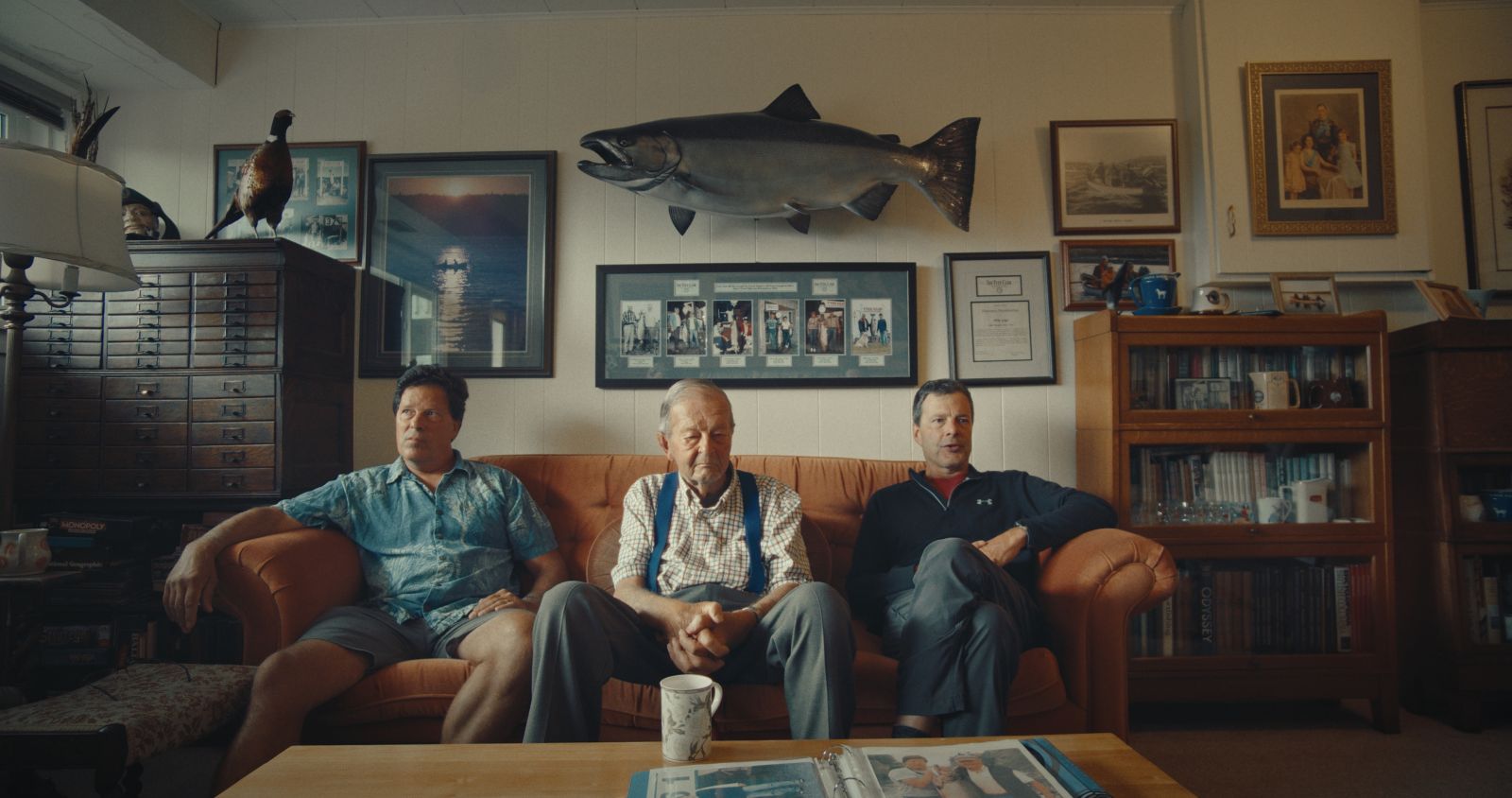
That existential question fuels In Tyee Country, an offbeat addition to the seemingly endless body of water docs from B.C. This one finds a novel subject with which to consider climate change, environmental preservation in the face of development, and Indigenous land sovereignty. Directors Jevan Crittenden and Nate Slaco interview a chorus of devoted members in the Tyee Club to learn about the association’s history and present activities as it (sort of) anticipates the future.
In Tyee Country finds a droll sense of humour with which to explore the club’s idiosyncrasies. The film invites members to explain how they weigh the catches, while others run audiences through the very particular parameters under which wannabe members must catch a tyee to qualify. Use of a motor on a boat is strictly prohibited, as is natural bait. Only two qualifying tyee may be caught be day, too, so prospective members can’t be greedy with their weigh-ins. The latter isn’t much a problem these, since members note that 30-pounders are in increasingly short supply.
As the filmmakers capture the members’ stories, they observe the rules and rituals that bring the club together as a community. The members share their lifelong passion and many of them have a gift for gab. Each story conveys the moment when a member was “hooked,” so to speak, on the sport of reeling in the big suckers. The club boasts its own signature pageantry, too, as outdoor signage advertises the weight of the most recent catch, along with the bountiful weigh-in for the season’s biggest salmon.
Crittenden and Slaco also capture the concentric circles within which the club exists. Anglers who aren’t members dish about why that haven’t joined. For some, it’s too intimidating and far too limiting to go after 30-pounders—an extraordinarily large minimum prize. Other voices, like leaders of the location Indigenous community, express frustration over a settler mentality of entitlement for the river’s resources, along with some grief that the clubhouse has a lease on stolen land.
Members themselves confront these issues. Some work individually for environmental causes, although the club itself remains fairly apolitical. Hotter topics than the weather include the basic rules for membership. Some members want the size of the prize on the table. They worry that keeping the bar at 30-pounders makes it impossible for the club to admit new members, and therefore impossible for the club to maintain its legacy for generations, if few such fish exist. Alternatively, members grumble blasphemy at the prospect of removing tyee as a defining factor of the Tyee Club. The conversation becomes more existential than environmental, even as members who stick to their guns regarding the salmon’s weight acknowledge how fishing in the region has changed over recent seasons.
In Tyee County moves sprightly with a light touch that acknowledges the quirks of the club and incorporates these charms into the design. The music by Scott Currie keeps the spirit bright with folksy motifs that honour the back to basics nature of the club’s time-honoured practice as members reel in salmon with their hands and a line. The film finds humour in the situation without making light of it. That point seems appropriate, because a tyee is anything but light. Unless, of course, the members acquiesce and change the rules.