



Oh, if only love comes ’round again
It will have been worth the ride
And what a ride
-Sheryl Crow “It’s Only Love”
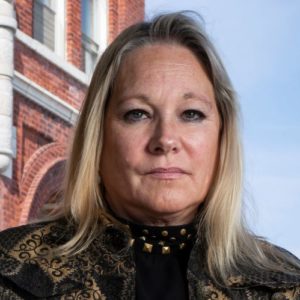
With an indelible and hard-won CV of nearly twenty documentary films and features made in thirty years—garnering numerous Canadian Screen, Hot Docs and International Emmy Awards—one could be forgiven for expecting a memoir by documentary filmmaker Shelley Saywell to be a battle-scarred reflection on the very difficult stories she’s brought to international audiences since 1988. From Rape: A Crime of War and Kim’s Story: The Road from Vietnam, to Hamas: Behind the Mask and A Child’s Century of War (for which Saywell was Oscar-shortlisted), there are few headlines of treacherous international conflict zones and the resultant mass violations against untold innocents in the last six decades which have escaped Saywell’s steadfast search for justice and reckoning through the documentary form.
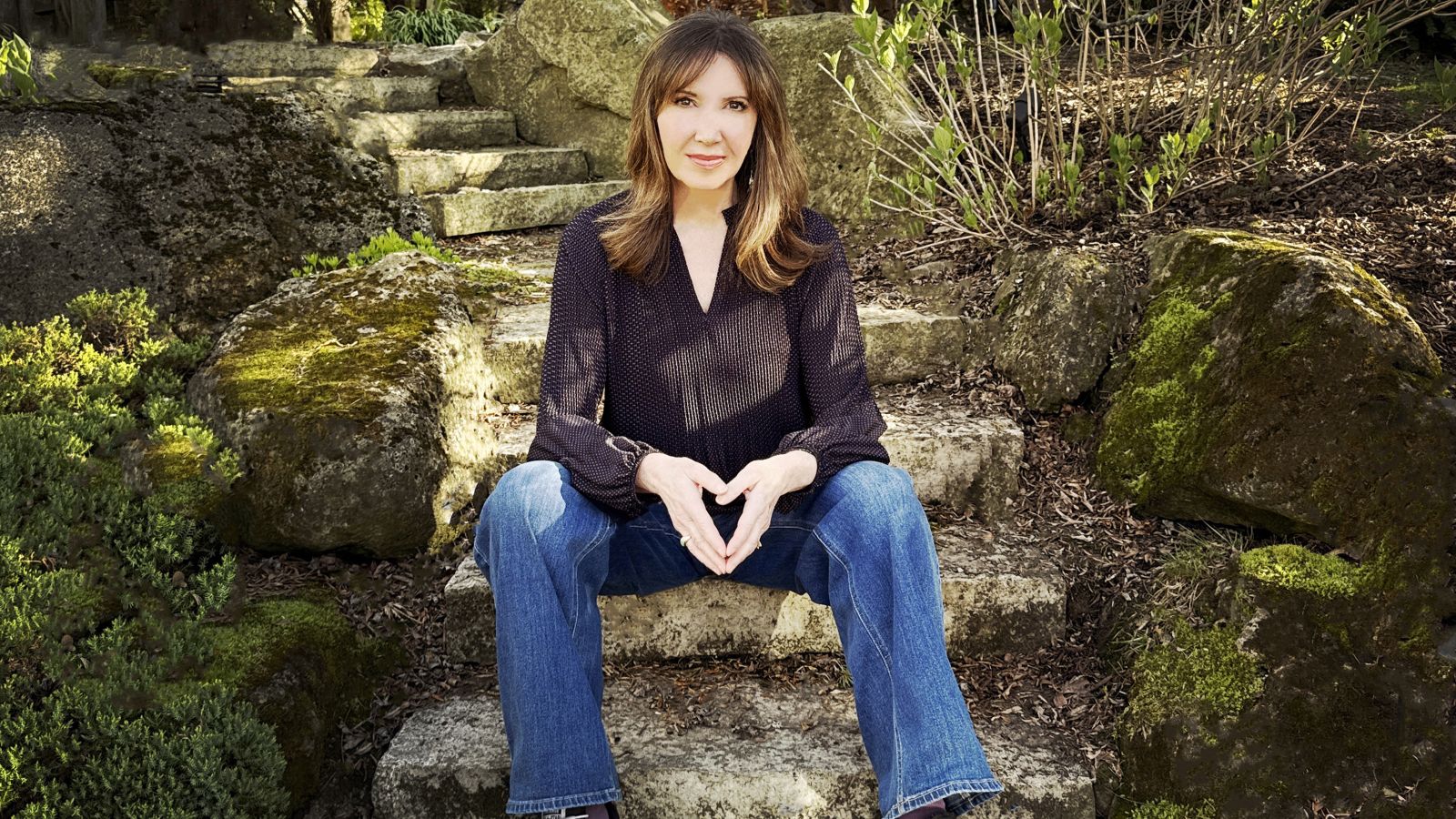
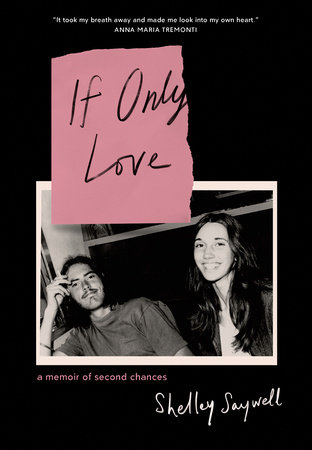
In her new memoir, If Only Love: A Memoir of Second Chances, Saywell has plumbed her own personal archive of emails, journals, letters and memories from the age of seventeen onward to tell a battle-scarred story indeed. But it’s not one about war. Rather, it’s a time-, space- and possibly genre-bending tale about love found, lost and then found again thirty years later. And then lost again.
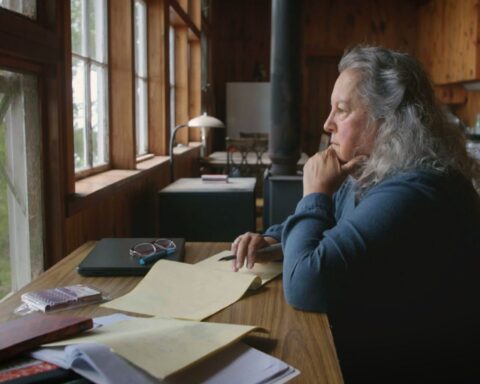
Formally retired now from making documentaries and comfortably ensconced in Niagara-on-the-Lake, Saywell is still an unmatched storyteller. If Only Love seamlessly weaves together multiple life lines of near-cosmic soul love and the grief of terminal illness and loss, capturing both the unfiltered rush of young love shared with the late Daniel (“Pete”) Peterson, whom she met in 1972 at a Canadian-International high school in Japan, with the wrenching, stumbling days and months of blinding grief after his death. They reconnected in 2002, thanks to a chance classmates.com encounter, and eventually enjoyed a twelve-year marriage before Daniel died in early summer of 2017, a mere ten months after a lung cancer diagnosis.
“After his death, people I worked with wanted me to keep going,” recalls Saywell. “I feel so lucky that I got to do the documentary work that I loved. But I didn’t want to do it anymore. And I began to feel this just before Daniel got sick. And I’ve now fallen in love with writing. It’s so liberating. All those years making films, if you didn’t get it on camera, it didn’t happen. When the great investigative journalist Oriana Fallaci published her novel Beirut she was asked why she left nonfiction. Her answer was that nonfiction was too much of a straitjacket. She wanted to be able to say when something’s evil. And the only way you can say it is in liberating yourself. So, for me, not to have to have images, not to have to ask anyone for money, that was liberating. I never thought of publishing though; this was just journaling through grief, trying to figure out how to stay alive, because I didn’t want to at that point.”
The result feels painfully honest, raw, yet lyrical and restrained; a tribute to love and gratitude, which offers up just enough biography of Saywell and Peterson to make the flow of memory effortless. Perhaps this is why the genre-bending part resonates. Readers can learn of a man lovingly portrayed as a deep, captivating soul, who loved passionately, fearlessly. In many ways, it is a refreshing pull against the grain of this moment’s broad cultural cynicism about lasting partnerships.
Peterson grew up in Kobe, Japan, the son of American Presbyterian missionaries. He was an artist and musician. Japanese was his first language. He was all long hair and strumming a guitar when Saywell met him in her final year of high school in Japan. For herself, Saywell’s globetrotting life began early, when her family followed their father, a scholar of Asian studies, throughout China and other parts of Asia. After graduation, the dreamy teenagers reunited at Saywell’s family home in Toronto. But things felt off. Her father was critical, and Saywell felt awkward. As she keenly observes in the book, her childhood self and the young adult woman/lover part of her struggled to reconcile. The lovers parted and disappeared from each other’s lives for decades.
The memoir continues in charting Saywell’s own evolution as a researcher and filmmaker. Indeed, one of the remarkable things about If Only Love, is that one can clearly discern the connection between a harrowing, life-altering experience, and an oeuvre centred around gross violations against women, girls and children in war—a focus well beyond journalistic or feminist pre-occupations.
This other grief-inducing experience is told here for the first time. At twenty-one, Saywell suffered a brutal sexual assault with the utterly demoralizing result of justice denied (still). “The amazing thing about writing a memoir that I never knew,” says Saywell, “is that you start to see patterns in your life. It took me sitting down and writing that story out to connect that assault to the films that I made. I’m sure I made a connection that I had empathy, but the real line between the two became so clear when writing the book.”
There was no therapy for the trauma, just sublimation in the relentless, courageous decades ahead of social justice filmmaking. And after long-term relationships (including with the late Michael Maclear, creator of the legendary 1981 series Vietnam: The Ten Thousand Day War, which Saywell worked on), and a divorce, Saywell would check in through friends on what was happening with Daniel. She learned little, until that chance connection in 2002. After a whirlwind e-mail correspondence, their connection was rekindled through a mutual love of literature, music, art and romance itself. Soon after meeting in person, Daniel proposed. He was American, she Canadian, and after sorting that out, as well as her filmmaking abroad and Daniel’s work in Washington as an art and architecture restoration expert, they finally married.
The grimmest part of the memoir begins in the traumatic state of caring for a beloved who is terminal. Saywell lays bare the denial, pain and confusion of the experience, and links it to losses amongst friends and family, all from cancer. Eight months after Daniel’s passing, a period of gutting paralysis when Saywell could barely leave her home, she finds herself in a weekly pilgrimage back to herself, venturing to a memoir writing class at University of Toronto.
Fourteen months later, she’s in Tuscany. “I had all these things that I’d written sparked by that course that were pretty nonsensical. I was going back in and out of memory. On the first morning when I opened my computer to sit down and write, I heard school bells down in the valley below. Our school in Japan was on a mountain and Italy was on a mountain. It was a schoolyard below. I heard the school bell. And then I went into a kind of trance where I just wrote about that entire year in Japan. And I could not believe the recall that I had. I was seventeen again.”
The meditation of the book, in process and form, carries us into the light. “I know people saw me in Tuscany as this woman alone, but I was actually with him the whole time,” recounts Saywell. “He was right there. That was a very profound and important part of not just the storytelling of the book but of my brain kicking in. That happened too in 2002, when Daniel and I started writing. We were mining memories and mining our lives across time.”
If Only Love is now available in bookstores.