




Nechako: It Will Be a Big River Again
(Canada, 90 min.)
Dir. Lyana Patrick
2021’s edition of Planet in Focus Environmental Film Festival opened with the documentary Wochiigii Io: End of the Peace. The film by Heather Hatch observed efforts of members of the West Moberly First Nations as they fought to preserve their ancestral land from flooding expected to be caused by the Site C dam, BC Hydro’s ambitious project to pump out money at the expense of the landscape that’s sustained members of Treaty 8 First Nations for generations.
This year’s edition of Planet in Focus shares a story that’s a stone’s throw from the fight in Wochiigii Io. The documentary Nechako: It Will Be a Big River Again, directed by Lyana Patrick, captures the fight of members Stellat’en and Saik’uz Nations as they seek legal intervention in the activities of a dam that’s devastated their people’s fishing supplies, in addition to completely altering the ecosystem of the major watershed. The man-made barrier here is the Kenney Dam, which went up in the 1950s, diverting approximately 70 percent of the Nechako River’s water supply into an artificial reservoir for the benefit of Rio Tinto Alcan, whose aggressive efforts in resource extraction traded a bountiful salmon supply for a lucrative aluminum industry.
While Wochiigii Io and Nechako might sound the same on paper, they’re different but notably complementary works. (Back in POV #120, Liam Lacey remarked that dam docs like Nechako somewhat offer a contemporary snapshot of the B.C. documentary ecosystem.) Nechako ultimately offers a hopeful, cautiously optimistic story while observing a case that should have been a cautionary tale for Site C and other similar projects.
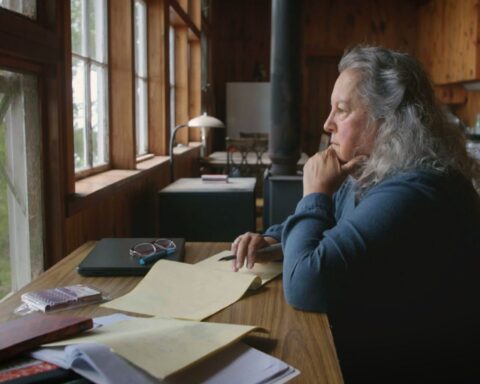
Patrick puts herself as one of the pairs of onscreen eyes through which audiences the collective effort to save, preserve, and restore the Nechako. She learns from her elders, including her parents. Her dad, Archie Patrick, was a former Chief of the Stellat’en First Nation, so the drive to save the major waterway runs in her blood.
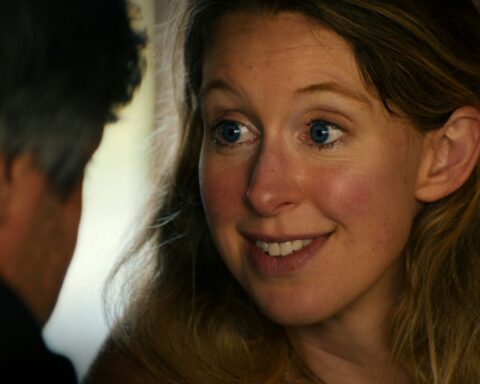
The director also observes community leaders like Saik’uz First Nation Councillor Jasmine Thomas to capture the legal battle and the personal elements that fuel it. Thomas often holds her baby during interviews and vérité glimpses as Patrick captures her day to day. The image of a young mother and community leader illustrates the earnest effort to ensure the health the land, its resources, and its cultural legacy for generations to come. Meanwhile, environmental monitors like Ashley Raphael and Caleb Nome take Patrick on a tour through the forest where healthy trees stand green and tall, but risk being lost by the sweeping efforts to pillage natural resources far beyond the intended means of the dam.
One participant says that the Nechako used to be a “grocery store” with all the salmon that elders used to fish. Patrick integrates generational wisdom within the film to illustrate how the sense of duty passes from grandparents to their children and grandchildren by investing their time and energy in developing a relationship with the water body itself. Archival clips show grandmothers and aunties preparing hearty supplies of salmon for the smokehouse, while the waters in contemporary scenes mostly hold distant memories of fish that fed families for months. Another interviewee notes that the fish survived the meteor impact that killed off the dinosaurs, but Rio Tinto managed to snuff them out in just a few years.
One can’t help but laugh at that wry observation. However, that morbid logic actually fuels the company’s defense against an injunction in the lengthy legal battle with First Nations communities One meeting with the First Nations’ lawyers shares the news that the company argues that while they acknowledge the consequences of their activities, they should be allowed to carry on business as usual, having been implementing their practices for years. Fighting the “why start now?” mentality requires persistence and spirit, and Patrick observes the resilience in the Stellat’en and Saik’uz First Nations as they carry on the fight amid tears and frustration.
The film handsomely observes what the communities seek to preserve, too. The cinematography by Sean Stiller frequently captures the picturesque landscape, while the jarring shocks of grey that intersect through the serene blue and green images show the violent reach of industry as resource extraction cuts through the woodlands and diverts the water from its natural flow. Through the poetic visuals allow Patrick positions the Nechako River as a central protagonist in its own story. It’s a silent voice throughout the film, but the images allow the river to speak to its role as a guardian and caregiver for generations amid their hard-fought campaign to protect it.
Nechako opens the 2025 Planet in Focus Environmental Film Festival on Oct. 21.
It screens at the Windsor International Film Festival on Nov. 1 and Guelph on Nov. 9.
(Additional screenings not announced as of press time.)