



Wild Inside
(USA, 95 min.)
Dir. Penny Lane
Prod. Gabriel Sedgwick, Nickolas Hasse
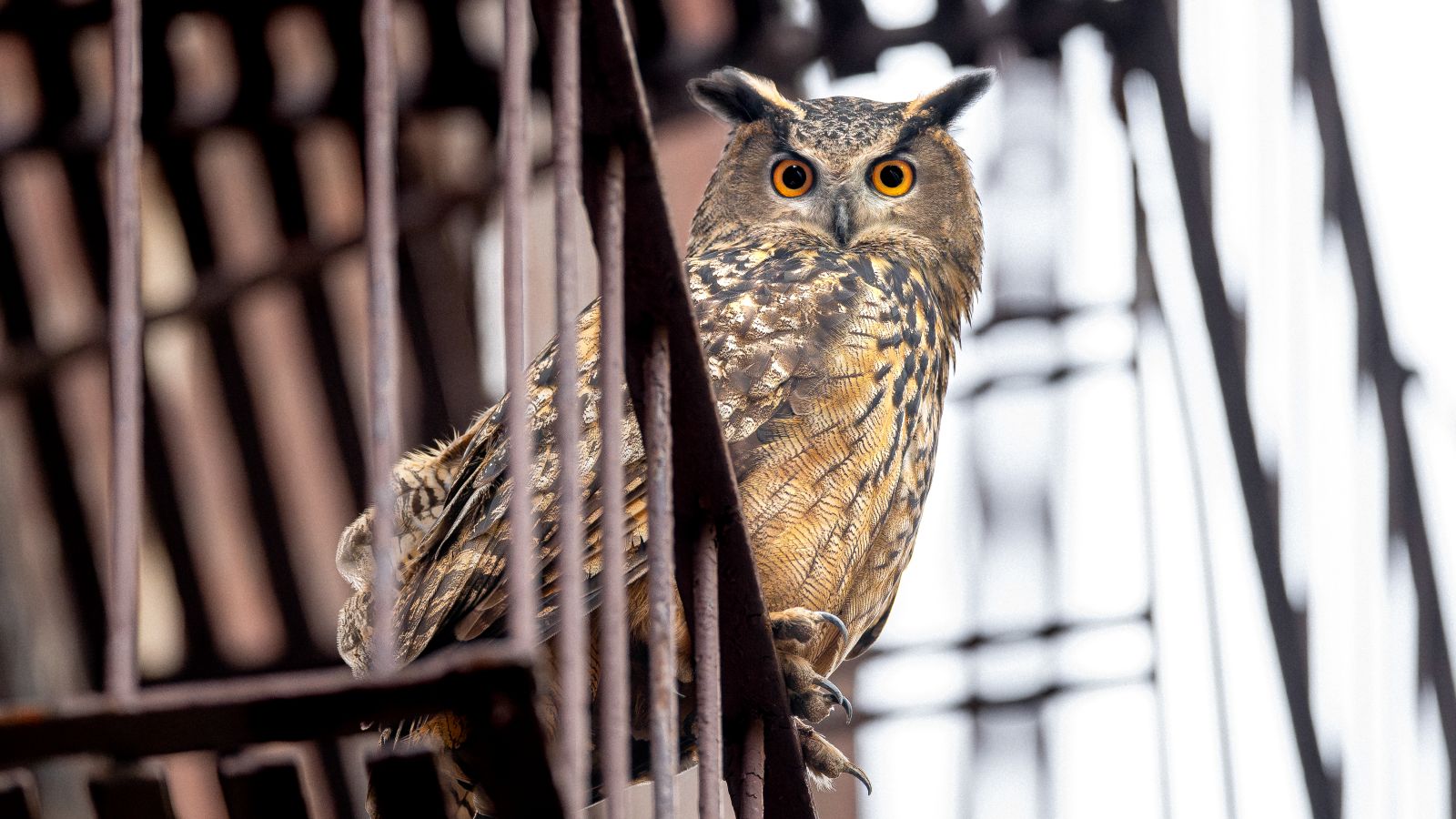
A story like that of Flaco the Eurasian Eagle-Owl could only happen in New York City. Director Penny Lane chronicles the magnificent bird’s escape from the Central Park Zoo after a vandal cut the owl’s cage. Luckily for Lane (Confessions of a Good Samaritan, Listening to Kenny G), her filmmaker friend Jeremy Workman (Secret Mall Apartment) was just strolling by Bergdorf Goodman’s on the edge of Central Park shortly after Flaco flew the coop.
That encounter gives Wild Inside some terrific footage from the very beginning of Flaco’s adventure through to the end. Wild Inside offers a New York story if there ever was one, but this urban birding tale is no breezy lark. It’s a moving fable about the relationship between humans and the animals with which they share city spaces. Moreover, it conveys the onus that comes with developing the land and forcing non-human animals to adapt to man-made surroundings.
Wild Inside observes the Flaco affair as it unfolds from the headline-making escape of February 2, 2023. Lane accompanies the devoted urban birders who form a grassroots coalition spotting and tracking the beloved bird during his escape. Their days observing birds guerilla-style make for an easy transition to surveillance squad. They share notes and have a live Twitter feed to alert birders and New Yorkers about Flaco’s position. The birders initially observe an owl in foreign territory.
Wild Inside draws upon an array of crowd-sourced footage to convey nearly every inch and flap of Flaco’s journey. The doc observes how the early days were tough for Flaco. Although he stayed within Central Park, he found himself braving new elements, like wind, daylight, unknown critters, and unfamiliar trees. The footage shows an owl that’s frightened, but also out of his depths in these uncontrolled elements.
Lane speaks with the birders on the ground, who express genuine concerns for Flaco’s safety. They explain how being born into captivity means that Flaco isn’t an adept hunter. Even as zookeepers try to catch him with cat carriers and lab rats (his normal feed—the rats, not the carriers), he doesn’t really bite. Moreover, his expansive wings aren’t as strong as they could be. Lane cuts to shots of Flaco’s modest cage, which resembles the dimensions of a bus stop. That’s hardly room to spread a six-foot wingspan and flap away.
One birder, dubbed “the bunny lady” finds herself especially wary about the arrival of a potential predator. Her mission to save pet rabbits abandoned in the park puts her front and centre in the Flaco surveillance crew, especially since her handy thermal camera makes an owl easy to spot. (It also becomes inadvertently useful for spotting men cruising in the Ramble.) However, the bunny lady embodies a turn of public opinion as Flaco’s escape transitions from rescue mission to fairy tale.
The birders watch as Flaco’s natural instincts kick in. He proves himself a mighty hunter. He hungrily feasts on Central Park rats and demonstrates that, despite growing up in captivity, he remains wild at heart. But as an owl born in a cage, he knows how to put on a good show. There’s a great element of performance as Flaco plays with his food to the delight of onlookers.
Discourse ensues as Lane captures the playful debate about the bird’s fate. The “Free Flaco” camp argues that it’s cruel to place a self-sufficient animal in captivity. The opposing side argues that elements of city life, from traffic to the rat poison ingested by animals upon which he feasts, mean that he’ll inevitably have a better life at the zoo. Even a bird sanctuary aviarist argues in favour of returning Flaco to captivity, arguing it’s wrong to expect him to adapt to a life he wasn’t born into. The zookeepers, largely fearing bad PR, agree with the former camp. It’s a Room scenario as there’s no returning Flaco to the life he knew before going outside those four walls.
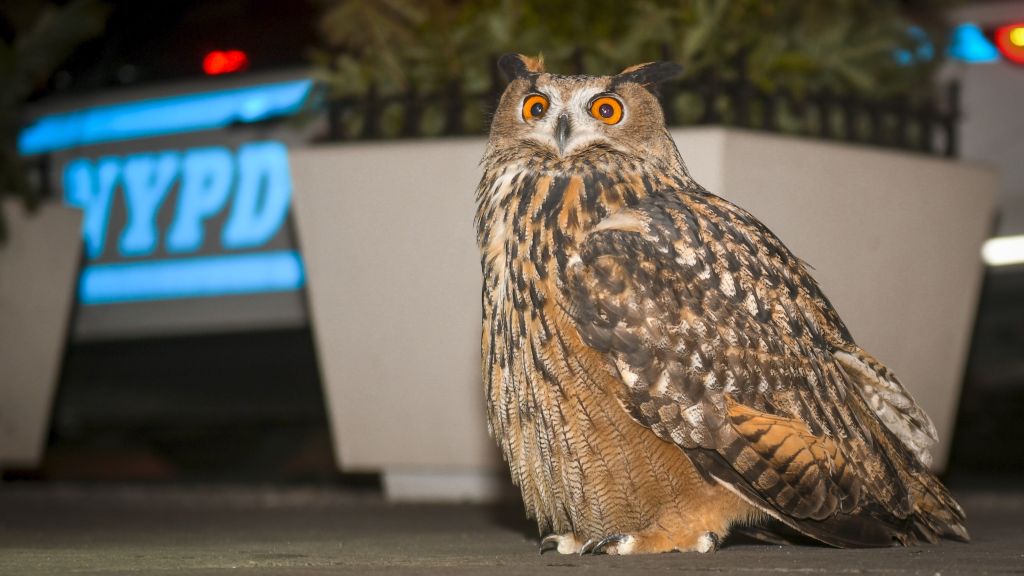
Live his best life, Flaco does. His story perfectly caters to Lane’s playfully curious approach to filmmaking. She tracks Flaco’s adventures while he becomes a folk hero of the city and draws upon the energy of the flock he assembled as a cause célèbre. Wild Inside features some very colourful characters as interviewees prove themselves New Yorkers through and through. They share dramatic stories with gusto about how the majestic bird becomes part of their daily routine. Moreover, when he ventures yonder and explores real estate outside Central Park, his fable assumes new elements of wonder as he graces fire escapes and scaffolds across the city.
He also becomes a mascot for the city. New Yorkers laugh about how he symbolizes the desire to break free from small dumpy apartments. Others identify with his hopeful hoots into the night searching for a mate. The dating pool is bleak for everyone, owls included, in one of the world’s biggest and busiest cities.
Wild Inside captures the dynamics of life in the urban jungle as Lane learns how much light Flaco brought daily to New Yorkers. It’s a story about social animals, too, as Flaco clearly enjoys being ogled. He continues to parade himself for all too see, hooting and hollering throughout the city. He also peeks into windows with an inquisitiveness that could easily land human creepers in jail.
His story offers a reminder that humans are animals, too. Flaco’s freedom flips the act of looking back on the humans. As Wild Inside charts Flaco’s adventures throughout the city, his flights bring him to the many different cages that people erect for themselves. There’s something refreshingly romantic, too, about the joy and passion that his encounters inspire within city dwellers. Lane’s film captures an inherent affinity that exist between humans and non-human counterparts. As interviewees discuss their relationships with animals beyond Flaco and express concerns for the hawks, raccoons, and even rats with which they share the city, Wild Inside invites audiences to consider the responsibilities entailed with being at the top of the food chain. There’s a world of animals that one can’t unsee after spotting them.
Lane doesn’t beat the moral of the story over the head as Flaco’s journey reaches its tragic end. However, the doc encourages one to see the easy alternatives, like avoiding rodenticides or putting decals on windows to deter collisions, which will let birds fly safely and triumphantly throughout the city. If any doc inspires audiences to give a hoot about their neighbours, this is it.