



Hanging by a Wire
(USA/UK/Pakistan, 77 min.)
Dir. Mohammed Ali Naqvi
Prod. Mohammed Ali Naqvi, Bilal Sami
Programme: World Cinema Documentary Competition (World premiere)
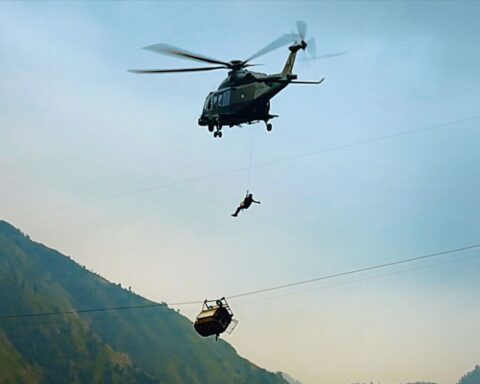
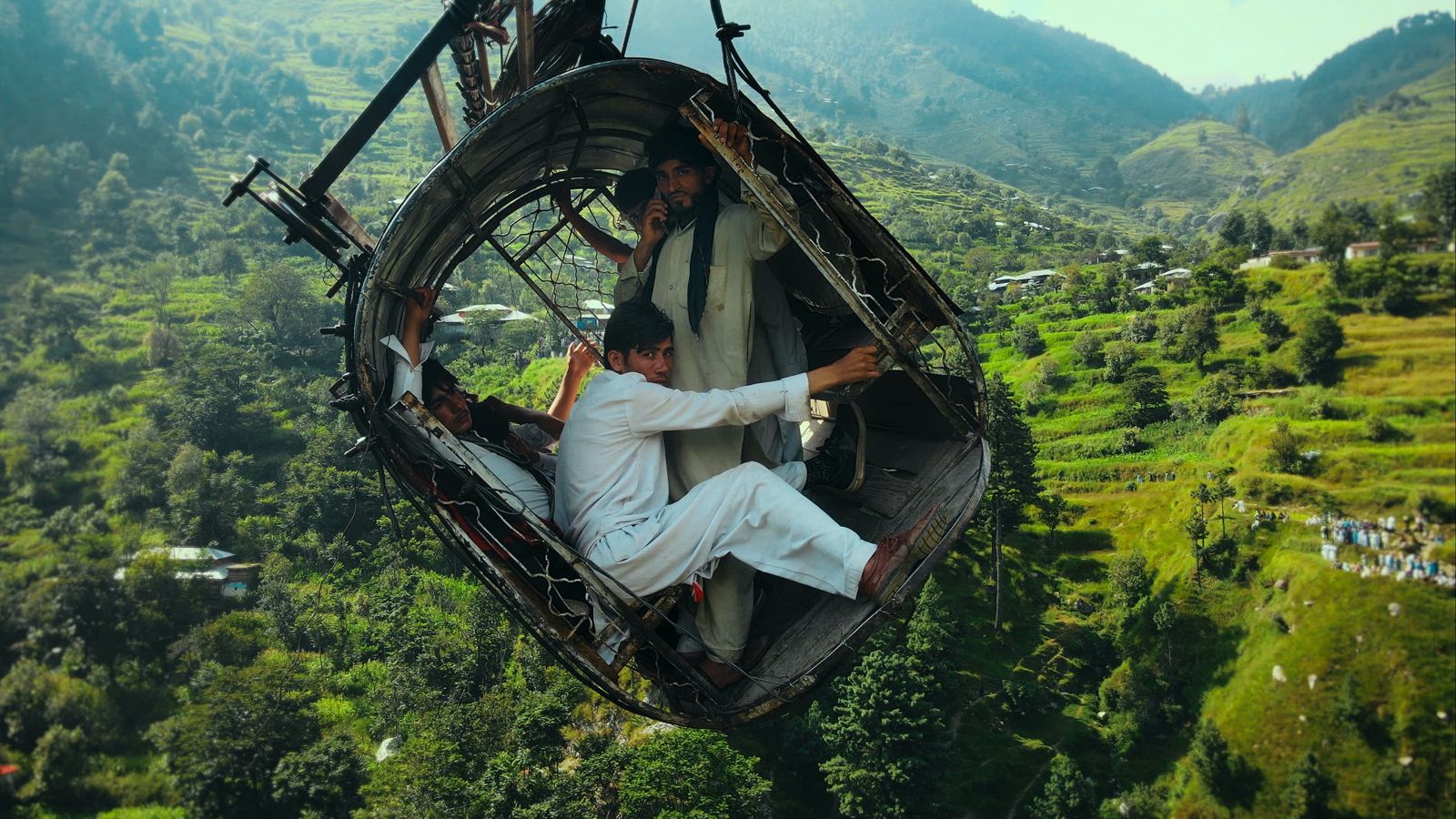
It is the stuff of a horror tale. You send your kid off to school, only for the unthinkable to happen. You soon realized they are caught in a death trap, dangling precariously hundreds of metres above a rock canyon. Instead of school busses, these young people take a cable car as part of their daily commute, but one fateful day makes the journey anything but routine. Two of the three rusted, well-worn tethers on the cable car have snapped. The students inside the car are stranded high in the air, in a carriage titled on its side, and at any moment, the last chord could fail and they’d fall to their inevitable deaths.
Such is the nail-biting scenario that’s explored in Mohammed Ali Naqvi’s brisk yet enthralling documentary Hanging by a Wire. Using a mix of amateur cellphone and drone footage, international media coverage, interviews with the family members and various participants, as well as carefully staged recreations, the film provides numerous perspectives that shed a brighter light on this event in Northern Pakistan that captured the world’s attention.
As a kind of vicarious thrill, the film is quite effective, and despite some obvious telegraphing of the results of certain rescue efforts, it still is a pulse-pounding thing to watch it unfold. Beyond a mere story of brave rescuers and those who support them, the film is most effective when it touches upon larger questions that are central to the event, from the communication between officials and locals, to the three disparate teams that attempted to grab people from the hanging gondola. Equally compelling are the complicated emotions expressed by fathers fearing the loss of their sons.
The film strings us along as attempt after attempt goes through various trials. Cables dangled from helicopters become caught in other wires, while makeshift equipment and inexpensive rope holds up one local who clambers onto the wire to make his own rescue effort. The scenes of the crowds of onlookers witnessing the event (hundreds of them aim their camera phones at those trapped above) illustrate not only the seriousness of the situation, but also the chaotic, unruly elements that demonstrate the logistical challenges of the rescue. They also give a sense of the endemic confrontations between official requests and the anger of people far too conditioned to being let down by government representatives.
This conflict between official response and community anger, as well as the understandable lack of patience that easily could have led to tragedy, is very much the core element that sets the film apart. The metaphor is perfectly visualised – on one side are the local people, on the other the officials, military and otherwise, who employ trusted techniques but ones that require planning and deliberation to accomplish. The divide between these elements is tied together in as rickety a fashion as the frayed, rusted wire that holds up the gondola with its frightened occupants. It’s a tug-of-war between two sides that want the same results, but go about it from literally different sides of a divide.
While Ali Naqvi’s film carefully navigates these divides, he does so with an extremely soft touch, making even the most divisive elements feel less like a rot baked into the system and more a series of mild disagreements about the way forward. There’s a celebratory quality throughout, from the police representative who receives a promotion, to the other rescuers who are given certificates for heroism, making this story fundamentally a feel-good narrative. Yet the image of the empty gondola swaying long after the rescue speaks to a far darker truth, one where questions of corruption and incompetence are left to other, more diligent probes.
The greater social circumstances in the Battagram region are also left unspoken, with the fact that only fathers are interviewed about their experience and it is only young boys who are headed to school on that fateful day. The broken infrastructure isn’t simply a fluke, but indicative of far broader issues in this region far from the capitol. Greater questions about how this happened, how it is to be avoided in future, and how other similar cable cars are to be retrofitted are beyond the scope of the film.
Hanging by a Wire is gripping, but many questions and the broader context are left dangling. Still, it provides a dash of thrill, magnifying the events of this human interest story to cinematic scope, and giving audiences a sense of the chaos, the tension, and the catharsis of that tumultuous day of terror back in 2023.