



Don’t Look Back in Anger
(UK/USA, 122 min.)
Dir. Dylan Southern and Will Lovelace
Prod. Sam Bridger, Guy Heeley
What’s the story with Oasis? The British rock band that dominated a U.K. wave electrified a generation with songs like “Supersonic” and “Wonderwall.” Fronted by brothers Noel Gallagher and Liam Gallagher, the Oasis story is one of rock legend. The siblings have a notoriously difficult working relationship, which led to breakup in 2009.
Footage from that conscious uncoupling appears at the beginning of Don’t Look Back in Anger as a crowd at a busy concert receives the news that the show won’t go on. “Oasis is no more,” a voice says over the speaker. The fans boo with a mix of outrage, shock, and heartbreak.
No matter how one felt then, though, the Oasis story inspires fans to embrace a change of heart. Don’t Look Back in Anger takes its cue from one of the band’s most popular songs. If Liam and Noel Gallagher can put the past behind them, literally anyone seems capable of forgiveness.
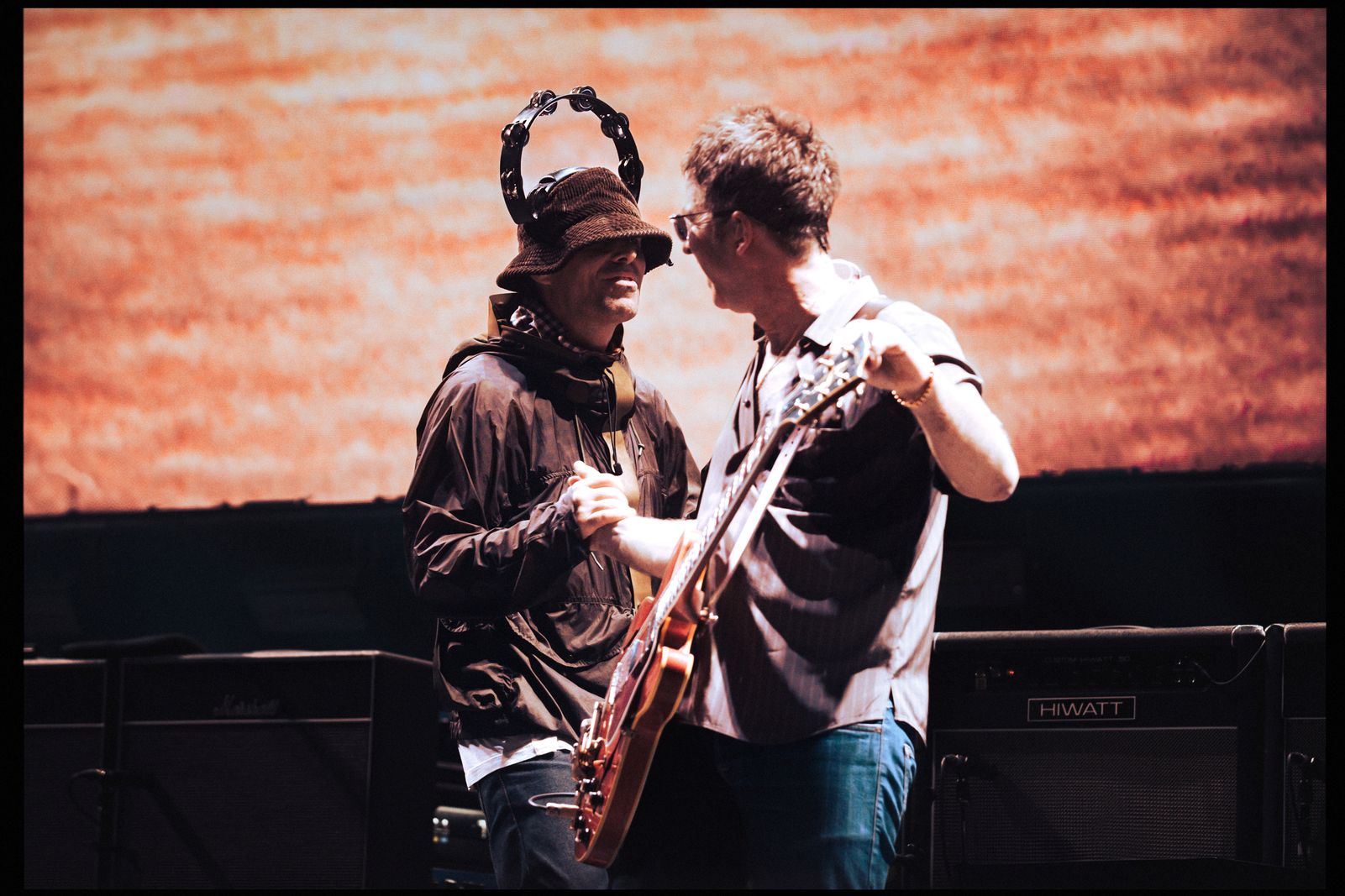
The brothers invite the cameras along for their 2025 reunion tour to bear witness as they make amends. The Oasis ’25 concert promises to be a massive event, eclipsed only by screaming teens at Taylor Swift. Police even have a game plan to deal with the surge of excitement over the band’s return. Oasis, after all, carries some of the biggest concert attendance records for its time. A generation that never expected to see them again will undoubtedly turn out—as will the new generation of fans that’s developed enthusiasm for the band passed down between families and friends.
Don’t Look Back in Anger captures an amusing moment as police officers read the game plan for the inaugural show. The forecast predicts an excitable mob with the herd mentality and emotional volatility of a stadium of soccer fans. That prediction sounds ludicrous, but proves spot-on. Directors Dylan Southern and Will Lovelace (Meet Me in the Bathroom) observe waves of histrionic Oasis fans convening for a religious experience. People of all ages rock out with a swell of emotion that one needs to see to believe.
The documentary, “created by” Peaky Blinders scribe Steven Knight in a novel credit if we ever saw one, generally follows the concert film route with its awesome view of the 2025 tour. Other docs recount the Oasis story from birth to breakup, such as 2016’s Supersonic. This one instead uses the Gallaghers’ reconciliation for an unexpectedly effective lesson in forgiveness.
The brothers get a fair bit of airtime with confessional interviews. Their salty language revisits the strained relationships, booze, drugs, and overall messiness that led to the breakup. However, their accounts offer relatively safe soundbites, if ones peppered with the C-word and F-bombs. Instead, Don’t Look Back in Again captures the appeal of Oasis by drawing upon perspectives of fans from across the globe. Each time the doc touches down in another country, one fervent Oasis-head shares his or her story about the power of the band and what a specific song means to them.
The bombastic, near supersonic, mix of Oasis songs and screaming fans easily puts audiences within the mob mentality. The doc delivers an exhilarating, obnoxiously loud rush that captures the energy of this emotionally amplified tour. This film, playing in IMAX cinemas for full effect, deserves to be seen in the loudest theatre possible—not so much for the bass, but for the power that comes when the Gallaghers cede the microphone to the fans and invite them to carry the tunes.
The film quite effectively lets the Gallaghers play music that resonates with their fans as images from the global tour energetically connect the footage of one song across the tour. Fans offer perspectives about relating to Oasis as working class citizens, seeing the pride of Ireland or Manchester echoing in their music, or, surprisingly and movingly, sharing the traumatic experience of surviving the bombing of Ariana Grande’s Manchester concert in 2017. That fan recalls attending a vigil where Mancunians united not in one of Grande’s songs, but in a haunting a cappella rendition of “Don’t Look Back in Anger.” Eight years after the breakup, Oasis heals the city.
Oasis also soothes the nation. In one thread, a priest offers a homily—to a crowd of maybe a half-dozen parishioners—and remarks upon the power of forgiveness. He tells of two brothers imparting near-Biblical levels of compassion by reconciling. As the doc cuts between masses of fans united by said reconciliation, the Oasis story assumes a little more weight. And people say the Beatles were bigger than Jesus.