


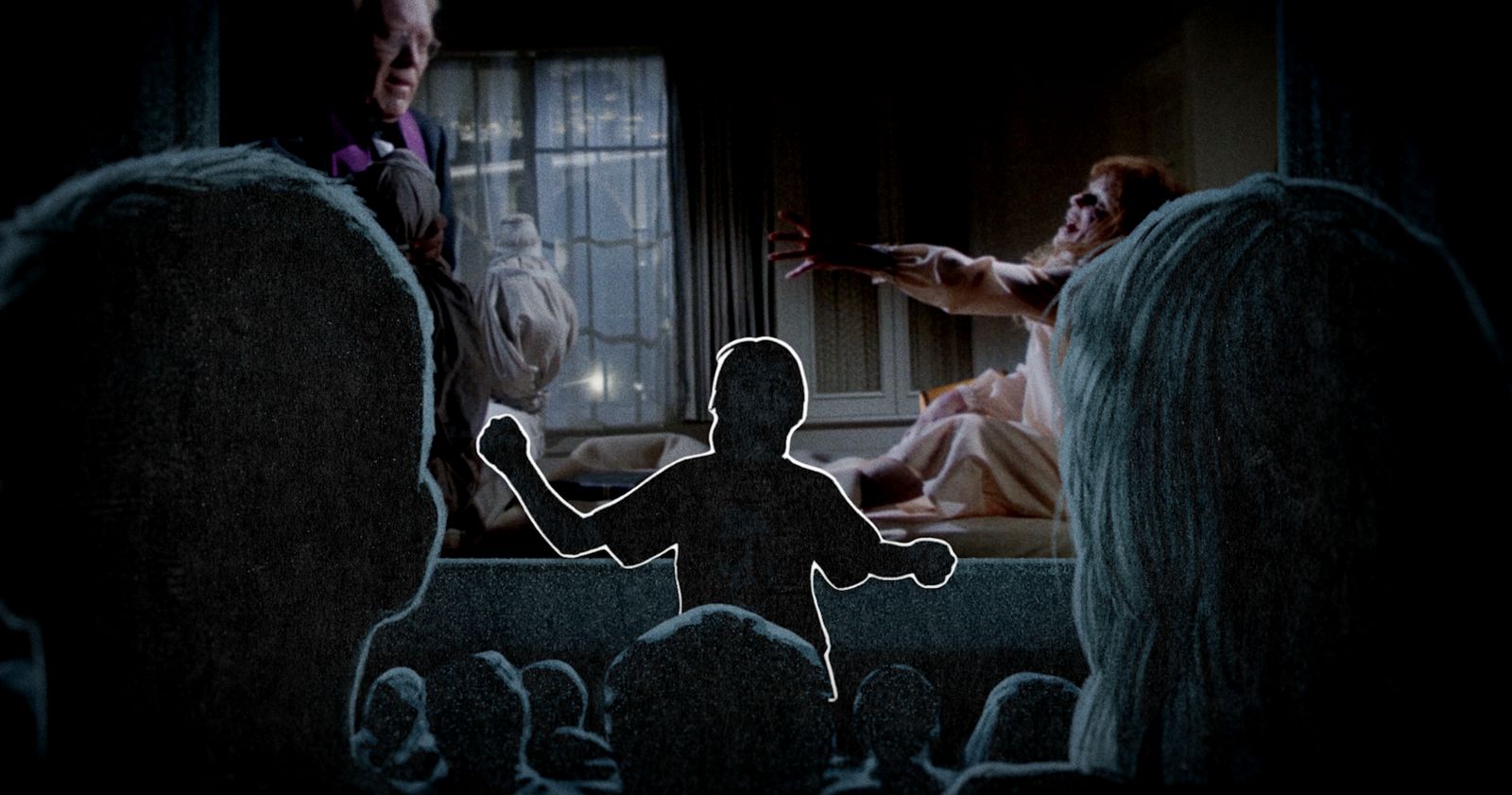

Being a huge fan of documentaries about filmmaking, and especially about disastrous films, my expectations for Boorman and the Devil were very high. After all, this is about the making of and fallout from The Exorcist II: The Heretic (1977), widely regarded as one of the most anticipated and ultimately most disastrous sequels in film history after the massive success of William Friedkin’s Oscar winning 1973 film. I knew that director John Boorman (who directed one of the masterpieces of American ’70s cinema, Deliverance) had granted an extended interview for the doc by director David Kittredge, as had star Linda Blair. I was also expecting to laugh (a lot) and thought I’d be highly entertained.
But the fantastic thing about this documentary is how unexpected a lot of it is. It’s not just about a turkey. Boorman really was trying to make something experimental and full of integrity with The Heretic, and the doc walks us through all of the various disasters, including cost overruns and stress levels that ultimately paused the production as Boorman was hospitalized for a week. Kittredge offers an in-depth assessment of the sequel, including technological firsts (it was one of the earliest films to use a Steadicam), battles over the script, thespian antics and how the film fit into the growing demand for sequels (or ‘sequelmania’). But the main surprise is how intensely and powerfully sad much of this exhaustively-researched doc is. Boorman was tortured by the filmmaking process and was devastated by the universally-negative response to his film. Exorcist fans won’t be disappointed, nor will anyone intrigued by Hollywood history.
Kittredge spoke with POV about pulling together Boorman and the Devil from his Los Angeles home.
POV: Matthew Hays
DK: David Kittredge
POV: Do you remember when you first saw The Exorcist II?
DK: I first saw Exorcist II: The Heretic on Betamax when I was about 14 or 15, and it was the shorter European cut, which was the only version of the film available until the mid-’90s. I knew about the film’s reputation and knew John Boorman’s name, but I hadn’t seen any of his films back then. I watched The Heretic perplexed—it didn’t resemble its predecessor in any way, but I found it a really fascinating watch. There seemed to be ideas just floating under the surface but it didn’t really connect for me. It wasn’t until I saw the longer U.S. domestic cut after college that I really became interested in the film, because love that version or hate it, it’s a complete coherent work. The European recut was trying to “horror it up,” which sometimes worked, but sometimes didn’t.
POV: This was a low point in Boorman’s career, obviously. Was it difficult to convince him to participate?
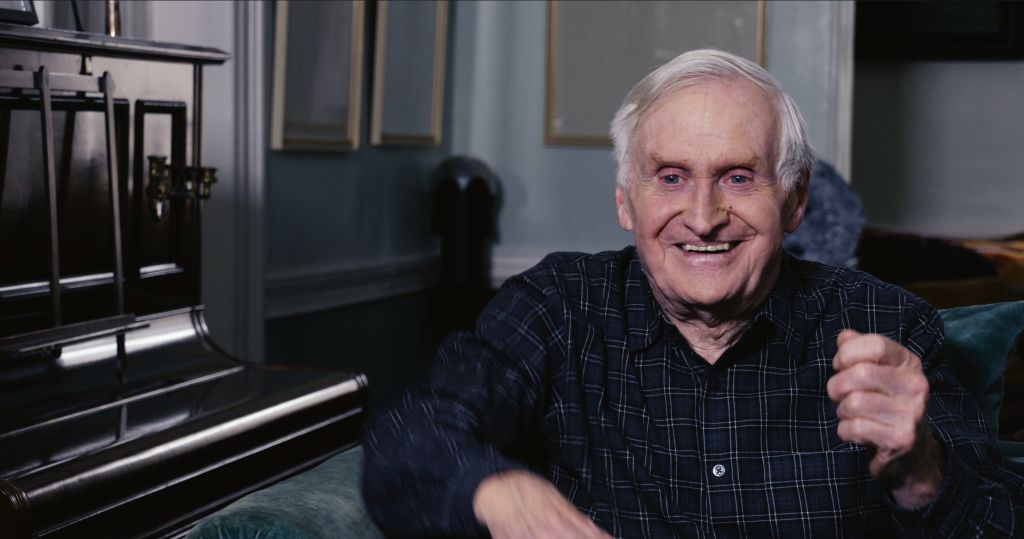
DK: It was a bit of a courtship. John had barely mentioned The Heretic in the 40-plus years since its release, it was such a profoundly painful experience for him. We exchanged several emails and then got on a Skype call. I communicated what I was trying to do with the documentary—not to hold Exorcist II up for mockery or make some sort of snarky “bad movie” analysis, but to really look at what he’d been trying to do with it and the ideas behind it, and also do a really deep dive into the profoundly impressive technical feats he pulled off with the film. Some of the visuals in it are staggering. Two things, I think, convinced him, one was when I said that his choice to shoot almost entirely on Burbank soundstages reminded me of Powell and Pressburger’s Black Narcissus, and he confirmed that was an inspiration, and when I said that if Boorman hadn’t gone through the experience of making The Heretic, Excalibur would not have been as good, and as furious, as it is. Excalibur was the film he did after, and it’s very much the work of an artist with something to prove.
POV: Were there any interviews you couldn’t get but wanted to?
DK: There always are. I’d been speaking with [star] Kitty Winn and she’s absolutely wonderful, but she declined to be interviewed on camera. And I get it—she’s happy and had moved on from the world of Hollywood long ago. And there were others I wish we’d have had the budget to get, crew members in various places in the country. But I think the film represents the crew pretty well—we have the 1st assistant camera [Ron Vargas], 2nd assistant director [Victor Hsu], script supervisor [Bonnie Prendergast]; Garrett Brown, the Steadicam inventor/operator (The Heretic was one of the first films to use Steadicam); even an uncredited Warner Bros electrician who worked on the set. It would have been amazing to get some of the now-deceased people, like John Calley (the head of WB production), producer Richard Lederer, production designer Richard MacDonald, and of course, Richard Burton. Oh, Lord, I would have loved to have interviewed Burton. I wonder if he would have said yes.
POV: What I was impressed with was that I thought this was going to be a funny doc about a big filmmaking disaster. Instead I was tremendously moved by the film. Much of it is very sad—Boorman clearly thought he’d made a good movie.
DK: I’m so happy you were moved by the film. There are a few moments in the last 15 minutes that, even after having edited the film together and seeing it more times than I can count, I still get choked up by. Because at heart this is not really a documentary about a filmmaking disaster. It’s about what it takes to make really ambitious art, and beyond that, what it means to be an artist. There’s stuff in this film that I’ve never seen expressed by artists the way they are here, and as a cinema lover, I am just really grateful that people like John [Boorman] and Louise Fletcher and Linda Blair and others allowed themselves to be so vulnerable and open. If the film is somewhat melancholy in parts, with these artists looking back at their lives and works, it’s also profoundly inspiring. We all spend our days dealing with what’s in front of us, and if you’re an artist that’s really about trying to make stuff, trying to put together the next project. My takeaway talking with these people is to take more chances, to swing more for the fences. To hell with playing it safe. Because if going through The Heretic didn’t kill Boorman, maybe taking a big swing isn’t a bad idea—even if it doesn’t connect.
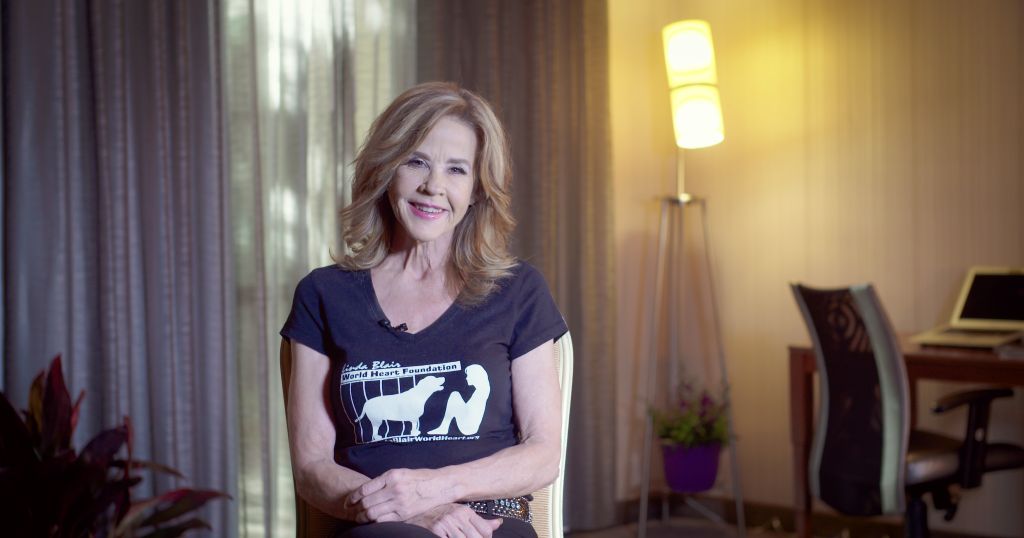
POV: What’s the most surprising response you’ve had to Boorman and the Devil?
DK: Mostly the responses have been “this wasn’t the film I thought it was going to be.” In a really positive way! Because people don’t expect to be moved, they don’t expect a making-of documentary to delve into questions of what it means to be an artist, what is your life’s meaning, etc. To me—that’s always what the film was going to be. Boorman was the first interview for the film, and I can remember going back to my hotel room in Bray, Ireland and looking at that footage and feeling this profound responsibility—this is one of the greatest filmmakers that’s ever been behind a camera, and he’s talking not just about this one movie, but also about his life, his children, other films, how to navigate ambition versus pragmatism… how to emotionally and spiritually survive as an ambitious artist. It’s stuff that I find just so rich and valuable. Cinema is an art form that has been a huge part of my life since I was young, and to speak with this amazing, experienced, visionary filmmaker about his life and work is a treasure I never expected to have and will never forget.