




The Voice of Hind Rajab
(Tunisia/France, 88 min.)
Dir. Kaouther Ben Hania
Programme: Special Presentations (North American premiere)
For all the grief that the Toronto International Film Festival received this year over a single (unenviably complicated) programming choice, they deserve some credit for selecting far more stories from the Palestinian perspective of the ongoing genocide. The real shame, moreover, is that the controversy this season overwhelmed much better films that deserve a place in the conversation. Strong selections include documentaries like Put Your Soul on Your Hand and Walk and With Hasan in Gaza, and dramas like Palestine 36.
Chief among them, however, and certainly among the best films of the year overall, is Kaouther Ben Hania‘s riveting film The Voice of Hind Rajab. This suspenseful hybrid drama unfolds with razor-sharp precision as it uses found audio recordings to interrogate our collective failure to respond to the situation in Palestine. Ben Hania employs an ingenious hybrid model that builds upon her Oscar-nominated Four Daughters to inject a pulse-pounding film with a palpable sense of absence.
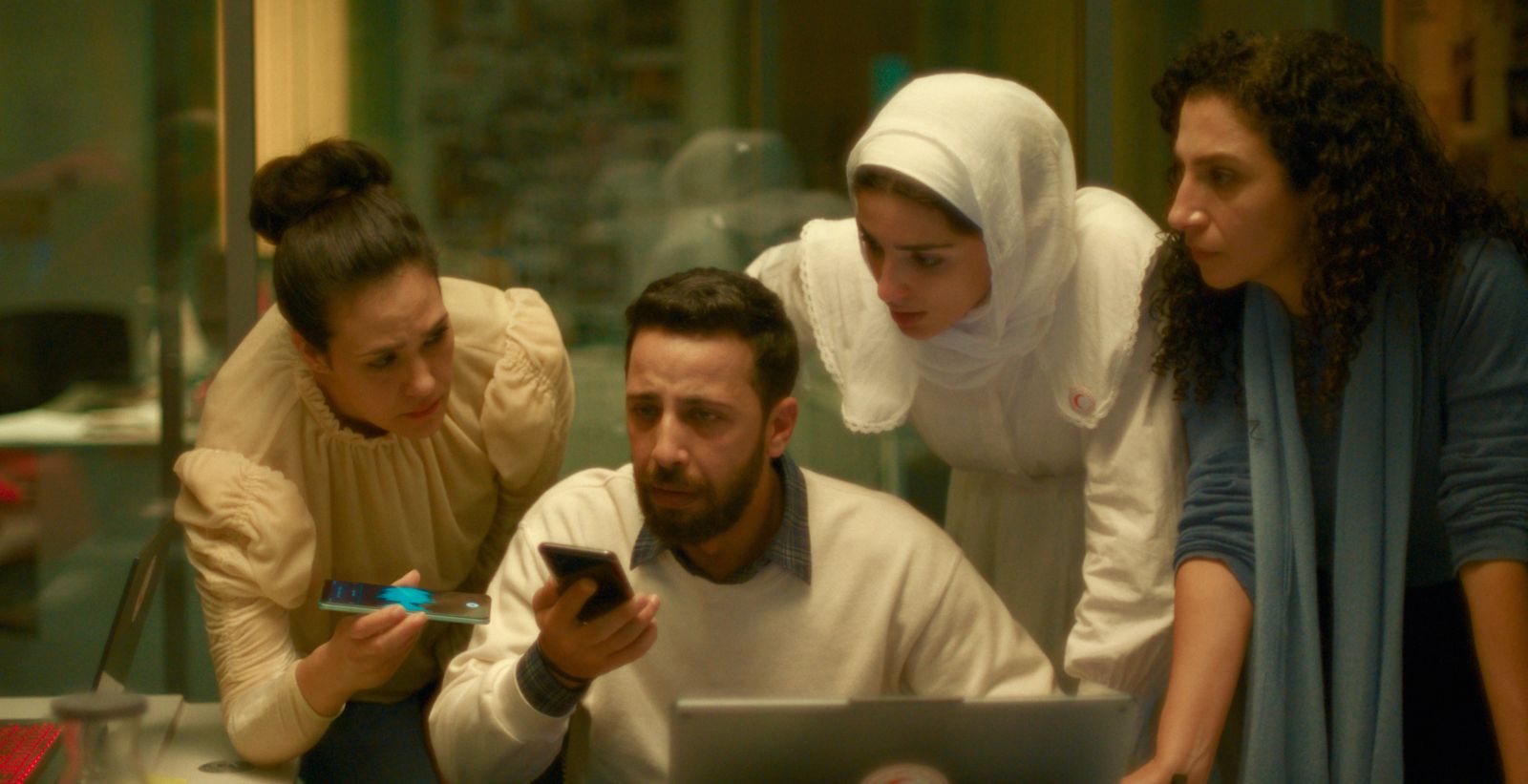
The film unfolds somewhat like Gustav Gustav Möller’s 2018 Danish thriller The Guilty by following the drama in a call centre in almost real time. Omar (Motaz Malhees) receives a dispatch at the Red Crescent call centre that no volunteer wants to hear. It’s a request from a man in Germany desperate for the Palestinian response centre to connect with his brother in Gaza, who is trapped in a car with his family. Omar heeds the call and briefly connects with a young woman in the car. She frantically mentions that tanks are beside them and that Israeli soldiers are shooting. She screams in horror as bullets pop violently and the call goes dead.
When Omar calls back to ease his fear that the worst has happened, a little girl answers the phone. She’s six years old. Her name is Hind. She’s alone, and she’s very scared.
Ben Hania cuts to the real audio recordings from that fateful day—January 29, 2024–that horrified the world and helped bring more empathy, if little action, for the plight of Palestinians enduring relentless violence at the hands of the IDF. The screen holds on black with a white audio wave undulating with the tremors in Hind’s voice as Omar and his colleague Rana (Saja Kilani) reassure her that help is on the way.
It should be a quick mission with the Red Crescent responders merely eight minutes away from the Gaza gas station where the IDF assailed the car with bullets. But recent attacks in the area, and the likely prospect that the Israelis know that someone is still alive in the car and are using her as bait–makes any rescue mission a death trap and minefield of bureaucratic hurdles.
The lean chamber drama unfolds as a heart-pounding race against time. Omar and Raja keep Hind calm, reciting the Quran and telling her all is well, while battling their own call and response with the paper pushers holding up the green light. As the clock keeps ticking and the calls with Hind stretch far beyond the eight-minute mark, Ben Hania makes a viewer squirm with the unbearable sense of helplessness that seals the child’s fate. The cinematography by Juan Sarmiento G. offers a dizzying feat of handheld camerawork that holds intimately close on the volunteers. One feels the exhaustion as the mental and emotional strain take its toll. Meanwhile, taut editing by Qutaiba Barhamji, Maxime Mathis, and Ben Hania doesn’t give audiences a send to catch their breath.
The film deftly weaves the audio files with note-perfect performances that recreate the unbearable phone calls. Hind’s voice remains respectfully preserved and immortalized with her final words speaking for themselves. A fantastic ensemble cast empathetically portrays the call centre volunteers as they oscillate between staying calm under pressure and nearly unravelling with the demands of holding out a lifeline when the worst seems inevitable. Kilani gives a heart-breaking turn as Raja, while Omar provides a compelling surrogate for the audience, especially anyone angry with the system’s failure to respond. Equally strong is Clara Khoury as Nisreen, the call centre supervisor who assumes a maternal role in the call as the clock reaches overtime.
Hania ingeniously blends real footage of the heroes in the centre as the Red Crescent’s social media team takes to live streaming with hopes of building public pressure to act. The camera within the frame holds on Khoury as the picture blurs and the real Nisreen appears on the smartphone, calmly and reassuringly keeping Hind on the line. This is a valiant and respectful portrait of heroism that asks the world why it’s so hard to do the right thing. Without sermonizing or moralizing, The Voice of Hind Rajab lets us endure a young girl’s final moments in Gaza.
Ben Hania cuts away from the call centre only to present gut-wrenching photos of Hind’s family car, which took 355 bullets from the IDF before she was found 12 days later. As Omar asks in the film, “If a little girl can’t inspire empathy, what can?” The world might have failed Hind Rajab, but this film ensures that her voice will be forever seared into your memory.