



Maintenance Artist
(USA, 95 min.)
Dir. Toby Perl Freilich
Prod. Toby Perl Freilich, Judith Mizrachy
Programme: Artscapes (Canadian premiere)
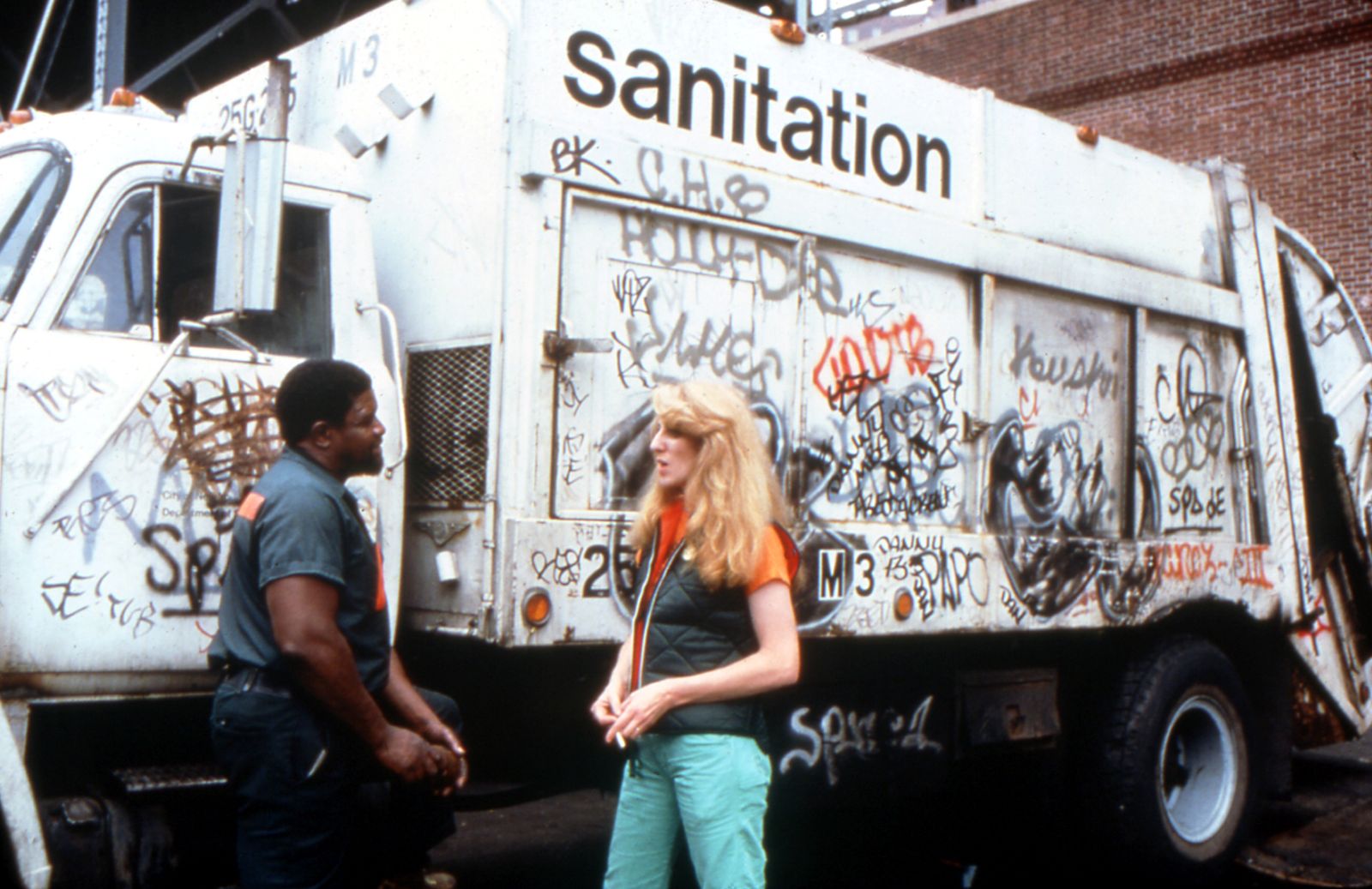
For over 40 years, artist Mierle Laderman Ukeles has been reimagining the fine line between art and labour. She’s spent decades as the artist in residence for New York’s Department of Sanitation–the first and, to date, only person to hold the job. As she mentions in Maintenance Artist, though, the position is a volunteer one. That valuation says so much about her practice and the way society perceives her domain, but more so the ways in which institutions value artistic expressions that don’t fit an easy model for selling and collecting.
Maintenance Artist looks at Ukeles’ distinct oeuvre by combining two popular modes of arts docs. On one hand, as Ukeles’ prepares for a major career retrospective at the Queens Museum–the first such showcase of her work– the documentary adopts the usual process of chronicling the mounting of a show. Ukeles and company sift through her archives, select pieces, and illuminate their choices. On the other hand, the film follows the archival route with the artist walking audiences through her work in a career spanning interview in which she reflects upon key turning points and pieces, while extensive images from the past show these live performances in motion.
The combination affords a great showcase for Ukeles’ art, which few people likely get to encounter unless they’re in the right place at the right time, or a subject of it. It’s thoughtful and highly entertaining art that carves its own space between pop art and documentary. It’s a joy to watch, and provocative while raising issues that should realistically be common sense practices in human decency.
The context for Ukeles’ work indeed seems unique. Archival photos offer portraits of housework: laundry, mopping, dishes, etc. Her unfussy lensing elevates and honours this work through the tradition of documentary street photography. She captures women’s domestic travails with an eye for the chores as labour with all the rights and distinctions that designation entails. One feels the physical exhaustion inspired by a day of hard scrubbing simply by looking at the photos. Her work evokes the sweat and grime of manual labour, but she captures it with an affinity for dedicated custodians and civil servants who undertake maintenance work so that others can enjoy squeaky clean living.
Ukeles has a real knack for illuminating her process. She humorously talks about incorporating her kids into her work and picking up some strays while creating pieces that invite a sense of play. However, she outlines the philosophy of being a maintenance artist with a blistering manifesto. Ukeles crafts a distinct credo about the significance of recognizing pink and blue collar workers in a field that puts white collar duties as the hallmark of success. Nobody is lesser than for the means through which they earn their living, and her practice embeds notions of second wave feminism, civil rights efforts, and good old fashioned socialism into its declaration of principles. Ukeles’ philosophy outlines an artistic practice so distinct that it actually appears in Julian Rosefeldt’s documentary/art piece Manifesto as one of several screeds interpreted by Cate Blanchett. It’s probably the most commercial iteration of the Ukeles’ oeuvre.
Director Toby Perl Freilich settles into an origin story of sorts after a somewhat hodgepodge opening act. After taking pictures of custodians at an office building and asking them to label their portraits as art or labour, Ukeles gets a show. A cynical critic likens her art to frivolity and jokes that the Department of Sanitation might inspire some work by putting the old adage about trash and treasure to good use. Cue a brainwave and Ukeles makes a pitch.
The timing of her idea holds a key place in the development of her career. Freilich situates the evolution of the maintenance artist within New York City’s struggle in the 1970s to realise its potential as a bustling metropolis. Images of the “drop dead city” ooze with grime, but not in the pleasing way of Ukeles’ photos. It’s an era when the Big Apple’s rotten to the core and urban decay runs rampant with city hall undercutting services. Sanitation workers bear the brunt as front line workers cleaning up their neighbours’ trash. Mierle sees a perfect opportunity to put poetry in motion as the philosophy of her art lives and breathes in the city’s trash schedule.
She embarks on a project to shake the hand of every sanitation worker in the city. Criss-crossing through the boroughs, Ukeles invites local kids to thank the workers. The campaign draws media attention. Mierle’s maintenance art soon becomes a performance piece that reimagines the social fabric of the city. Ukeles makes visible the humanity and humbleness in honest work that lets a city function.
Maintenance Artist lets audiences explore an oeuvre that’s inherently ephemeral as Ukeles’ art defies the traditional archive. Beyond her sketches that work out ideas, and then the video documentation of her pieces being performed, much of the art exists in the emotional and intellectual connections it creates in the moment.
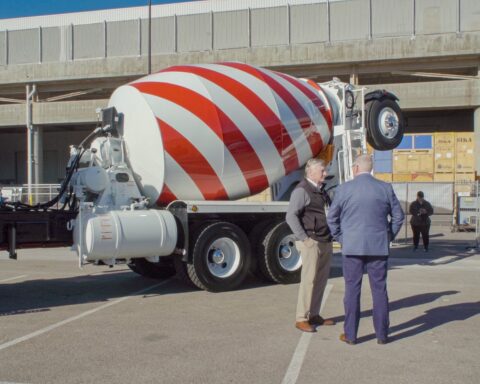
Other swell clips appear, like a ballet she choreographed in Japan with snow removal trucks to remind citizens of the art of winter maintenance. It’s a brilliant piece and a major feat of scale and industry, like something that Christo and Jeanne-Claude might have imagined had they been on the municipal dime. During the COVID-19 pandemic, meanwhile, her work harkens back to the gestures of thanks that first got her the gig. Banners invite New Yorkers to thank front line workers keeping the city clean in times of crisis.
Maintenance Artist invites valuable considerations about the ways in which we value art, but also the everyday work that often goes undetected as we go about our ways. That invisible labour is an art unto itself, and this portrait of Ukeles’ practice offers a deeply humanist consideration of civil society. If a portrait of a can of soup nets high praise and higher prices, shouldn’t the artists who recycle the can be equally worthy of esteem?