


“Why write a poem that’s over somebody’s head?” asks poet Andrea Gibson in Come See Me in the Good Light. “Even then: over somebody’s heart?”
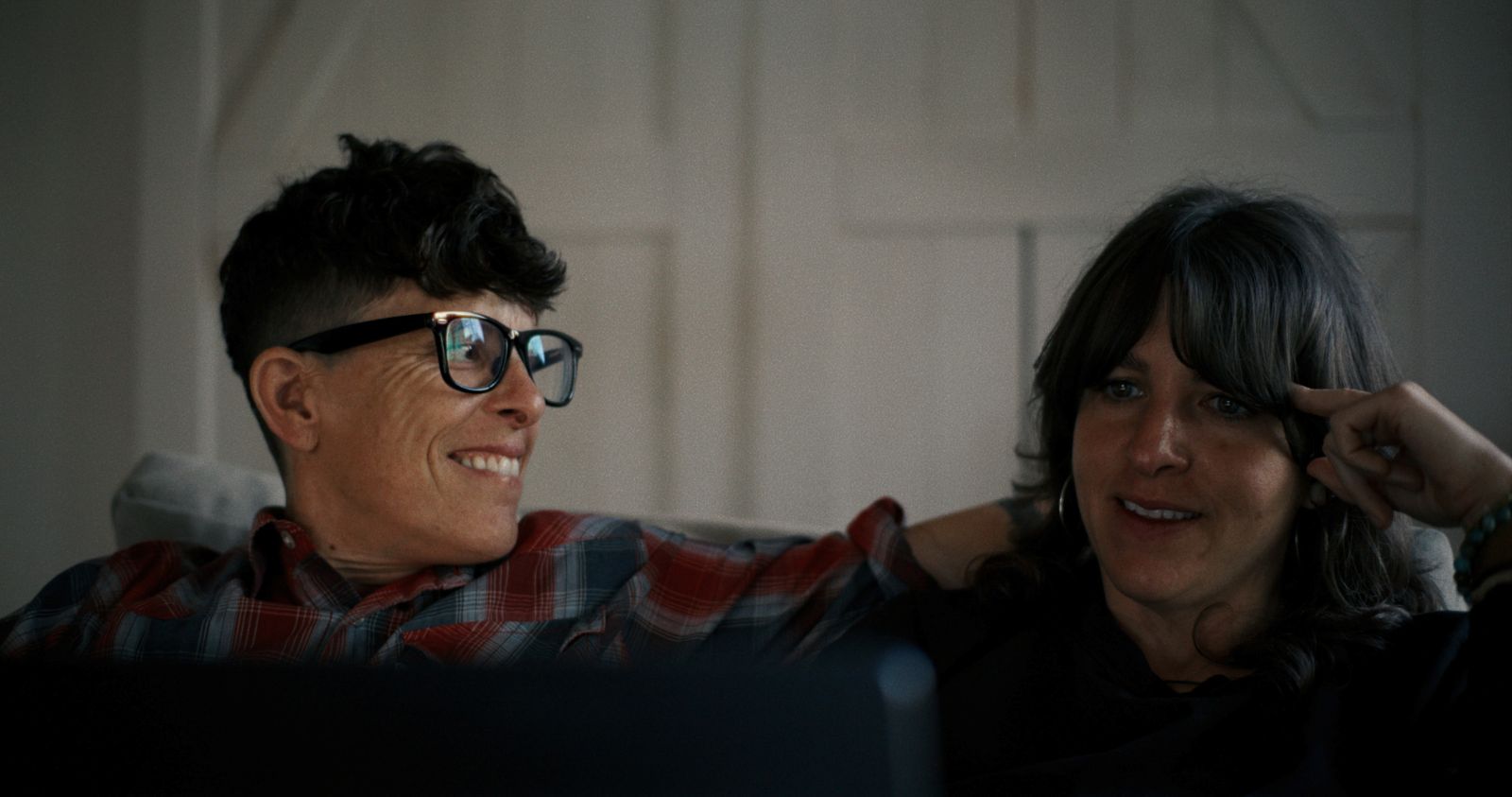
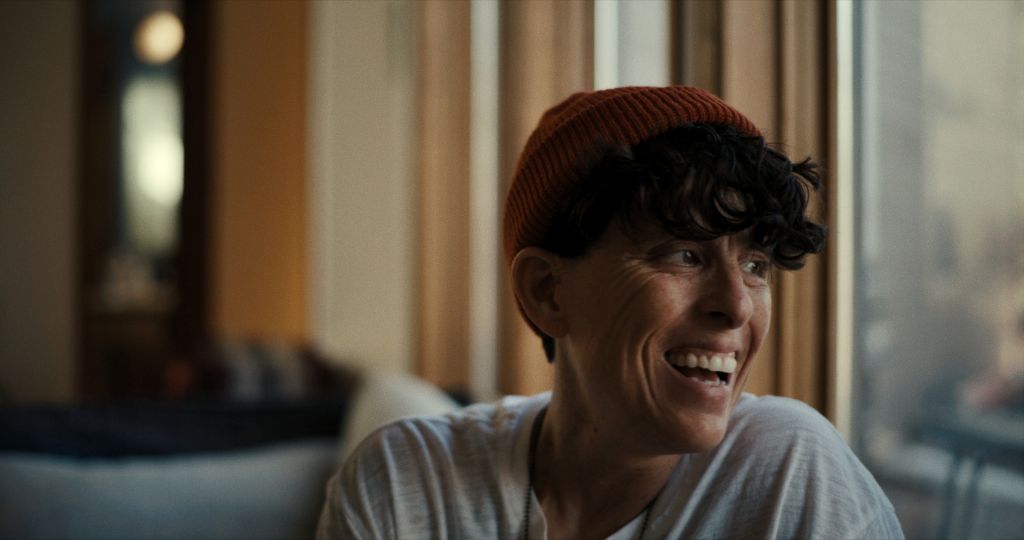
If any film this year speaks directly to the heart, it’s Come See Me in the Good Light. The documentary directed by Ryan White (Good Night Oppy, Pamela: A Love Story) beautifully understands the philosophy behind Gibson’s poetry. The film intimately observes Gibson’s life after receiving a terminal cancer diagnosis. They vow to make the most of every day they have left on this Earth with their partner, poet Megan Falley. And while the logline suggests that audiences are in for a heavy experience, Come See Me in the Good Light envelops them in an intimate journey full of tears of laughter. At a time when AI proves one of the hottest topics in conversation, this film refreshingly emphasizes the value of emotional intelligence.
While Gibson passed on July 14, 2025, they surpassed the doctors’ preliminary forecasts and lived not only through the production, but also long enough to share the acclaimed premiere of Come See Me in the Good Light at Sundance earlier this year where it won the overall Festival Favourite Award. It continues to move audiences as it rolls onto AppleTV November 14, winning audience awards at festivals including Toronto’s Hot Docs.
“Andrea’s eyesight was challenged through one of the treatments that they were doing and writing was difficult, looking at a screen was difficult, and they were really drawn to the idea of being able to continue to make art because one of their favourite quotes was Picasso saying he would paint by licking the floor of a jail cell with his own wet tongue,” Falley tells POV via Zoom. “Andrea, I think, was twinned with Picasso in that way.”
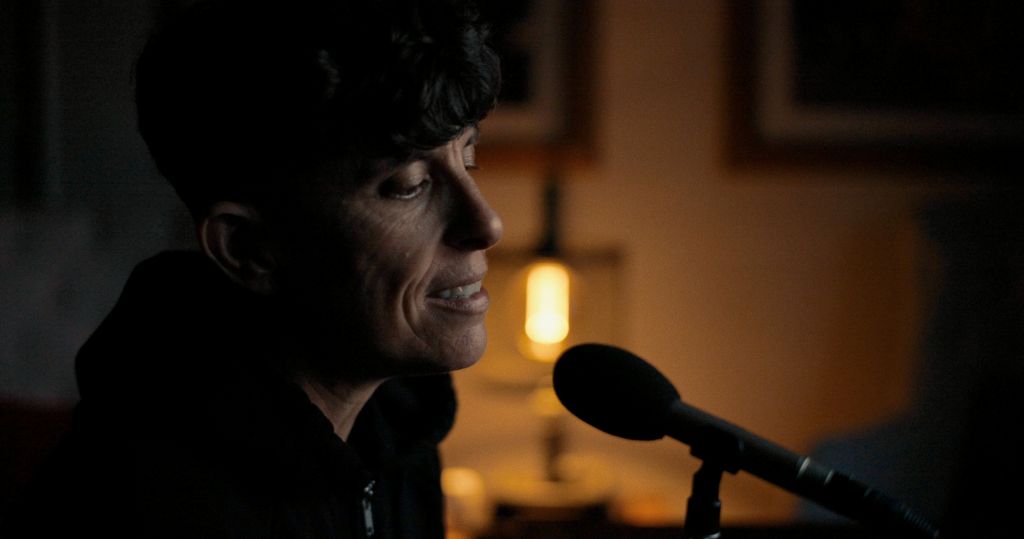
Falley pauses and laughs, reflecting the film’s seamless ability to deftly change gears emotionally as she and Gibson keep their spirits bright in challenging moments: trips to the hospital, chemotherapy sessions, disheartening test results, and painful reminders of time running out. “It almost felt like the passive income version of art we could live,” chuckles Falley. She says the therapeutic element of the documentary helped Gibson share their poetry in moments when the fight to stay alive literally took their voice from them. “Then it would be made into something we would show, and it wouldn’t be Andrea having to use their body to tour, which it wasn’t strong enough to do for so long. They could keep putting it out there and [a film] could keep living and reaching people.”
The film’s a testament to the magic that happens when participants find the right match in the filmmakers with whom they share their lives. It’s a tricky prospect too, as the severity of Gibson’s diagnosis didn’t allow for the usual getting-to-know-you time that filmmakers have. Fortunately for White and producer Jessica Hargrave, who were introduced to Gibson and Falley through mutual friends Stef Willen and comic Tig Notaro (both producers on the doc), the poets’ comfort with vulnerability made them naturals before the cameras.
“We were surprised to find how open Andrea and Megan both were from the very start and how much they seemed to understand the value of letting us into the room, even in uncomfortable situations,” says Hargrave. “In addition to saying that we could come, at some point, they told us that they wanted us to come. It was nice for them to have a witness for those really intense experiences.”
“Knowing that the camera was there would reinforce to us what we were already trying to do, which was how can we make beauty of this time, art of this time, love of this time, a lesson of this time, a gift of this time for each other,” agrees Falley.
Come See Me in the Good Light observes as Falley and Gibson cozy up together with their laptops as they workshop each other’s writing—Gibson’s poetry and Falley’s memoir about weight and coming to love her body. Gibson defends the power of their eight-word vocabulary, which they liken to building a house with a screwdriver. Meanwhile, Falley defends her inventive word choices, like “octopoidal,” which reflects her sense of feeling overwhelmed, but Gibson worries the word choice is too esoteric to be effective. Other moments capture them as they cuddle up with their dogs and reflect on the role of caregivers and loving each other through sickness and health. The film also finds refreshing pauses when the camera lingers in their bedroom as they turn out the lights. The intimacy of the film is disarmingly effective.

“I don’t think you really know at the beginning how close you’re going to get with these people,” says White. “That closeness is not the traditional journalistic arms-length that you’re taught in Documentary 101, but that wouldn’t have worked for this film, or at least it would’ve been a very different film had we had that type of distance.”
Hargrave says that intimacy also comes through the limited number of locations that audiences share with Gibson and Falley. The action mostly contains itself to the poets’ Colorado home and the hospital, along with the car rides between destinations. The hospital reveals an extra layer of vulnerability as Gibson receives updates about their progress, a process they liken to living in three week cycles as they await the latest results of blood tests revealing their treatment’s success or decline.
“They started dreading those three week cycles, but then as we started making the film with them, they said that the three weeks were framed differently because they meant that their friends were coming to visit,” notes Hargrave. The return home affords the film some levity as, no matter what number comes up in those results, Gibson and Falley vow to make the most of the next three weeks.
White relates the process of getting close with Gibson and Falley to his relationship with Hargrave and their participant Jean Hargadon Wehner in their Netflix series The Keepers about a sexual abuse scandal at a Baltimore all-girls school. “Jean taught Jess and I both a lot about that type of filmmaking, about that intimacy and about trust when someone’s going through a trauma, how you form a relationship with them, but also make a documentary about them,” says White.
“We made a lot of mistakes with Jean and we learned from them, but she was willing to hold our hand through that process,” White continues. “I think we took a lot of what we learned in making The Keepers to this experience with Andrea and Megan. I can’t think of one time that either of them said, ‘Can you not film this? Or maybe this isn’t the best time.’ We were there from the moment they woke up and they would literally go to bed and we would leave the house while they were in bed. So we were there morning ’til night and it blurred lines.”
The duo also got some perspective from Notaro, as the comic previously shared her own experience with a cancer diagnosis in the documentary Tig, which opened Hot Docs 2015. “I know what it’s like to reveal life surprises as a camera is rolling,” she says. After White previously shared with Notaro his desire to make a funny documentary, Notaro suggested him when their mutual friend Stef Willen pitched the idea of a doc about Gibson and Falley. “There can’t be egos. It has to all be driven by love.”
That love is on full display in an early scene in which Willen joins the poets for dinner. They joke with Willen about the voicemails they left each other after Andrea shared that their cancer had returned. The humorous exchange sees Willen recall a message in which Gibson said that Falley was on fingering duty for the night and would poke the cancer right of their ovaries. Gibson then plays Willen’s reply, which congratulates them and shares that she’s been getting thumbed by a new lady friend.
As further proof of the comfort of everyone in the production, the TMI fingering conversation actually draws from the first day of shooting. It’s a great example of the poets’ openheartedness that makes the journey so warm and accessible. But it also illustrates the delicate balancing act that Come See Me in the Good Light navigates while oscillating between heavy subject matter and therapeutic laughter.
“There’s a reason we include that scene so early in the film, and it’s to disarm people and say, ‘everyone relax, this is going to be funny. It’s going to be dirty. It’s going to not be what you thought it was going to be when you read the log line,’” explains White. “But that scene takes a very serious turn. It’s a look from Meg where that scene really hits the brakes.” Amid the laughter, Andrea makes an observation about Stef’s girlfriend being twenty years older and wonders what it’s like for Stef to know that her partner will likely die before she does. Megan’s reaction injects a devastating shot of sobriety to the humour.
“I love watching with the crowd because it’s interesting to watch when people stop laughing,” observes White. “The laughing kind of ripples into the seriousness for a while because they have disarmed people so much. And the scene is so funny that different crowds ripple longer. Some people stop in their tracks.”

White credits film editor Berenice Chávez for finding the rhythm to stop audiences in their tracks while keeping them along for the ride. “That is a real tight rope act of emotions to be able to walk that fine line,” White says. “That was a lot of experimentation that Bernice was doing with the humour. I think we felt so comfortable with Andrea and Megan, and we’ve been friends with Tig for a long time—she does this in her comedy so brilliantly: taking those dark moments that can also be so funny.”
White points to a scene near the end of the film when Gibson receives devastating news that the cancer has fully spread through their body. “Meg says, ‘I love that for you’ when Andrea is saying, ‘Now I’m back in the present,’” says White. “Meg isn’t there yet to have people like that on camera.”
The film lets audiences appreciate Gibson’s sense of serenity, while Falley processes the finality that approaches. The point becomes ominously if tenderly unscored by the presence of only one of the two mourning doves that live in the ratty tree by their house. The image of the lone bird, whom Gibson says they hope find a new partner one day to share the ratty tree, provides a bittersweet way of telling Meg that things will be ok.
“Being willing to weave between the dark and the funny, that type of storytelling is my favourite place to live in,” adds White. “I love stand-up comedy and I love film, but it’s rare that you have people, especially in documentaries, who live in that space.”
Notaro says that’s another example of how the documentary latches onto Gibson’s sense of humour. “Life is always going to deliver humour and the array of emotions and experiences,” notes Notaro. “Meg and Andrea are not people who shy away from any of that. It’s just a natural part of how they lived. There wasn’t anything taboo. There wasn’t anything you couldn’t talk about. There wasn’t anything you couldn’t make a joke about. The joy was that you could be wrecked by one of Andrea’s poems and then afterwards you could laugh about something weird later.”
“I guess that’s the beauty of two hilarious poets: everything is poetic even when they’re not recognizing it,” agrees White.
The filmmakers add that joy and holding onto it ultimately gave them the direction for where to go as Gibson and Falley were living in three week cycles with the ups and downs of the results. “We had started out thinking we were making an end of life film, and therefore end of life would be part of that film,” says Hargrave. “Ryan and I were coming to this realization that we knew this wasn’t a film about dying. It was the film about living. There’s a storytelling element of it too in that the release of the film is part of the storytelling. And one of the things that Andrea loved so much was to connect with people.”
With filming ending in October 2024 and Chavez nimbly cutting the doc to be ready for Sundance in January, the film could come full circle with Gibson and Falley joining the premiere. It’s a fitting ending since Come See Me in the Good Light climaxes with Gibson realizing their wish to return to the stage and perform for a crowd one last time. As they recite poems that they have to memorize anew due to their treatment, the film finds well-earned catharsis that just levels a viewer.
“Andrea was practically levitating with joy on the stage and truly jumping for joy. To watch and to know that they had that standing ovation in that huge room two nights in a row, and to have all of that love reflected back—I love watching that part of the movie,” says Falley. “What they felt was the fact that they got to do the performance the way that they did, with the joy that they did, the openheartedness that they did—no amount of applause could compare it to what they felt in their heart for how they lived. Andrea spoke about it being the last one and it was. I wish there were a hundred more.”
Falley says that while her own work obviously paused while prioritizing her role as caregiver, the experience of going through this journey with her partner has given her perspective. “I’ve never seen somebody die before. I’ve certainly never felt it happen beneath my hands,” she says. “In writing a book about that is so much about a body, I learned a lot of things in that moment.”
Even as Falley tears up, recalling how it feels to be focusing on her own writing again, she switches back to the sense of humour that makes any conversation about the film a roller coaster. “Andrea’s energy is still in me as I continue to write,” she reflects. “And probably when I try to say something like ‘octopoidal,’ I’ll feel their finger on the backspace.”