



Brunello: The Gracious Visionary (Brunello, il visionario garbato)
(Italy, 127 min.)
Dir. Giuseppe Tornatore
Prod. Brunello Cucinelli, Massimiliano di Lodovico
Brunello Cucinelli recalls a mild “a-ha” moment for his foray into fashion. The Italian billionaire and king of cashmere” revisits the day his mother, Maria, bought him a new pair of pants. He contextualises the gift as a significant offering in a modest home where both parents worked on the farm and he and his brothers walked seven kilometres to school. Cucinelli notes that the oldest son received new clothes, or new-ish if donated by an elder relative, who then passed the garments down to younger siblings. As a kid brother to older boys, Cucinelli remembers that his clothes were often generously broken in. He says he didn’t really mind since his mom was a pro at letting the fits in and out. But sharing pants was a no-no.
The memory of his mother gifting him a fresh pair of green corduroys therefore offers a formative moment. Cucinelli tells filmmaker Giuseppe Tornatore in Brunello: The Gracious Visionary how he loved the modern design and feel of this new pair of pants. There was just one problem, he explains: they were green.
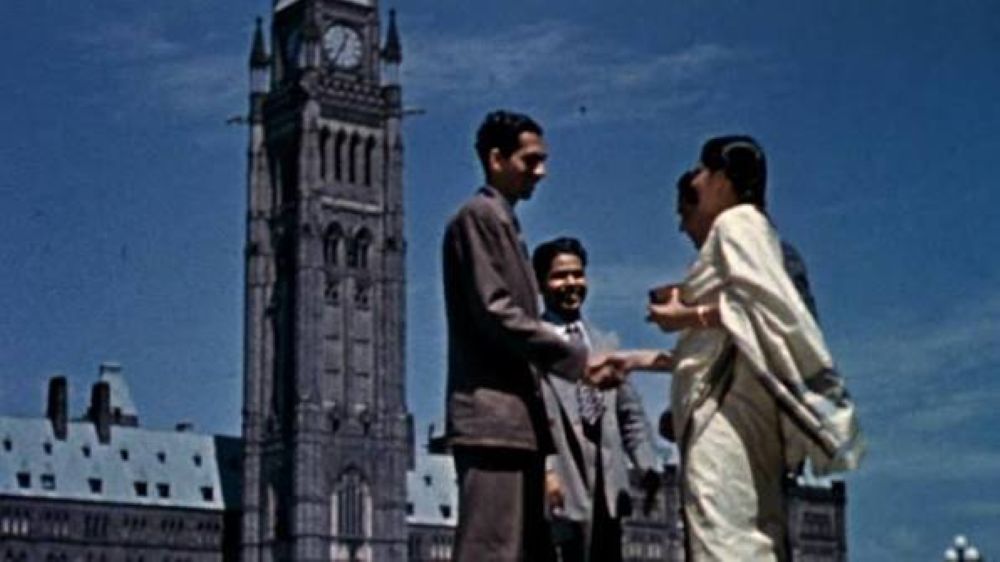
Cut to a re-enactment of a teenage Cucinelli (played by Francesco Ferroni) burying the verdant-coloured pants in the dirt. The fashion mogul loves his earth tones and appreciates fine tailoring, but even as a boy in a cash-strapped family, his taste had its limits. Tornatore doesn’t return to the mystery of the offending pants, but one can assume that Maria forgave her son for ditching the thoughtful gift. Green pants are the magic seed for Brunello’s beanstalk.
This anecdote illustrates how Cucinelli proves an amiable raconteur. The film’s generous pace allows his quotidian anecdotes to unfurl with the cadence of unfussy country life. The fashion mogul shares his life’s story in Brunello: The Gracious Visionary and the title for the documentary might be humbling if the film weren’t produced by the king of cashmere himself. This handsome bio has more softball pitches than a little league game.
The nature of celebrity biodocs made by subjects to promote their own stories inevitably invites suspicion. The project purportedly furthers Brunello’s view of “humanistic sustainability,” but essentially delivers self-serving PR. Tornatore, best known for his Oscar winning masterwork Cinema Paradiso, finds himself in an unenviable position. Cucinelli obviously has a vision in mind—a gracious one—but his story itself offers a flat humble-brag.
Tornatore directs the dramatic elements far more confidently than he does the conventional documentary scenes. The re-enactments have a great eye for detail and a wonderful sense of character. They genuinely build Cucinelli’s humble background within the film’s fabric. However, the director remains far too deferential and referential in the documentary side of the project. The interviews with names like Oprah Winfrey and Patrick Dempsey, as well as numerous family members, create an echo chamber of fawning platitudes. Even the beautifully shot location sequences have the air of a high-end fashion commercial as Cucinelli strolls around historic sites. The mogul even restored some of them…and he makes sure to tell the audience.
The nature of Cucinelli’s trade also leaves Tornatore limited when it comes to engaging with this métier cinematically. One can only do so much with cashmere and a story void of conflict or controversy. (Matters of Cucinelli’s Russian sales obviously happened far too late to be included.) That’s a shame since Tornatore previously worked wonders with an Italian icon’s artistry in the documentary Ennio, which explored the oeuvre of movie maestro Ennio Morricone in a similarly elevated manner and sense for patient storytelling.
Tornatore instead embeds within the film a motif that plays with Cucinelli’s hand at cards. In one of the star’s many long-winded digressions about youthful passions, he elaborates upon becoming a card shark at a young age. The Gracious Visionary intercuts the interviews and dramatic scenes with shots of Cucinelli flipping and dealing cards with gusto. He frequently uses the cards as a metaphor for his business sense, likening gambles in the garment trade to calculated risks at the table. But his stories also admit to being an adept card counter. There’s a sense that Cucinelli rigs the documentary’s deck to ensure a favourable outcome.
That said, the Italians undeniably have an eye for fashion. Cinematographer Fabio Zamarion lenses both the documentary and dramatic elements with striking golden hues. The Gracious Visionary looks as expensive as the highest-grade garment on Cucinelli’s fashion line. When the film actually gets to Cucinelli’s fashion work and his insights into the process of developing cashmere sweaters, it provides an intriguing window into the makings of a high-end pullover. The film’s attention to Cucinelli’s humble upbringing also illuminates his empathy for the workers. The fashion czar positions himself as something of a Robin Hood-style distributor as he spins his yarn about investing in the people who produce his high-end clothes.
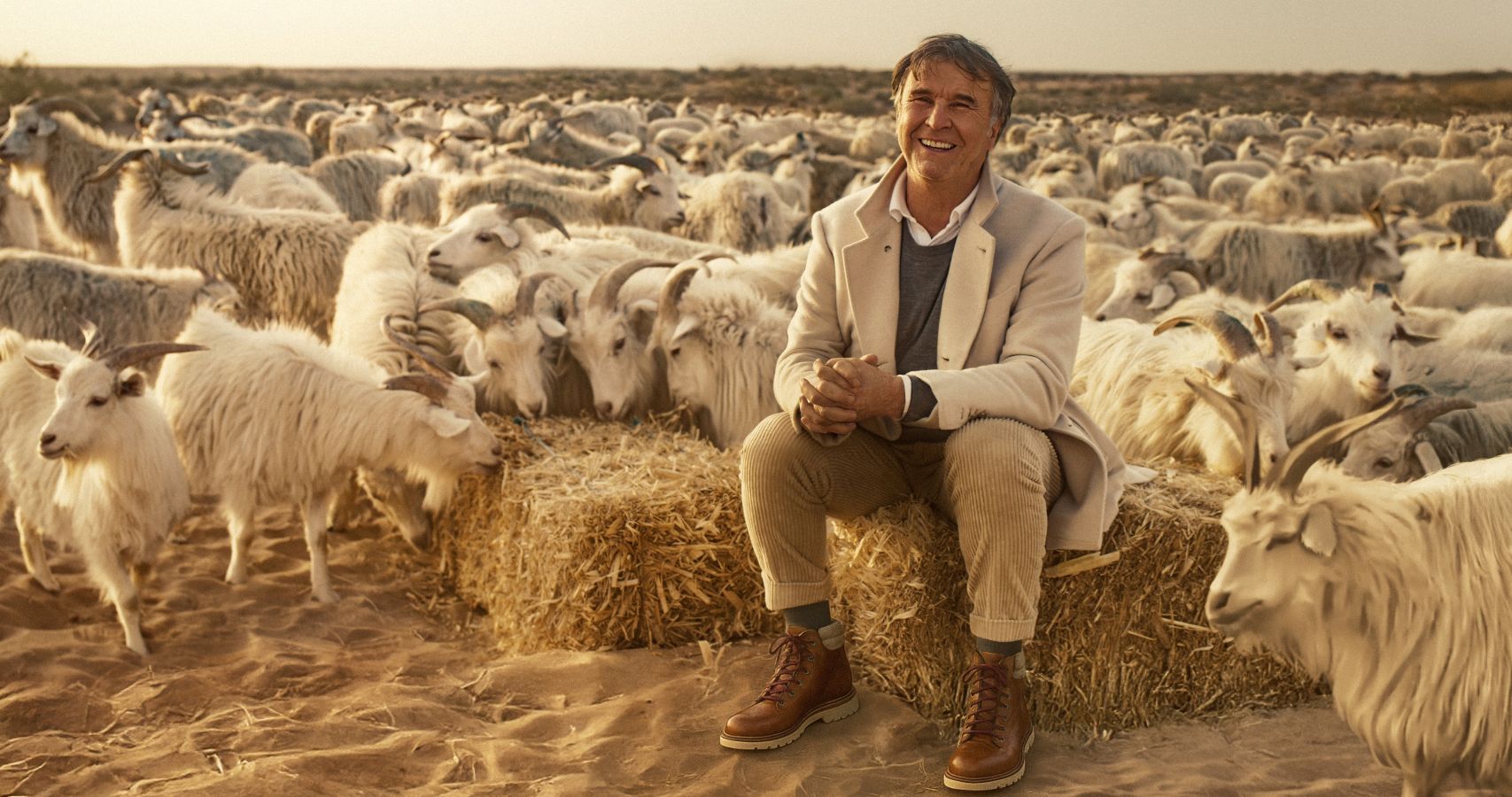
The latter point includes a segment about the impact of the COVID-19 pandemic and Cucinelli’s announcement to workers that he wouldn’t resort to layoffs or salary cuts for two years. The anecdote, however, feels somewhat incongruous to Cucinelli’s own reflection about his choice to invest in cashmere. He recalls following advice to invest in high-end products since developing countries would inevitably enter the market with cheaper markets. The film observes the flow of cashmere wool from Mongolia to Italy, and makes clear that Cucinelli takes care of his people, but his trade hinges upon wealth, class, and privilege.
To his credit, this fact sort of arises amid the self-congratulation. From the days as a young lad enjoying a “life of leisure” and letting his adult self spin his idle time as important work “enriching his soul” to addressing the G20 leaders and sharing his philosophy for human sustainability, the film can’t quite reconcile the star’s privileged perspective with his humble origins, best as it tries to wrestle this tension. Moreover, by the time the documentary actually arrives at this positive spin for people-forward capitalism, The Gracious Visionary hasn’t offered much beyond the origin story for a self-made man.
Cucinelli spends so much time detailing the minutiae of his youth that The Gracious Visionary feels more shoehorned than empowered by its star’s hand in the production. The film inadvertently calls to mind a barb with which fashion editor Miranda Priestly (Meryl Streep) zings her foe, Dior peddler Emily (Emily Blunt) in The Devil Wears Prada 2. “You’re a not a visionary; you’re a vendor,” Miranda charges. Cucinelli actually appears as one of the flyby cameos in Streep’s hit comedy—filmed in his signature colour palette, no less. He might have taken the line to heart while bringing his own story to the screen. Rosy portraits of nice billionaires may be an acquired taste. But for anyone who can afford a sweater that runs $1,500 on a sale day, feel free to buy what he’s selling.