




June 1972 was a momentous time in what was then the sleepy, provincial city of Toronto. First, that month marks the occasion of the birth of your humble writer. Even more salient to this discussion, the date marks the opening of a local production of Stephen Schwartz and John-Michael Tebelak’s sometimes gentle, but certainly gentile, rock operetta Godspell which, implausibly, changed the world of music and comedy for generations.
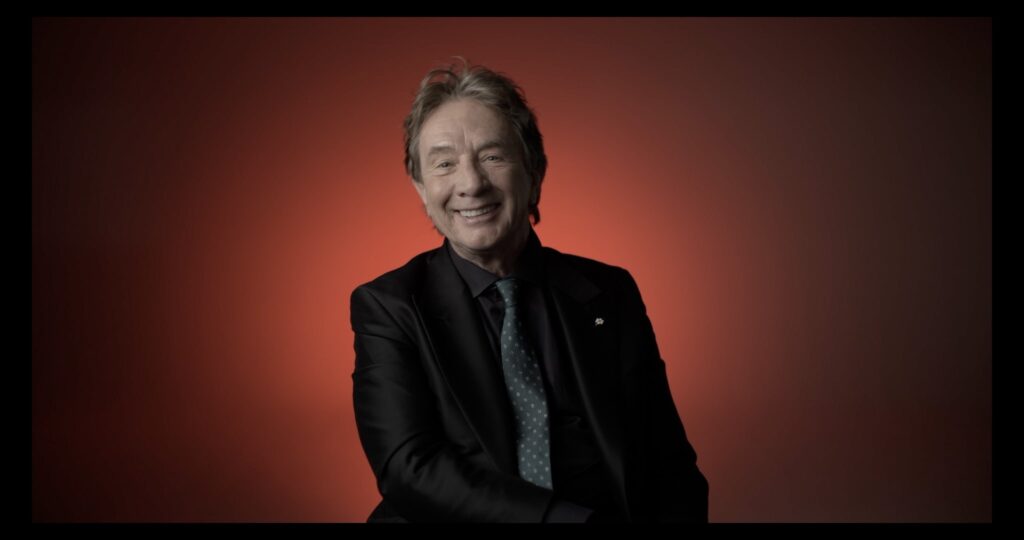
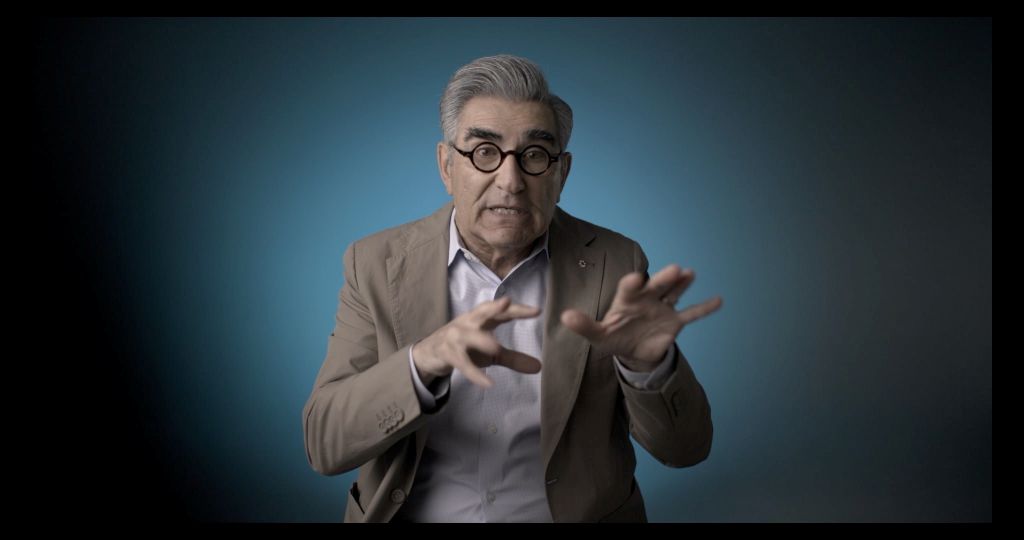
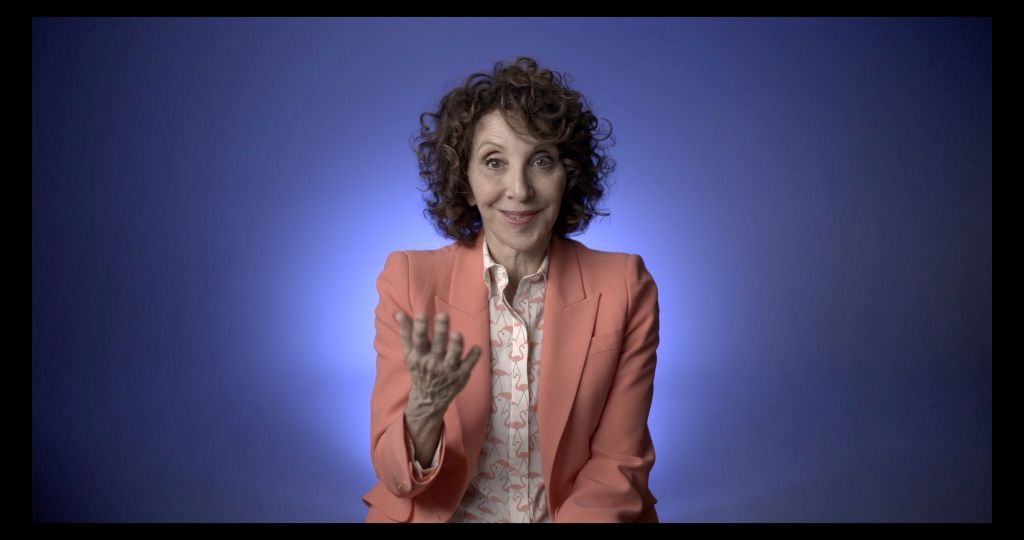
Filmmaker Nick Davis captures the spirit of the father, son, and holy zeitgeist that emerged from this production in his entertaining yet probing documentary You Had to Be There: How the Toronto Godspell Ignited the Comedy Revolution… The film does its best to belie its title, putting us virtually in the seats of the Royal Alex Theatre to witness the likes of Martin Short, Eugene Levy, Victor Garber, Gilda Radner, and Andrea Martin as their apostolic antics created a sensation at the time. Thanks to some intrepid (if illegal) bootlegging by the vertically challenged Mr. Short, we get to hear the original show, buttressed by welcome and sometimes unsettling reflections by players who went on to larger fame following the production, and those who left show business.
POV spoke with You Had to Be There director Davis ahead of the film’s world premiere at this year’s Toronto International Film Festival.
POV: Jason Gorber
ND: Nick Davis
The following has been edited for brevity and clarity.
POV: When did you first hear about the wild story of the Toronto Godspell cast?
ND: I don’t remember not knowing about this. I don’t want to date [myself], but I probably knew about it in the mid-’70s. When I did improv in New York in the late ’80s, I remember wondering if our group was soon to be thought of like the Toronto Godspell cast. [Laughs.] It didn’t happen for that particular group.
The idea for a film started to take shape in 2017. I was telling Jane Mendelsohn, my wife and partner in our production company, that I was reading Marty’s, uh, Martin Short’s memoir.
POV: We’re Canadian. We call him Marty.
ND: Ok, good. Well, he told me to call him Marty the first time we met, so I feel like I’m allowed to call him Marty. But I was reading his memoir and it talked about the ’72 Godspell. Neither of us knew that he and Gilda [Radner] had dated and had a relationship. I was thinking about this group of friends coming together and falling in love with each other— that really got us excited and we kicked it around for a number of years. I was doing other films, she was writing books and doing a musical and stuff, and then finally we said, after my last film came out, that this deserved a documentary, and someone’s got to make this. I can’t believe it hasn’t been made!
I wrote Marty, uh, Martin Short a letter, and got back a note a few weeks later from his agent saying they’re willing to meet with me, but I had to pick the restaurant.
POV: What did you pick?
ND: I knew where he was staying on the Upper East Side, so I picked a place near there that would be convenient for him, a nice restaurant, but not too nice.
POV: It basically sounds like Martin Short. He’s nice, but not too nice.
ND: Exactly. This is the root of Jiminy Glick. To make a long story short, I went and had lunch with him, and within the first five minutes, I was prepared to pitch why I think we should do this, and blah, blah, blah, and he was like, “No, I talked to everybody. We’re all excited for this. Let’s do it.”
POV: That’s the obvious follow-up: he’s the one who got the band together, basically?
ND: They’ve all stayed in touch very much. There’s an email chain.
POV: As a documentarian, you’re left to struggle with the fact that you wanted to tell the story, but as far as anyone knew, nobody ever recorded the show. What was the moment like when you discovered the cassette bootleg?
ND: It all was in that same lunch. I didn’t think anybody had ever recorded it, and there was no film that we had found, and Marty confirmed there was no footage. But he then said he did have a tape recording, and Paul (Shaffer) and he cleaned it up a few years ago. I left that lunch thinking, “I’ve got it. That’s the gold, that’s the film.”
The fact that it had never been filmed before was a gift. I really don’t know that this production would have attained the status it has attained had somebody actually filmed it. In our mind’s eye and our imagination, this show was thought of as the greatest thing of all time. Necessity is the mother of invention, so we had to figure out, well, what are we gonna do? And I knew instantly I wanted animation and we started meeting with animators and all of that. But it all came out of that one lunch.
POV: You finally heard the recording. What did you think?
ND: I thought this was great. It was amazing. I just drove around with it in my car. What I love most is the audience. You feel that energy, and that’s what’s incredible. If they’d gone to a studio and done an official Toronto production, it wouldn’t have that. We end the film as the credits roll and you’re just listening to the standing ovation and the audience filtering out. You feel it so thoroughly, and it’s exhilarating.
POV: Not to jump too far ahead, but whose magnificent apartment is that where Paul’s banging away on that glorious Steinway during the cast reunion the end of the film?
ND: That’s [composer/pianist] Adam Guettel’s apartment. The piano that Paul is banging on was originally Adam’s grandfather, Richard Rodgers’, own instrument. That’s the piano on which Rodgers composed the song that Marty auditioned for Godspell with. Rodgers composed “My Funny Valentine” on that bloody piano and there Marty is years later with them all singing the thing from which Marty’s audition led to it all. It’s a crazy thing!
POV: How challenging was it to get the members of the cast to open up to you? Not every story led to the success that others have had.
ND: Every showbiz story has its Pete Best, right? [Best, a drummer, is one of the people considered the “fifth Beatle.”] I was worried about the ones who we haven’t all heard of. But the experience was as meaningful to them as it was to the ones we’ve heard of. I don’t want to say it was easy. I mean, Avril Chown was interesting. She was very happy to talk, but it took her a while before she told us the darker story that none of us knew. Now that I think about it, I realize that the interview for her was a process of getting comfortable enough and realizing, “Oh, these guys are going to do the right thing. They’re telling the story in the right way, this is not exploitative or anything.” I asked her a question and she said, Oh, fuck it, I may as well tell you.” She was being a little bit cagey about what she was doing and then she just said, “Look, I lost my joy. Let me tell you what happened,” and it was unbelievable.

POV: Short himself opens up quite a bit, particularly about that feeling of being left behind and re-entering the fray to re-join his castmates.
ND: He has written about that in his memoir, that feeling that something’s wrong here. In my view, what was wrong was that he had forgotten what brought him to Godspell. Doing the stuff in that musical [is what we] all love Martin Short for. He was stretching, doing the prison drama thing, or Cole Porter, or whatever he mentions in the film, but he wasn’t allowed to be Martin Short. I knew that was coming and that wasn’t a surprise. It was more, “How is he going to tell it?” But he’s great about that.
POV: For me the legendary story is that of Paul Shaffer. If you’re there as a friend’s rehearsal pianist and you’re impressing Stephen Schwartz, that’s a pretty amazing thing.
ND: I’ve always thought that, oh, March 25, 1972, that’s where these comedy minds came together. But it’s also where Paul met John – it’s not John on the back of the truck at the St. John’s fête or whatever, in July of ’57. It’s Stephen Schwartz saying, “Wait, who is this guy who came in? He’s playing cold and is playing everything with such gusto, the way it should be played.”
POV: It’s Paul bringing the younger George onto the bus when they met John after they met at the fête if you really want to get all Beatles-y. It’s Paul saying, “I’ve got this young guy that’s at my school that won’t stop bugging me, but he actually knows a 9th chord and can play ‘Raunchy,’” and John finally realizing this is the missing piece.
ND: Exactly, that’s a better analogy. “Game recognizes game,” as Schwartz says. That’s this whole other thing that the film really doesn’t have time for. I’m not musical, and I don’t know how to talk about 9th chords and such. But we do say nobody plays the piano like Paul. As Marty says, maybe him and Elton John – by so forcefully attacking the instrument.
POV: How did you know it would be the scope of a feature-length film? How did you know there’s enough story here to actually recognize that this wasn’t just, “Hey, how cool is this? All of these guys got together and then went off and did SCTV and SNL.” There’s so much more.
ND: I think because it made no sense to me. Why did all of these brilliant comic minds come from what I thought was a sappy, hippy-dippy musical about the life of Jesus?
POV: Just to dig into that a little bit more, so the thing for you was a surprise that they were all in Godspell, or was the surprise for you that they were all in Toronto?
ND: No, it was a surprise that these comedians had come from a Godspell, and, by the way, in Toronto? Why Canada? There was this whole musical scene in Toronto that was happening there at that time, that was fighting the old, colonial thing that was, as Jayne Eastwood said, it was a “stuffy town.” So that was interesting and fun.
POV: The Jayne Eastwood stuff is really interesting for me as a kind of full circle moment. Goin’ Down the Road was always presented to us as this legendary work of Canadian realism, but the reason I know that film exists is because of Joe Flaherty and John Candy making fun of it on SCTV. I can’t imagine you’d ever heard of the film before you started making this.
ND: I’d certainly never heard of it, and no, and then I watched it, and it’s amazing. It’s a fascinating piece.
POV: There must have been moments, especially at the reunion, where it felt like you were intruding on a bunch of friends.
ND: The reunion was such a blast. It was just the most fun, and I knew going in, we just have to make sure the lens caps are off, and we can’t screw this up. I wasn’t worried. Jane and I were there with our iPhones and we’re circling them, and you do. Sometimes you have to remind yourself, “Oh, right, I’m not a part of this.” Because they’re so warm and loving and lovely that you do sort of feel like, “Hey, I’m part of the gang!” It’s a very special group of people.
POV: How much were you avoiding having a full crew with booms and stuff like that?
ND: A lot, we were trying not to. You’re just going to see cameramen, you just always are. We had other producers who were there with their iPhones and we were like, “We all gotta get back down the hall.” We were all so excited. The cast were so happy to see each other, it was so much fun for them that it just created a great aura that you want to be around.
POV: It’s almost biblical.
ND: It is!
POV: Let’s give some credit to the people who did the animation.
ND: I loved what they did! I met with a lot of animators, and Richard O’Connor at Ace and Son, a company here in New York. He got it instantly. The charge was “Scooby Doo, but with psychedelia.” We want Yellow Submarine in there too. He totally got it.
It was a ton of work for him, and we were behind the 8-ball the whole time. Everyone says don’t use animation, it takes forever, and I was like, how hard can it be? It took forever, we were living with black for long periods of time and you just thought, “This was never going to happen.” But I’m very happy with it and we worked really hard in the online also to age it up. And get the colours right. Jane in particular was a beast on the colours. We wanted to make sure it feels like you’re watching TV in 1972. I thought they did a great job.
POV: What does Godspell mean to you now?
ND: Well, I’ve completely changed my tune on Godspell. I still think it’s a tricky show to do, but I would love to see it done well, now. The music is great and if done right, with clowns who are exuding that kind of positive, joyful energy, and the message of love, there’s nothing better.
POV: And how did this film change the way that you see these types of long-term relationships?
ND: This does make you reflect on your own life. Do you have friends you’ve known this long and who are as meaningful to you? I’m not a huge fan of the word “nostalgia,” because it carries with it some kind of treacly taste. But bringing a moment of your own life back to life again? If that’s nostalgia, I’m all for it.
That was the goal of this movie. Let’s take this magical moment and blow it out and bring it back to life and show how it influenced so many things over the last 50 years. We looked at how it led to all of these tentacles, the impact it had on the culture and on this particular set of individuals, who are all really special, terrific people.
POV: I’m assuming that the reunion was shot after the interviews, and that was a purposefully choice.
ND: Part of the reason it was done that way is that I went into this thinking that one thing I was not going to do was bring them all together. That is just too easy and stupid and I hate things like that. And as we got into the interviews and I realized these people actually love each other. We’ve got to give it to them, it’s got to be so fun. So then we mapped it out and scheduled it for January, in the Pacific Palisades, at Marty’s house. And then the fires hit and you couldn’t do that. So then we had to find a location and I called a friend with a fantastic apartment and before I even told him why I was calling, he said we’ll do it here. You’ve got to do it here. So that’s how it happened.
POV: Have they seen it yet?
ND: Some of them have, and I think some of them are waiting for the premiere.