



Rescue
(Denmark/ItalyGermany/Sweden/Iceland, 90 min.)
Dir. Sine Plambech
Prod. Sofie Husum Johannesen, Andreas Dalsgaard, Tereza Simikova
Programme: TIFF Docs (World premiere)
One family’s torturous quest to be reunited serves as a microcosm of a global crisis in Rescue. This gripping migration saga from director Sine Plambech (Heartbound) begins in media res as a tense rescue mission unfolds amid choppy international waters of the Mediterranean Sea.
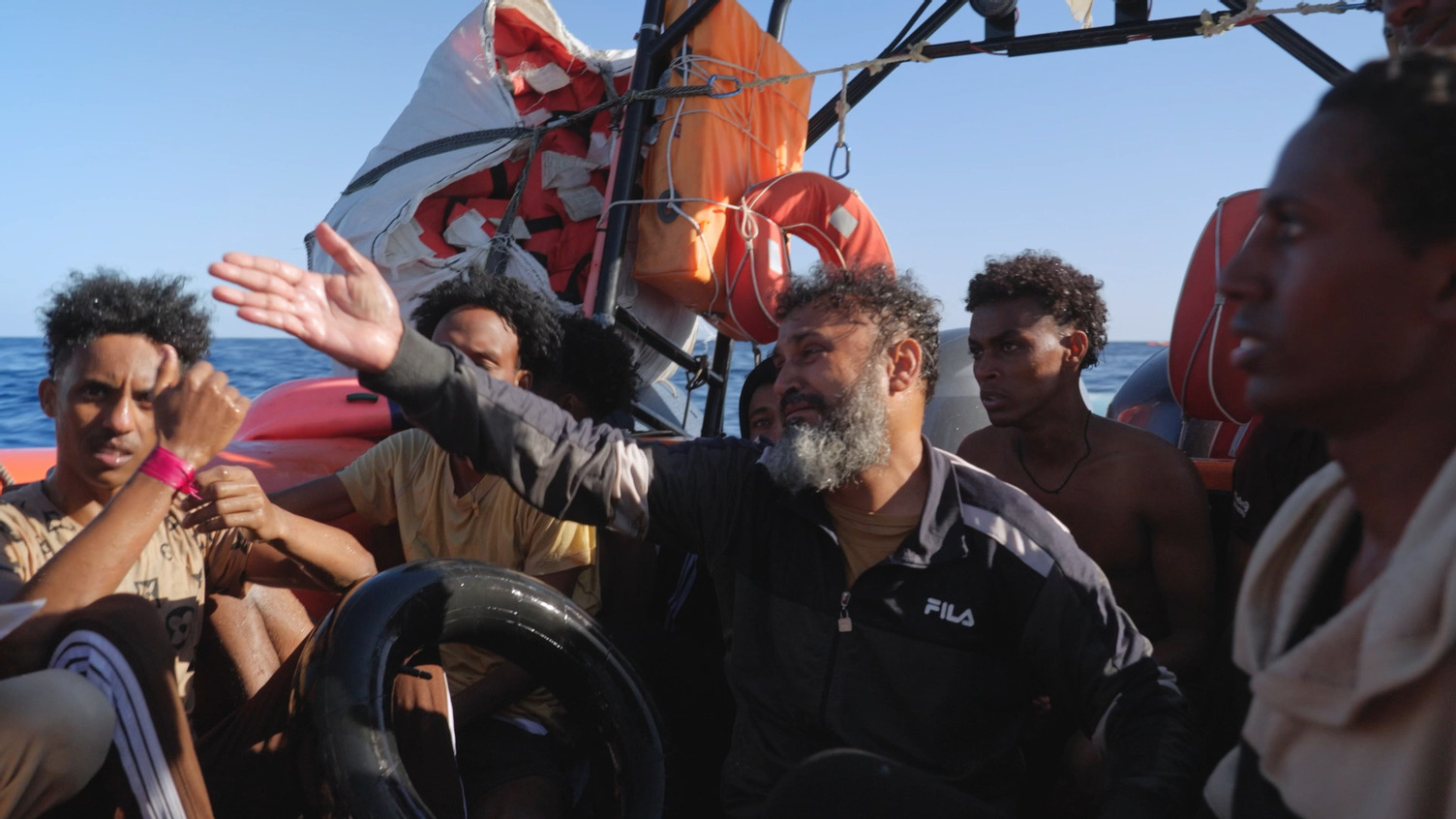
The camera huddleds safely out of sight as it accompanies humanitarian workers as they depart from the Geo Barents ship in an orange raft. Their target is a chaotic flotilla of three boats: one large vessel with armed men and two rickety dinghies, each full of migrants.
The tense standoff divides families as the smugglers separate men from women and children. They spare the men, and as relief workers from Doctors Without Borders pull the refugees from the sea, the survivors process a maelstrom of emotions. One man, Hani, becomes overwhelmed with survivor’s guilt: his wife, Roro, is on the other boat with their infant daughter and 11-year-old son. As distance grows between the boats and the Libyan coast guard swoops in like a pirate ship protecting its bounty, intimidating the Geo Barents to abort is mission, Rescue urgently observes the corrupt and inhumane system violently entrapping civilians in a game of containment and control.
Rescue compliments stories told in previous migration chronicles like this year’s equally harrowing The Sandbox. While that film considers a wide web of lives caught by the infiltration of technology in the migration “economy,” Rescue zeroes in on the personal costs that families face when the European Union invests its resources in the entities from which people like Hani and Roro flee. Moreover, when Hani lands in Lampedusa, Italy, his efforts to connect Roro go unanswered. She could be heading back to Libya or, like too many migrants, have been claimed by the sea. Rescue shows how both routes are dire.
The film goes alongside Hani as he and his eldest son make the make the inevitable Sophie’s choice and continue to Germany where the family planned to relocate. Impeccable access and sensitive observational skills allow the family to process their grief from a respectful distance, both conveying the intimacy of their despair and their necessary hope without exploiting their vulnerability.
Self-shot videos from Hani and Roro’s phones add their perspectives to the mix. Roro eventually makes contact and shares a distressing update: the smugglers have brought her to a prison in Sudan and request a ransom. She and the two children spend horrible months in a small space. Roro endures brutal physical, sexual, and emotional violence at the hands of her captures, all the while she puts on a brave face for Hani and the kids to reassure them, and herself, that all will be well.
Rescue weaves this human interest story within a wider network of systemic failures, but also the heroism of individuals and NGOs working on behalf of people like Hani and Roro who simply want a better life for the children. It’s a bravura fusion of cinematic enagement and sociological inquiry that uses an emotional hook to implore audiences to consider the bigger picture. Weaving the efforts of the crew on the Geo Barents, the humanitarians on the ground, and the lawyers pursuing justice, the doc situates one story within countless others to stress a global crisis. Every frame resonates with palpable urgency.