




For decades, Min Sook Lee has been on a quest to uncover truth through her art. Her award-winning films including Hogtown: The Politics of Policing (2005), Tiger Spirit (2008) and Migrant Dreams (2016) focus on justice, drawing on her passionate political and activist work. After taking a different tack in her career and entering academia, first in 2011 as an instructor at TMU (then Ryerson University) and then, in 2015, as associate professor at OCAD U, Lee’s film work began to change. The COVID lockdown forced Lee to confront her own family’s story, looking inward to a tragedy that is both deeply personal and universal in its impact.
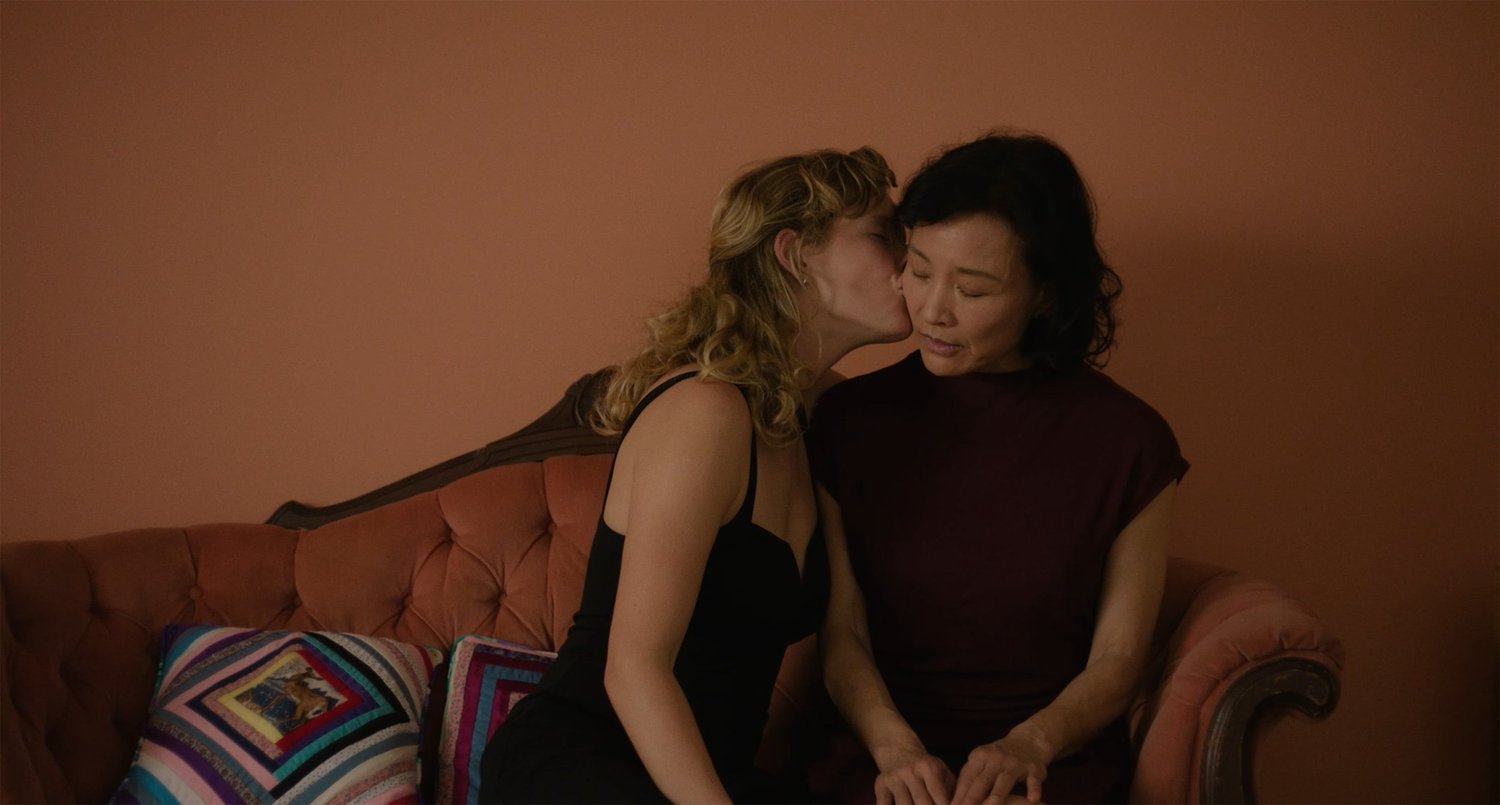
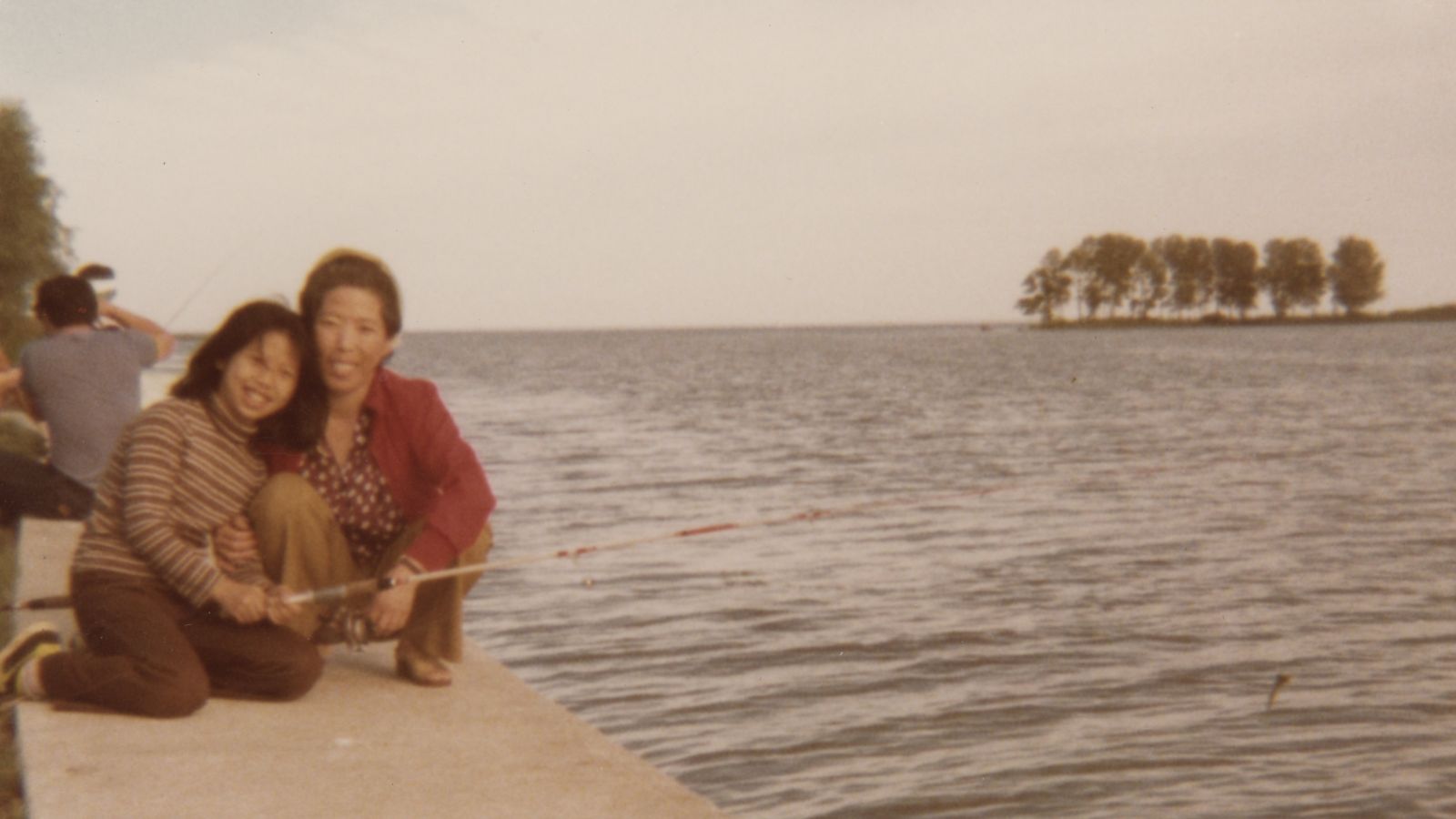
Her new work, There Are No Words, is a challenging film that follows a daughter’s quest to get answers from one parent about another who died by suicide. The doc traces the filmmaker’s complex relationship with an ailing father while diving deeply into her mother’s experiences as a shopkeeper in Toronto and her life back in Korea. This multi-country, multi-generational, multi-cultural journey plays out in surprising ways, driven by the epistemological tenacity of a filmmaker intent on confronting the hidden truths of her own upbringing, bringing the tools of her craft to bear on a highly personal narrative.
POV spoke to Min Sook Lee prior to the film’s premiere at this year’s Toronto International Film Festival.

POV: Jason Gorber
MSL: Min Sook Lee
The following has been edited for brevity and clarity.
POV: You’ve included yourself in other films before, but by focusing on your family, this makes it even more of a personal story. How challenging did you find the process of looking inward to be?
MSL: I wanted to tell this story for a very long time, but I just wasn’t ready. Frankly, I didn’t know how I would do it. It took time to build a space where people felt comfortable talking about difficult parts of their lives. I respect the immense trust that’s essential in the filmmaker/participant relationship. At a certain point I stopped to think about the ethics, the accountability and the challenges of documentary filmmaking. I pulled away from filmmaking and pivoted into teaching.
POV: So how did you break through? What was the hook that allowed you to see how you could navigate it?
MSL: When COVID hit, it threw a wrench into everything and made me realize the scarcity of time I had to access the key storyteller in my life, my father, if I wanted to understand my mother’s story. But he’s never been the most straightforward storyteller. There is always a plurality of truths coming from my father.
POV: There’s something remarkable in being a documentarian whose father was an intelligence officer. How do you navigate somebody whose job it was to lie and get them to actually tell some truths?
MSL: It’s a slippery task. It was about trying to find stable ground in terms of the story of this film. I had to accept that there are certain truths that will never fully be understood or known. I know that I can’t trust what he says. And, yet, I have the compulsion to be able to say that something really did happen.
POV: The daughter of a fabulist growing up to become a documentarian is a fascinating narrative in and of itself.
MSL: One of the draws for me about documentary is that even though oppressors and abusers and perpetrators will deny that certain things happened, I can provide proof. I’m not paranoid, but there is a certain deep skepticism I have when I hear someone’s explanations or stories. I have my own need to know, to find secondary sources to verify statements. Part of this comes from knowing that my mother never got to tell her story. There are so many people like my mother whose stories have been erased or re-narrated. As much as I recognize that the truth is complicated and there’s no real truth with a capital T, there are truths. There are things that did happen, and it matters that there are people who know that. I’m the most satisfied when countering so many of the fictive qualities that my father exhibited throughout my life and the damage that brought.
POV: How do you make sure that you craft this film with nuance when you are so close to the story?
MSL: I guess because I’ve made mistakes in earlier films. You ask yourself what you would have done differently. It’s never just a creative process for me, it’s also political. I’m interested in the social impact of the work that I make, and in the relationship between the filmmaker and the participants.When I was making the film, I thought a lot about what my mother’s choices were. Why would she be drawn to this guy? I would never want to imagine her heart being broken, her being betrayed. I would always prefer the idea that maybe she was playing him somehow.
POV: She did convince your father to leave where he had political standing and economic pull, to go to run a convenience store in Toronto and one day have a daughter that would tell her story.
MSL: There’s a sense of control, but of her own loss.
POV: You are tackling the tough subject of suicide, which is handled very differently in the Japanese and Korean cultures that shaped your mother.
MSL: Koreans have the highest suicide rate in the world. I was 12 when my mother died. I’m 55 now. I’ve gone through many different takes. At first I did simply see her as a victim. I’m at this point now where I understand there was a choice that was made. My mother’s act was a refusal, and it was her choice. But then there are many people who are devastated by suicide, who recognize it as a mental health disorder. I know many women who were my mother’s age who were abused throughout their marriage. Now the men are old and feeble, and the women take care of them.
POV: Not dissimilar, it must be said, to you caring for your father.
MSL: Yeah. But I do it in an emotionally detached way. I don’t have to be obedient or have to be the dutiful daughter. But he is a human being, and I cannot just abandon him like a dog on the road.
POV: How do you anticipate feeling as audiences take on your family history and make their own judgments about your story?
MSL: It’s very anxiety-provoking. I feel deeply exposed, and in some ways, I feel a little bit ashamed. I wish I had a happy family story to tell. I’ve constantly asked myself, “Why did I make this film?” I wanted to make sure that my mother’s story was told that she wasn’t erased from history. I wanted other people who had experienced similar things to feel seen. This is a familiar story not only for many diasporic Koreans, but also to many intergenerational traumatized people whose parents were in militarist societies. Militarism creates deep violence in the most intimate spaces of our lives. Whatever side of the conflict that you are locating yourself in, the families of people who engage in militarism are deeply traumatized and that violence does not end when the person comes back through the front door. In fact, in some ways the most terrifying moments occur in the kitchen or in the bedroom of people’s homes. I know this isn’t something that’s singular to me.