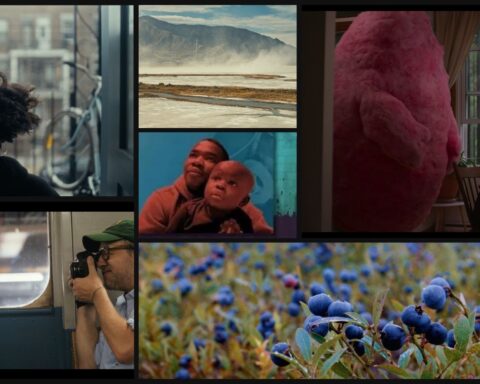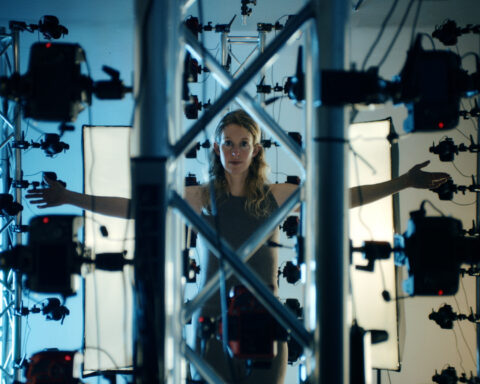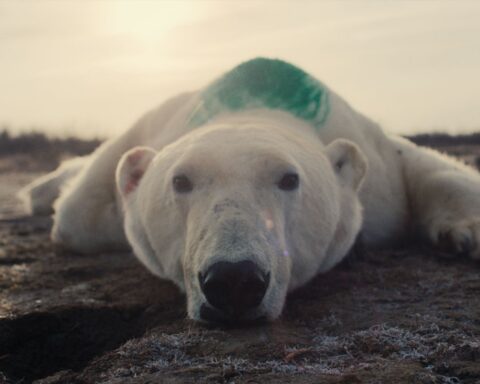




“People are interested in the process of discovery, and they want to know what science is bringing to the world and how discoveries will change our world,” says Hunt for the Oldest DNA writer/director Niobe Thompson, speaking with POV from Vancouver. The film, which won an Emmy for Best Science and Technology Documentary this summer and premieres November 4 on Knowledge Network, embeds audiences in the thrill of discovery while chronicling the breakthrough research of Danish biologist Eske Willerslev. The scientist shares the ups and downs of his research over decades as he pursues the highly competitive quest to discover ancient DNA by digging up dirt, fossils, and old poop with hopes of recovering genes dating back millions of years.
The quest at the heart of Hunt for the Oldest DNA may at first resemble the documentary kin of Jurassic Park, but the scientists in the film make clear that the Hollywood blockbuster is pure fiction. Research shows that DNA is too fragile to resurrect species as long dead as the dinosaurs. (Especially if using frogs as the contemporary living tie-in when evolution tells scientists to look to birds.)
“One of the lines in the film that I love is, ‘Is there a time machine? Yes, it’s DNA. It’s ancient DNA,” says Thompson. “Ancient DNA is an incredibly powerful time machine now, but we don’t really understand how it works. Most people are still stuck in the Jurassic Park era. We took that as a starting point: Let’s go back to the beginning and talk about how that was actually never the case. The whole ancient DNA field blew up because it turns out we couldn’t recover dinosaur DNA. But in the wreckage of that disastrous failure, incredible things started to happen. We were able to get pretty much all of the architects of the ancient DNA revolution on screen.”
Hunt for the Oldest DNA chronicles Willerslev’s research into the possibilities of environmental DNA, mainly by exploring samples preserved in frozen dirt. The doc follows the biologist to Greenland and all the way to his 2022 publication in Nature about unearthing DNA that’s possibly 2 million years old.
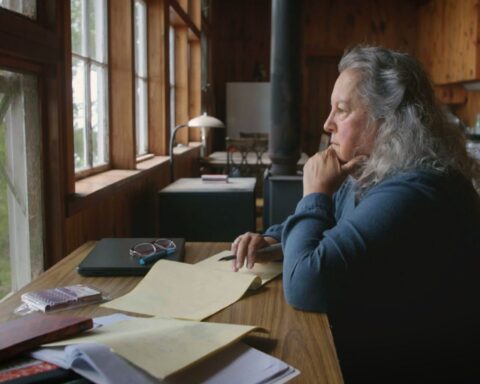
The film finds considerable drama in Willerslev’s hard-fought journey to that landmark discovery. Thompson says that knowing Willerslev throughout the years helped shape the personal quest narrative that develops alongside the biologist’s odyssey of trial and error. “I actually met him when I was doing my anthropological field work in Siberia. I was there for two years living in a northern region,” says Thompson. “I was travelling up a very remote river, and I met him covered in mud. He was drilling the riverbank, which was actually exposed permafrost, looking for dirt and DNA from the Ice Age.” The filmmaker’s relationship with Willerslev goes back to the days when they were both doctoral students, and the biologist previously worked with Thompson on other documentaries, but Hunt for the Oldest DNA marks the first time he’s been the star.
Willerslev shares in the film how his earliest teachers joked that he wouldn’t amount to anything. In one interview, he tells Thompson how a schoolteacher told the class that they knew Eske hadn’t taken his turn at the blackboard because there weren’t any mistakes on it. The biologist shares how such seemingly small remarks shape a person’s sense of self-worth. His story is one of overcoming both personal and professional obstacles while pursuing his passion.

“I think the reason people really resonate with this film is because it’s this intimate portrait of a tortured scientist who’s incredibly ambitious,” says Thompson, “He, in his own words, is always trying to stay a step ahead of his demons. I thought to bring an unvarnished portrait of a scientist working at the most elite level would be new.”
Willerslev gets candid about his mental health struggles, which culminated in suicidal ideation. Those challenges bring a turning point, though, as Willerslev recalls a moment in which he held a hunting rifle with plans to turn it on himself, but took pause while observing a tree through the window. He evokes a moment of clarity marvelling at nature’s wonder and the interconnectedness of life on Earth. Eske credits that dark moment for inspiring a renaissance to pursue science with newfound energy. He later finds another breakthrough while looking out a window: by seeing a dog poop in the rain. The image inspires him to explore the potential of bacteria—and the DNA it holds—that washes into the earth and could endure for years in regions with permafrost to preserve it.
“It’s not something you see when you see scientists in films,” adds Thompson. “They typically have a real facade. They present to the public and they’re very controlled about the image they give you. In this case, Eske was willing to really say it how it was, and I took that invitation and pushed it as far as we could.”

Willerslev’s contemporaries share perspectives on the discipline entailed in sourcing and sequencing genetic material from another era. These participants include Beth Shapiro, Professor of Evolutionary Biology, who provide insights about the effects of contamination on DNA. Meanwhile, paleobiologist Natalia Rybczynski, one member of the team whose discovery of 23-million year old remains of a rhinoceros in Nunavut recently made headlines of their own, talks about preservation and archiving at the Museum of Nature in Ottawa. These stories, like Willerslev’s insights, take audiences into the scientific process with a healthy mix of nerdy excitement and lucid education as the researchers detail the complexity of studying DNA.
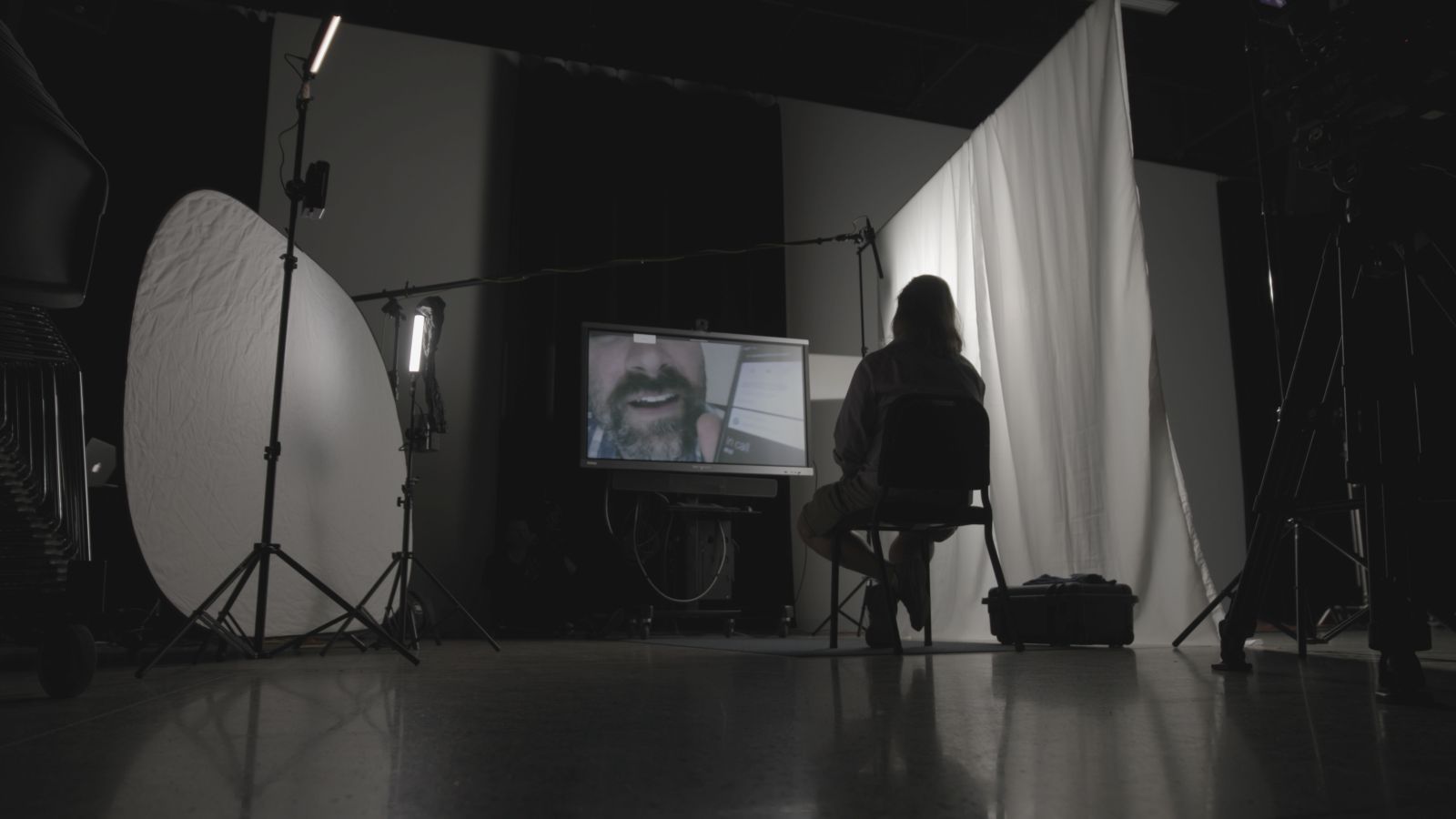
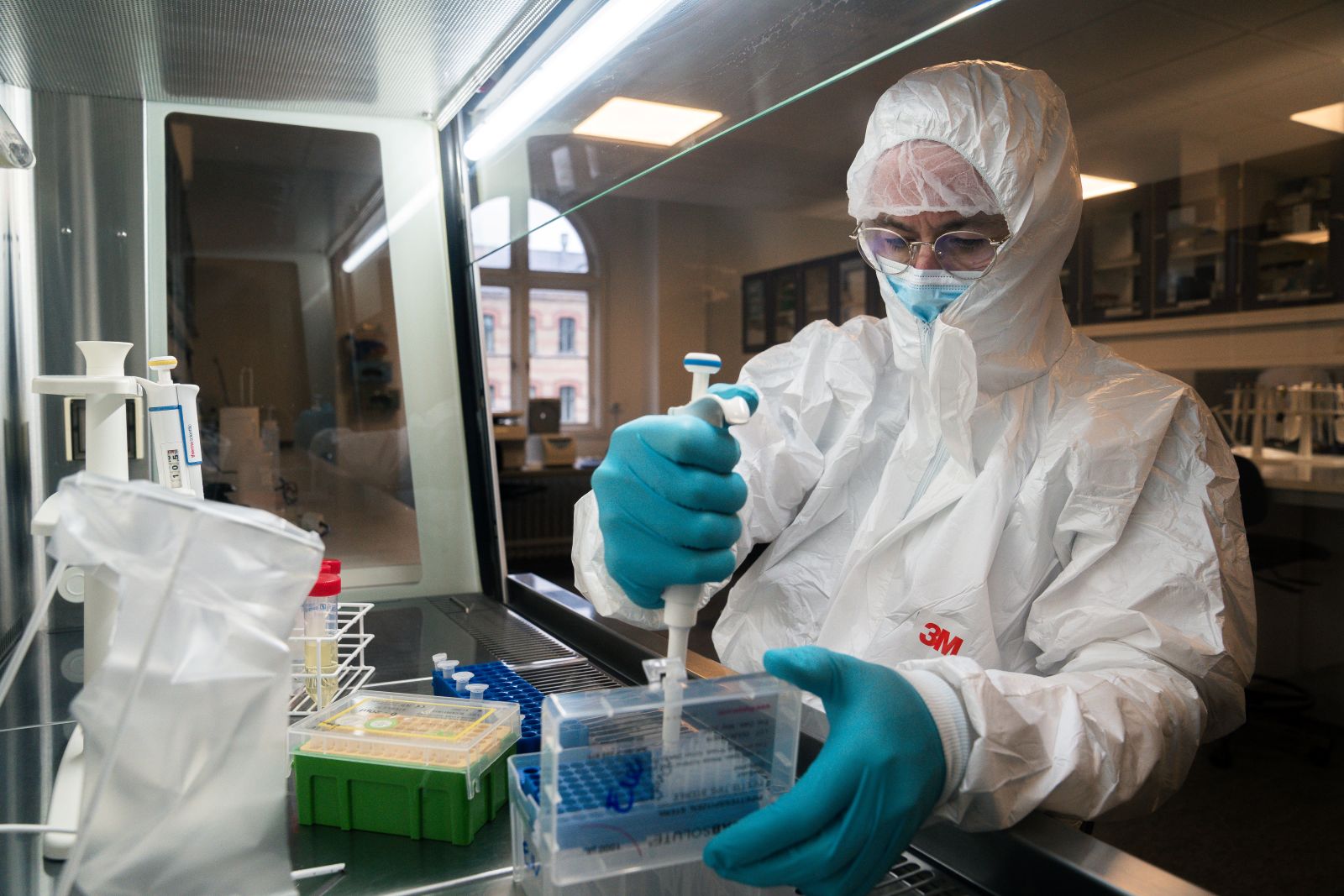
Thompson says that making science and nature docs over years has taught him how to navigate the delicacy of the lab space, but that the production observes careful protocols to avoid contamination. The cameras get an insider’s view of the laboratory as technicians and machines process samples, but filmmakers can’t be in a “clean lab” as the scientists don protective suits to extract dirt from frozen samples. With frozen samples in the field, the risk of contamination is smaller, as Eske’s research shows why that’s the best condition to preserve DNA. However, once they enter the lab space, everyone needs to be especially careful.

“There has to be a two day separation between when you’re in the normal wet labs and the clean lab,” explains Thompson. The director notes that filmmakers can’t go from one lab to another on successive days to avoid contamination, so the production follows a relatively complex process.
“Most science documentaries tell a story about something that has been discovered, and they backfill the process. They explain the discovery. But what you don’t see is how the sausage got made—it’s full of setbacks and breakthroughs and emotion,” says Thompson, who notes that an effort was made to embed human stories into the doc’s DNA. “Science is done by real human beings. It’s intensely competitive, so it’s a place that you find some really sparkling personalities. Scientists are driven, ambitious people with all the same faults that you find in the general population. Making science relatable is about showing that science is done by people like you and me.”
That process includes scientists like biologist Astrid Schmidt, who details the arduous work as part of Willerslev’s team with the earlier environmental DNA from the Greenland samples. She admits to walking away from the field and pursuing teaching instead when numerous failed attempts suggested this wasn’t the career path for her. (Title cards in the end credits, however, note a second wind.)
“It’s really hard to convince scientists to share a piece of themselves, but we’ve always asked for that,” says Thompson. Hunt for the Oldest DNA explores how scientists can overcome setbacks as technology evolves to complement ideas ahead of their time or to take tried and tested practices to new heights. This includes learning more about DNA through smaller samples, as deterioration over time simply means that researchers have less genetic material to work with for older samples.

Thompson says that innovations in technology have shaped his own approach to documentary, just as breakthroughs in the tools at Eske’s disposal add to his arsenal. “One of the big shifts that we’ve experienced with science filmmaking is embracing animation,” observes Thompson. Hunt for the Oldest DNA features approximately 45 minutes of animated material—roughly half of the film—with a mix of formats by award-winning animator Bruce Alcock to visualise the processes and breakthroughs of Willerslev’s research. The animation brings to life the species and environments whose genetic materials survives in the samples that Willerslev finds. The research affords new discoveries of animal migration patterns, like evidence that camels lived in northern environments where their hooves trudged through snow and their humps kept them warm before they made their way to the desert.
“We had a scientific advisory panel made of specialists from different areas—ancient DNA, botany and zoology, paleontology, geology—and then with Bruce, we set out to stay true to what, for example, every plant species would have been in ancient Greenland when we did reconstructions of pre-Ice Age scenes,” explains Thompson. “With the reconstructions of this lost world, with mammoths and reindeer and geese and all of these plant species, we were compositing actual photographs of species that still exist today and hand-drawn imagery.” Thompson adds that he and Alcock strove for unique visualizations, as opposed to 3D images that might bring Hunt for the Oldest DNA into Jurassic Park territory.
Meanwhile, Alcock’s signature 2D hand drawn animation conjures the strands of DNA to synthesize and visualise the relatively complex material that Willerslev and company explain. The animation also fuels the human element of Willerslev’s story, as rotoscope animation recreates scenes from his trapping days in Siberia.

For all the technological innovation, though, Thompson says that relationships with participants like Eske remain the core of the process. “What never changes is access. This is something that will remain at the core of documentary filmmaking in general,” he says. “We talk about how AI is going to take our jobs and change everything, but AI can’t give you access to great stories and characters. That continues to be a real focus for me: building relationships, building that trust, convincing people to let our cameras inside a confidential process or inside their private lives. That’s the piece that never changes.”
Having that relationship also provides an incredible window into the years-long research, as Thompson says he and Willerslev didn’t quite know where the science would go when they started the story. “There was promise, and Eske was telling me that it looked like they were going to be able to finally, after 16 years, recover and sequence DNA from the samples, but we didn’t know whether it would actually work,” says Thompson.
Moreover, Thompson notes that Canadian funders weren’t willing to embrace that level of uncertainty. The film in some ways mirrors the Eske’s own gambles, having been made without a Canadian broadcast license. (Knowledge came aboard later as an acquisition.)

“We had to go to partners who were willing to take a financial risk on a science documentary with no known ending, and really no guarantee that the science at the core of the project would turn out,” adds Thompson. “We could not find those partners in Canada.”
Instead, Thompson says he and his team found partners in PBS Nova and Tangled Back Studios, of the Howard Hughes Medical Institute, where there was more openness to taking a risk on the potential for a high-impact science project. “So we had to get everything right scientifically, and it was obsessive,” says Thompson.
But when everyone learned about that Eske was landing the cover of Nature with his 2022 publication, the risks paid off. “If you’re not really nervous about the whole thing blowing up in the process of making the film, you probably don’t have that interesting a film in your hands, anyway,” admits Thompson.
“What Esca has done, recovering detailed genetic information that is thousands of years old, is going to be transformational,” adds Thompson. “Now that you can go back in time and recover ancient genomes, you can recover genetic code from plants and animals that lived in different climate regimes, including hotter worlds. This discovery gives us a very detailed picture of a world that existed millions of years ago, which is also about to happen again in terms of the climate.”