



Everest Dark
(Canada, 90 min.)
Dir. Jereme Watt
Prod. Merit Jensen Carr, Jereme Watt, and Michael Bodnarchuk
Do mountains express emotions? That question lingers around Everest Dark just as the clouds and billowing snow envelop the titular mountain. Years of expeditions and tragedies make Everest both a graveyard and a garbage dump, but it’s supposed to be a sacred place. These competing realities, along with the Eastern perspective about the mountain’s presence as a living, powerful being collide with Western notions of conquering every inch of the Earth.
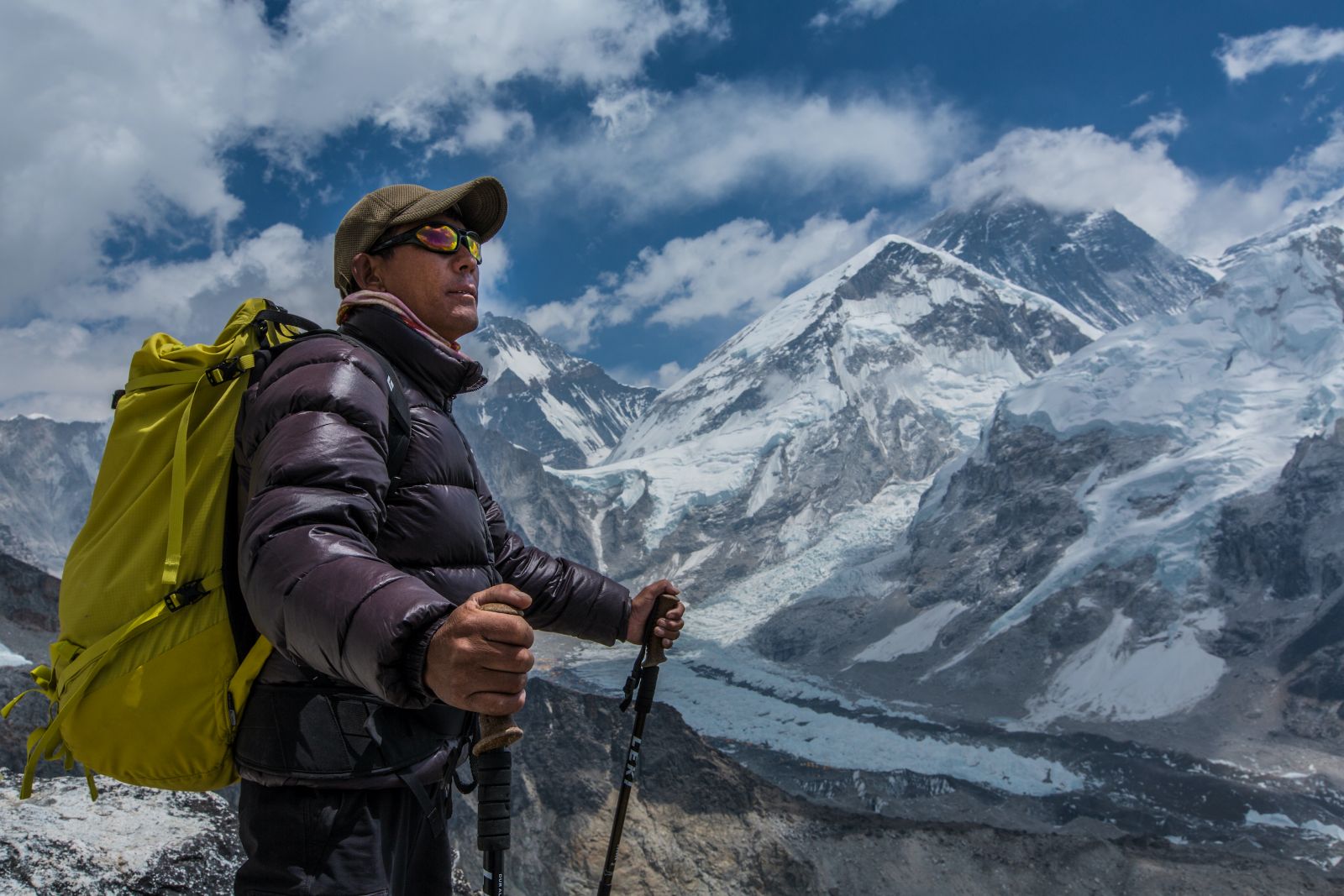
Veteran climber Mingma Tsiri Sherpa confronts his relationship with Everest as his beloved place becomes a deadly tourist trap. He serves as the guide in Everest Dark as an experienced climber, who has summited Everest 19 times and holds a world record holder for ascending all 14 “eight thousanders” on the first attempt. He knows that climbing the highest peak in the world is neither amateur sport nor recreational play. But the human flow on Everest leaves tragic evidence that many adventurers with money to burn don’t agree.
Mingma shares how Everest spoke to him in a dream. He recalls Everest’s rumbling anger, which he credits as a product of all the bodies left on the mountain. Without giving ill-fated climbers their proper funeral rites, Mingma explains, their souls don’t rest. Everest therefore absorbs this unrest. An unruly mountain means disaster for the climbers who wish to make an ascent. It also spells trouble for the Sherpas who rely upon expeditions to make a living, but account for many fatalities on the mountain.
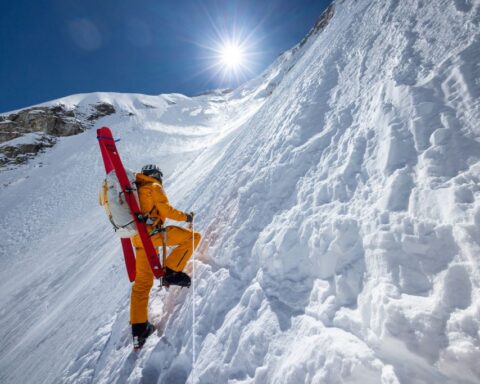
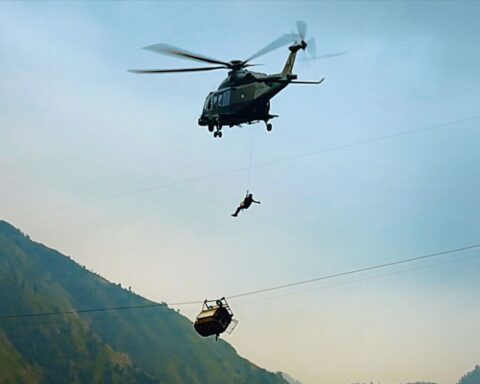
Everest Dark follows Mingma back up the mountain as he breaks his promise to never climb it again. However, he does so with an eye to putting souls to rest. He aims to recover some bodies and send them to their respective homes. A team joins him and summits from camp to camp. It’s a tricky mission, as they must traverse hot spots in the “death zone” and perilous terrain that claimed the lives of others, although their experience gives them advantages—but all the extra equipment required to retrieve and transport bodies adds a cumbersome strike against them.
Mingma explains how the flood of consumer tourism makes Everest especially dangerous in recent years. He cites a 2014 avalanche on Everest that killed 16 Sherpas, whose bodies are lost amid the snow and rubble. That event, chronicled in Jennifer Peedom’s 2015 epic Sherpa, lets Everest Dark serve as a companion of sorts to the seemingly endless field of mountain movies. New technologies allow filmmakers to capture images from peaks unlike ever before, but the stories themselves aren’t really changing.
There is, admittedly, a sense of déjà vu. Key footage from the 2014 avalanche appears in other films, notably Sherpa, while Everest Dark has the unenviable challenge of following Lucy Walker’s recent triumph Mountain Queen: The Summits of Lhakpa Sherpa, which is quite possibly the best mountain movie ever made. The stories obviously differ, but few films find the extraordinary screen presence of a character like Lhakpa. Her ability to tell a story proves as thrilling as her skills on the mountain. Mingma, by contrast, humbly shares his perspectives in modest and deferential accounts. He’s a man of few words. He just wants to get the job done and restore the balance. It’s a noble quest, but not the most dramatically exciting or emotionally satisfying one. It plays like a rescue film without life-or-death stakes.
Meanwhile, a voice of god narrator describes Mingma’s work and presents himself as an elder, but it’s actually actor Jaswant Dev Shrestha commenting upon the action and the mountain’s mood. While Mingma may not be the most exciting voice, more of his views within the commentary might help the film balance the East/West perspectives it nimbly straddles—although Mingma’s mission inherently speaks to Western audiences who may see Everest as a lark and not fully understand the disrespect entailed in treating the mountain as both a playground and a landfill.
Everest Dark nevertheless serves a cautionary tale about the perils of the mountain and the consequences of commercializing a sacred place. The film provides some truly awesome shots of Everest thanks to high altitude cinematography that captures every inch of the expedition. This doc’s no easy feat.
As Mingma and his fellow Sherpas make a secure path up Everest, the cameras explore every deadly crevasse and each field of ice and snow that shifts unpredictably. Climate change also influences their work, as windows change as ice melts more quickly with passing days.
What’s most striking, however, is the sheer volume of climbers in the background. Nighttime shots prove especially illuminating as climbers’ lanterns create an incandescent snake that makes its way up the mountain. Near the summit, there’s a traffic jam with over 100 climbers ascending and descending as Mingma and his crew try to safely retrieve one of the fallen, whose body remains frozen as people pass him by. There are enough sights here to get a sense of the thrills and perils on the mountain. And if Mingma hopes to reduce the traffic, he probably succeeds through the film. It affords a sense of Everest’s grandeur, but seems unlikely to inspire folks to book a trip.