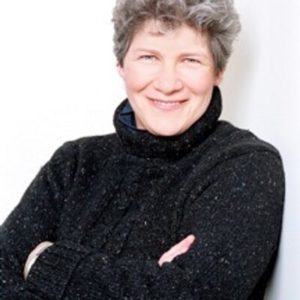




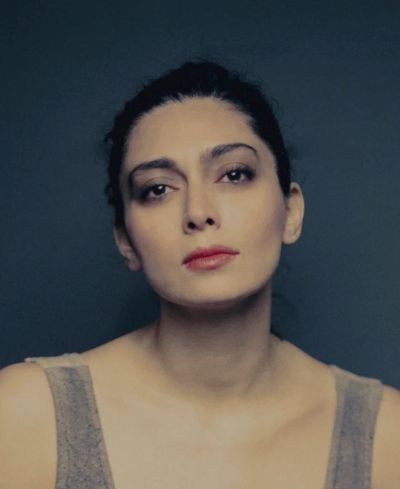
Encounter Pegah Ahangarani, the soft-spoken director of Rehearsals for a Revolution, and you sense a deep sadness, not just for her personal losses over time but for the current conditions in her home country Iran, which has been riven by violent conflict for almost five decades. That sadness plays out in her first feature, which took the 2026 L’Œil d’Or (Golden Eye) prize at Cannes. It beautifully blends details of her private life with political outrage, while at the same time documenting 40 years of resistance,
A famous actor who appeared in 40 Iranian films, Ahangarani herself was arrested twice for participating in anti-government protests and then left Iran to live in the UK in exile. It was there that she committed to documentary filmmaking.
It wasn’t that difficult to make the transition from actor to director.
“I started acting when I was a child. And I had my first serious role when I was 15,” she explains. “But I aways hated being an actress. I didn’t want to be in front of the camera, I didn’t like all the things around it, acting, being famous. When I moved to London, I decided to be just a documentary filmmaker because in Iran, I got lot of [offers] for acting and some of them were very tempting, but then I thought, ‘This is a new situation. It’s a new life and I want to do the things that I want to do.’”
Although her father Jamshid was a revolutionary filmmaker who was shooting everything all the time, and her mother, Manijeh Hekmat, was also an accomplished filmmaker, they weren’t the inspiration for her decision to make movies.
“Actually I grew up in that environment but they made fiction films and I didn’t like their [style of] films,” she admits. “But I learned a lot from them. From my mother, I learned that I should be persistent, and from my father, that I should document everything.”
Once away from Iran, she started her journey as a visual artist.
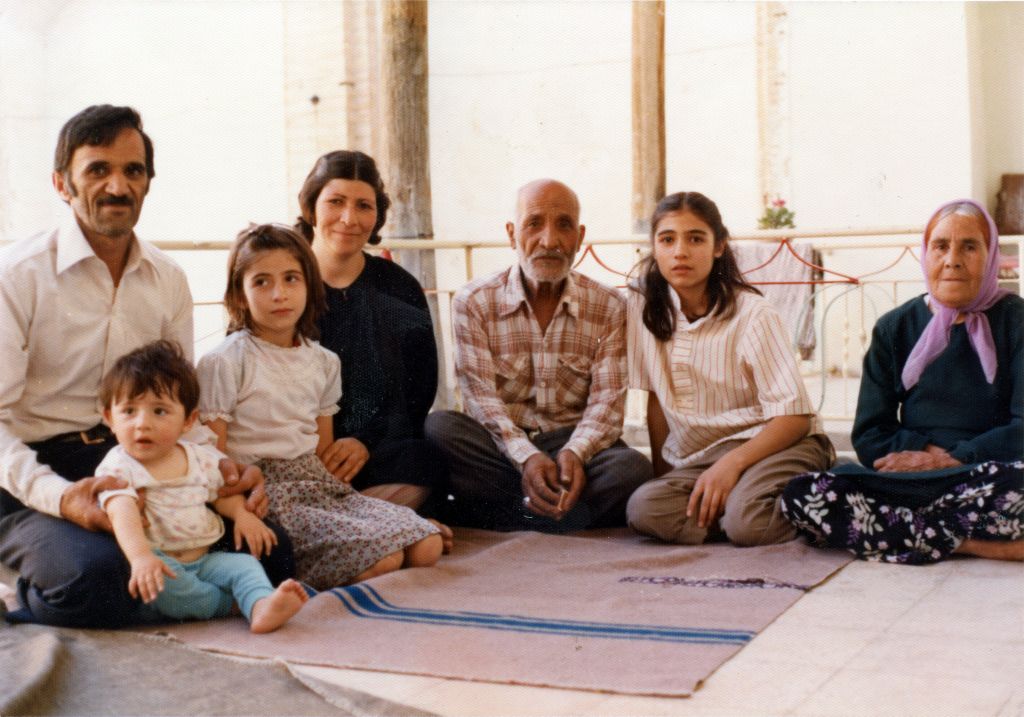
“Everything I did started with my short film called I Am Trying to Remember (2021). It was about my father’s best friend who was executed after the (1977 Islamic) revolution. I saw one photo in my family album and his face had been scratched out. And I didn’t know why. I learned it was because we were afraid and we didn’t want to leave any trace of him,” says Ahangarani.
“I realized that this was my responsibility: to bring people back to life and into the frame and to bring them back into our collective memory. The Iranian dictator wants us to forget our past and forget our victims, and so my responsibility is to remember them.”
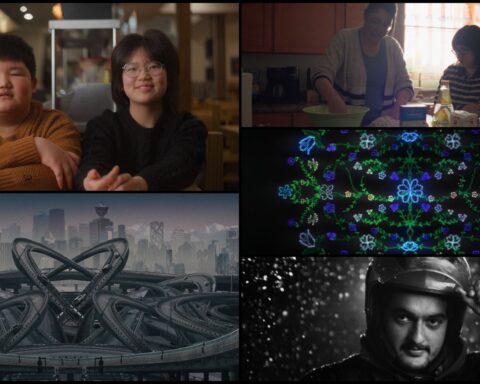
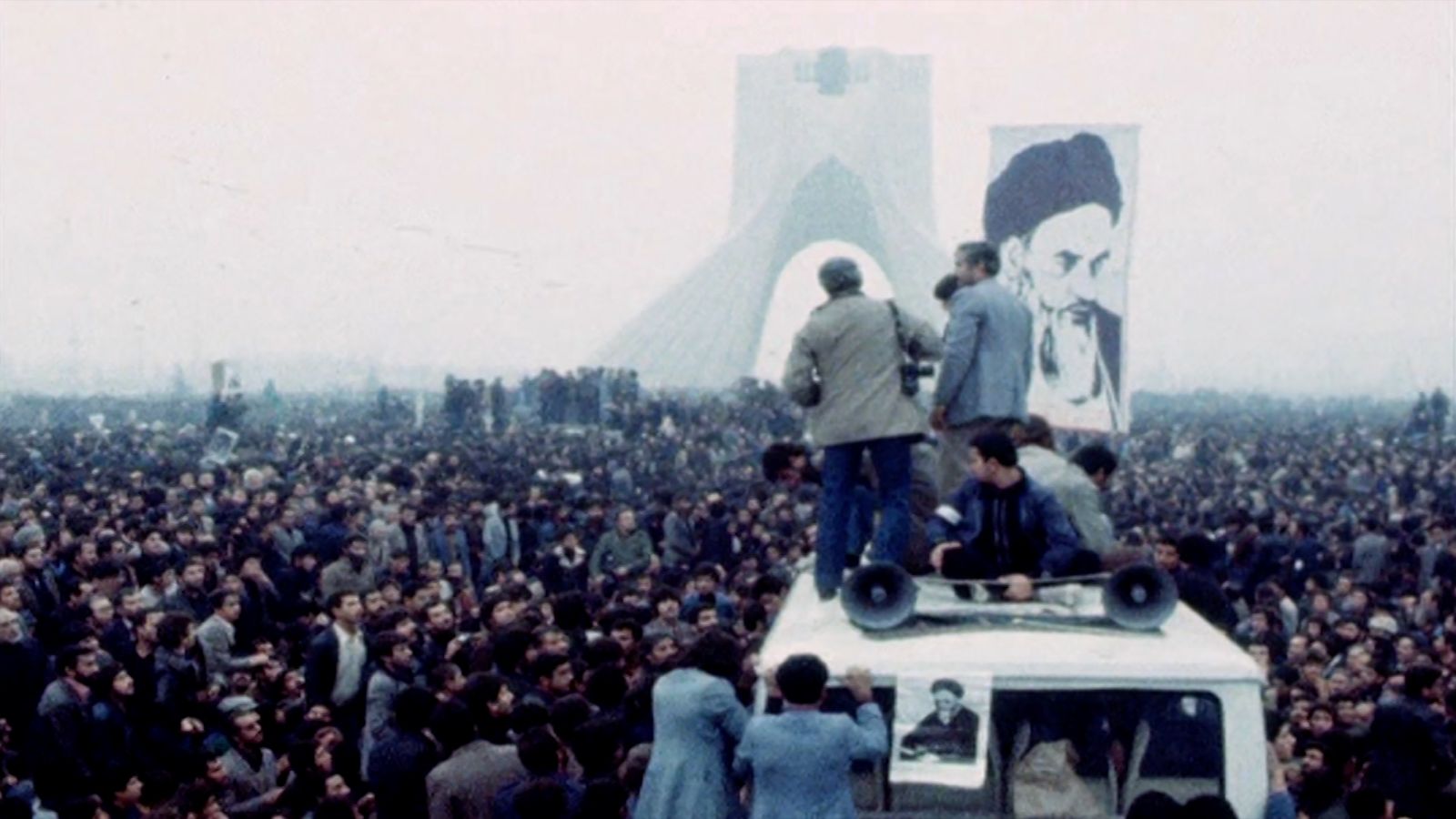
Rehearsals for a Revolution unfolds in five chapters, all with voiceover from Ahangarani, and each devoted to a character with a deep personal connection to her. The first honours her father, a supporter of the Islamic Revolution against the vicious tyrannical Shah Mohammed Reza Pahlavi. Jamshid became a fierce opponent when his best friend was executed by the Ayatollah. He realized that one form of repression had been replaced by another. He was also obsessed with documenting everything around him, through photos and Super 8 film.
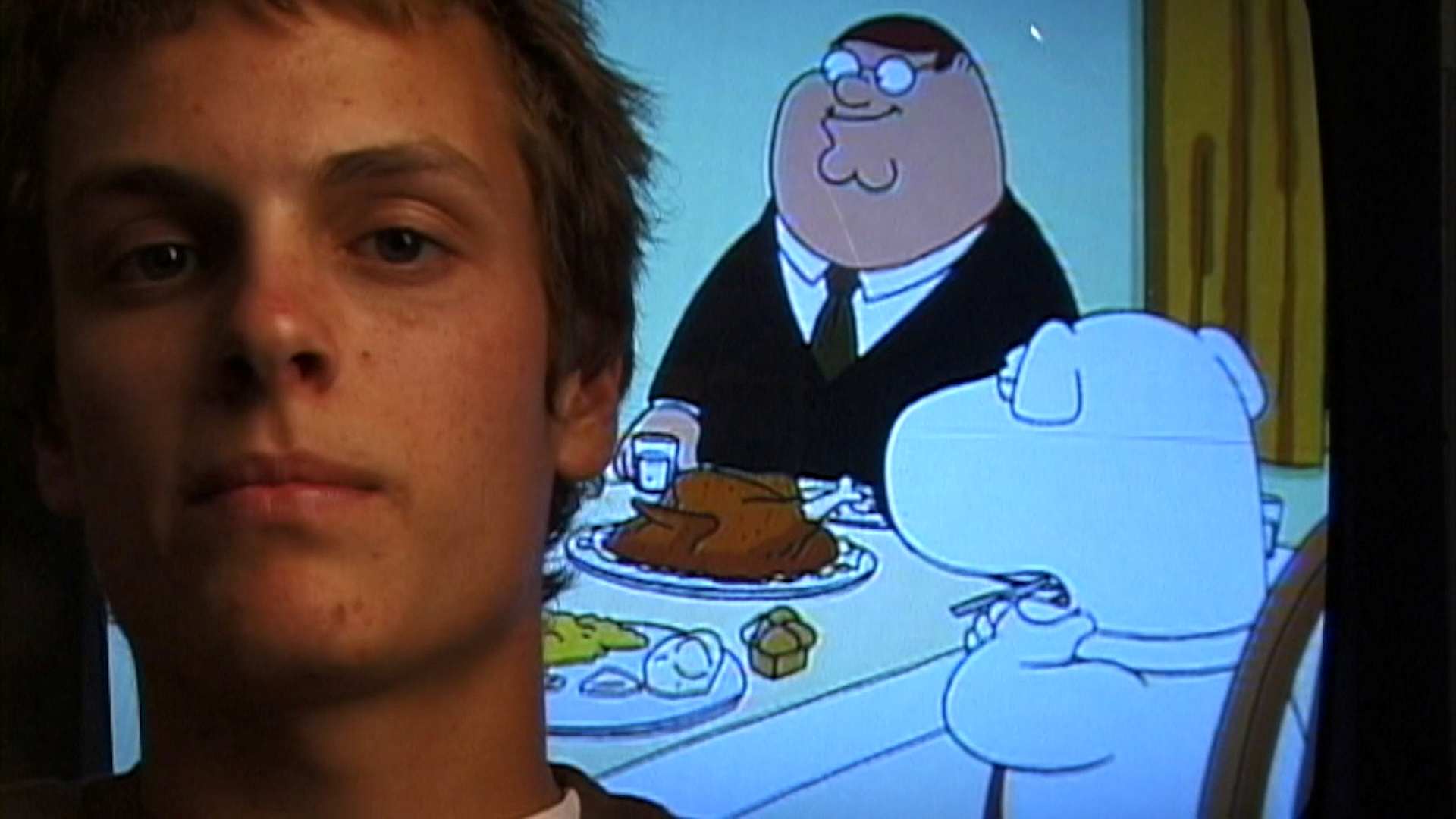
The second recalls her beloved teacher Sherrin Serraf whose dismissal from the school was triggered by Ahangarani. Not fathoming the repercussions, she distributed photos of Serraf not wearing a hijab. This section probes the issue of complicity, not only hers, but also her teachers, represented by grotesque animated caricatures, who wouldn’t let even a small infraction like this one go unpunished.
The third features Ahangarani’s uncle Rashid, who took to the streets in 1999 against President Mohammed Khatami’s regime, which had promised reform but instead crushed resistance, especially via a raid on the University of Tehran. Rashid later died tragically.
Unlike Khatami, President Ahmanadijad, elected in 2005, showed his true colours when he kissed the Ayatollah’s hand during his authorization ceremony. He crushed the 2009 Iranian Green Revolution featured in the film’s fourth segment, which sees Ahangarani augmented in archival footage and private documents. It pays homage to the director’s close friend, Amir, seen in one gorgeous sequence in silhouette, revving up the crowd.
The fifth chapter brings us to the current conditions of state repression and war with Iran and Israel. The film shows Ahangarani sorting through her images but also includes new information on the vicious attacks on protesters during the January street demonstrations. This section is titled ‘Lily,” after Ahangarani’s newborn daughter.
As each chapter unfolds, it reveal the ways technologies have changed over the past 50 years. In episode one, Ahangarani used Super 8 material and the home videos her father shot. Episode two, about her teacher, features newspapers, which she sees as a symbol of her era. She remembers the lineups forming when people couldn’t wait to see the headlines, For the section about her uncle she mined recordings Rashid made of his own voice. And in episode four, some of the material she shot herself and other sources came from social media.
Taken together, they make a powerful impression, proving that film can give information and inspire viewers politically while delivering an emotional punch.
“Cinema can play such an important role,” she declares. “This is very powerful. After they left Iran, filmmakers got to make make films without any censorship and the theme of some of these movies is about memory as a form of resistance. In Iran, we have an underground cinema where the directors make their movies without permission, without boundaries. They make their movies and send them to other countries and it’s a very strong wave. I can’t imagine how they can make these movies with all this oppression. But the government cannot control them. It’s incredible.”
But she’s despairing about the conflict between the U.S. and Iran, mocking President’s Trump’s claims that he could save Iran and bring the people freedom via a regime change.
“I remember that night I saw that on television and I told myself, ‘Bullshit,’” she says in a low voice that belies her anger. “They don’t to bring us freedom. This is crazy. It’s not true. This is not true. Nothing has changed and the Islamic regime is stronger. Every day they’re executing people.”
When it comes to Ali Reza Pahlavi, she says, the son of the former Shah and the man Trump touts as a good choice to be leader after the Americans unseat the Ayatollah, she says the Shah’s family history is being whitewashed and that the current Pahlavi is bent on destroying the real resistance. She says all of his consultants attack the true opposition in Iran, which is now in prison. They have media, they have money and they have Israel’s support. And unlike Nelson Mandela in South Africa or the Palestinian dissident Marwan Barghouti, for example, supporters of jailed Iranian dissidents have no safe way to keep the focus on potential leaders in prison.
It’s hard, she says, to stay hopeful. Every new promise for freedom is dashed by new regimes that promise reform but only reinforce oppression. But then she references the title of her movie, Rehearsals for a Revolution.
“They’re always trapped between hope and despair. But people do believe in the process. They believe in rehearsing, that you can fail and then and you can fail and then succeed again. In this process, then people keep going. There is hope and they stand up again.” Then she dejectedly adds, “But I don’t know how they find this hope.”
That said, she does end her documentary with footage of her newborn, a suggestion that can see some light in the future.