


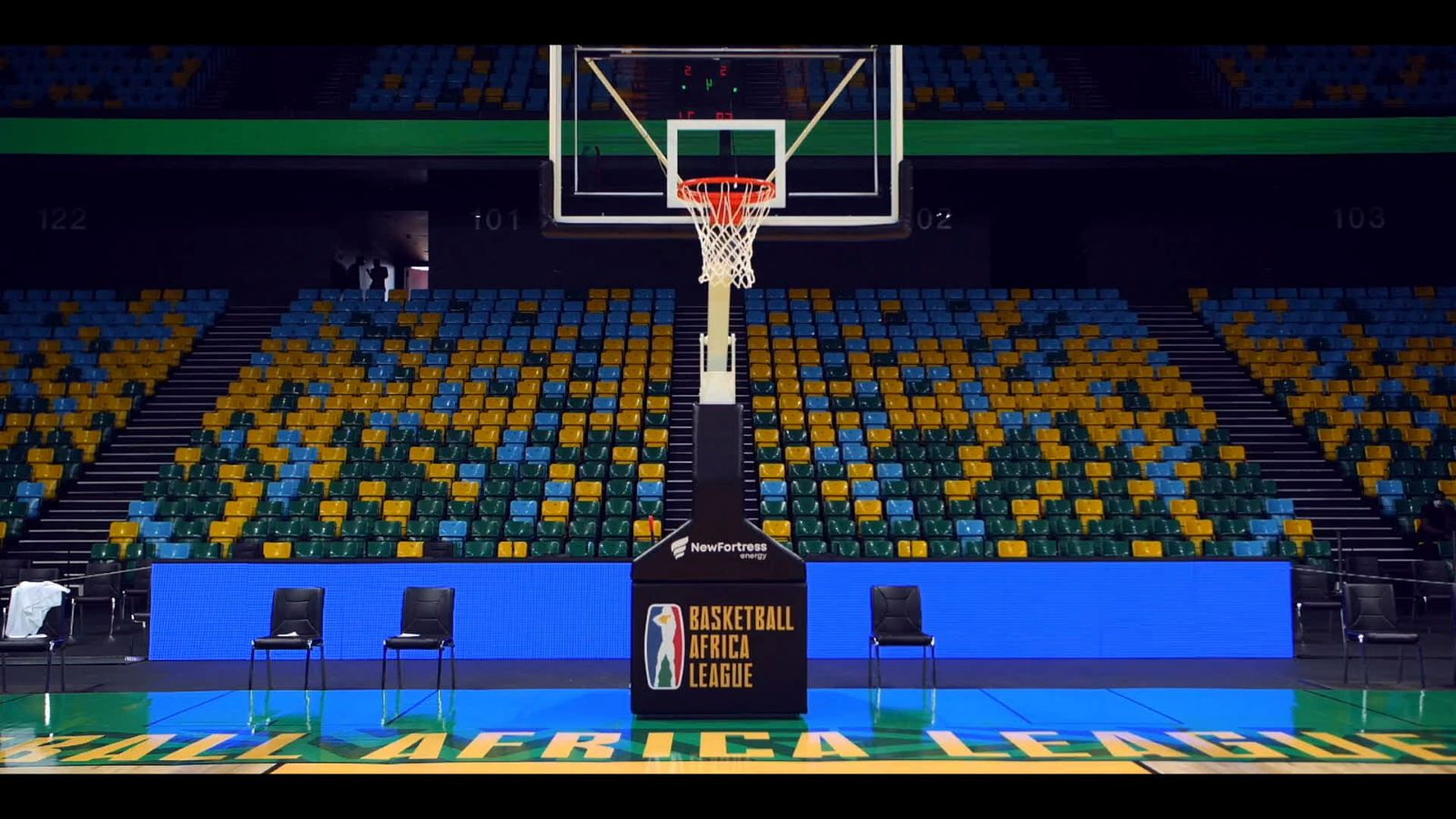


Origin: The Story of the Basketball Africa League
(Rwanda/UK/USA, 113 min.)
Dir. Richard Brown, Tebogo Malope
Programme: Primetime (World premiere)
For much of the modern era, sports have been geographically dependent, with perhaps football/soccer being a notable exception. While sports like cricket and rugby moved across the commonwealth, North America long stood as the odd one out, developing professional leagues that existed primarily in the US, with Canada receiving a team or two (except for ice hockey, obviously).
Today, no sport is happy to exist only within the confines of a particular area of the world. Both Canada and the US have become more active in cricket and rugby, while Major League Baseball, the National Football League, National Hockey League, and National Basketball Association (NBA) have all hosted games or series played outside of the two countries with increasing regularity. Add to that, the four core professional leagues have been scouting for talent from around the world, demonstrating an increased international interest in baseball, American football, hockey, and basketball.
In 2019, the NBA took international expansion a step further and established the Basketball Africa League (BAL) in partnership with the International Basketball Federation. Twelve teams across Africa play between March and June, competing for the championship trophy modelled after the baobab tree native to the continent.
In the docuseries Origin: The Story of the Basketball Africa League, directors Richard Brown and Tebogo Malope consider the BAL on levels both macro and micro. Using the inaugural season as the overarching connecting thread, the series turns its focus towards all twelve clubs and their respective host countries, introducing star players and their backgrounds growing up in their respective nation.
Origin seeks to share a larger story, though, about the broader benefit the BAL will have on the continent and its reputation overseas. Ugandan sports journalist Usher Komugisha offers the series its most eloquent voice, intelligently speaking to the history of each country, their cultures, and the homegrown star athletes who have made a name in the sport. In discussing the wider effects of the BAL, Brown and Malope heavily lean on the narrative that the league aims to keep African talent on the continent. The film argues that “success” should not be defined by making it in America and the NBA — success can also be found at home.
It’s an admirable mission and in general, the BAL does offer a high degree of economic and societal benefit to Africa that should be widely commended, and undeniably the inception of the league demands to be told. However, as BAL Strategic Partner Barack Obama points out in the series’ first episod, sports are “big business,” and as the episodes wear on, it becomes obvious that the sole purpose of Origin is to drive that business further into the black.
While some talking heads in the series, namely current BAL president Amadou Gallo Fall, offer heartfelt commentary about what the league’s existence means, many of the participants speak as if rattling off semi-scripted plaudits and clichés similar to a post-game interview. Even President Obama at times feels like he’s taking part in an infomercial, like when discussing his first and only meeting with his father, feigning a sudden recollection that “he did give me a basketball.”
Perhaps it’s fitting, though, as Origin seems to ultimately be a four hour commercial for the BAL — a commercial aimed at future and fans, certainly; but more so, a sales pitch for potential investors. All of the league’s promise is distilled into a few sound bites repeated in slightly different ways by the league’s players and those associated with the NBA, whether current and former players (some of whom are also investors in the BAL), or executives such as Commissioner Adam Silver and Deputy Commissioner Mark Tatum.
Compounding the blatant commercial veneer of the series, Origin exhibits an aggressive political bias that’s difficult to ignore. Episode Three, entitled “More Than a Game” emphasizes the off-court benefits advantages the BAL can offer, including a spotlight on Aristide Mugabe, a now-retired player regarded as one of the best Rwandan ballers.
When he was six years old, Mugabe’s father and brothers were killed in the Rwandan genocide. The episode underscores the remarkable nature of his journey from a young child facing down one of the worst atrocities in contemporary history to a man who defied those early beginnings and became one of the country’s most celebrated athletes. Mugabe’s story could have been the only focus of the episode and the Origin’s goal of showing the difference sports, and therefore the BAL, can make would have been resoundingly met. But Brown and Malope go a different way.
The genocide makes up a large part of the episode, discussing specifically France’s involvement and their complicity in the hundreds of thousands lives lost. Notably, Paul Kagame, current President of Rwanda and commander of the Rwandan Patriotic Front during the genocide, features heavily in this portion of the series, even engaging in a sit-down conversation with Masai Ujiri, former vice president and general manager of the Toronto Raptors and an executive producer of the docuseries.
Although emerging from the genocide and civil war as a hero, Kagame’s present-day legacy prevails as divisive. In 2021, the Human Rights Foundation sent a letter to Adam Silver expressing their concern over Kagame’s involvement in the BAL, describing the Rwandan head of state as a dictator and a former warlord, specifically pointing to his involvement in the humanitarian crisis in the Democratic Republic of Congo between 1993 and 2003. The nonpartisan not-for-profit concludes their letter by claiming Kagame’s association with the league as simply a distraction and an attempt at whitewashing his image.
While the series brushes over the political histories of each country participating in the BAL, Rwanda’s history and the improvements made under Kagame’s reign are given a more in-depth treatment. Origin shows French president Emmanuel Macron’s visit to Rwanda in 2021 where he gave a speech admitting France’s wrongdoings and inaction in 1993 to stop the genocide, topped off with taking in a BAL game alongside Kagame. The series attempts to use this diplomatic event as a way of proving the place of sports (and the BAL) in healing a nation’s wounds and rebuilding international relations. But make no mistake, this episode in particular plays like an endorsement for Kagame and his regime.
Regardless of how one views Kagame, to slip in a political endorsement of any kind into a docuseries about the inception of a sports league is disingenuous at best; and coupled with how Origin operates as a piece of advertising for the BAL, Kagame’s inclusion takes on even greater meaning.
The BAL offers an amazing opportunity for the African continent. Not only does it promote the game of basketball and provide resources to athletes, Origin rightly points out the improved infrastructure and countless jobs created. Many in the series point to the youthfulness of the continent, with President Obama stressing the need for African countries to engage the next generation to solve the problems of today and tomorrow, rather than old regimes concerned only with the problems of yesterday. Undoubtedly, sports have a way of laying the foundations for leadership, work ethic, and strategic thinking.
Origin succeeds in highlighting these positives and many others, and in truth, its existence and inclusion at a film festival like the Toronto International Film Festival will only improve the league’s chances of prosperity. But as a docuseries, the show lacks the unbiased and thorough reporting the genre should embrace.
On the bright side, the BAL now has a four hour presentation ready to go for the next investor’s meeting.