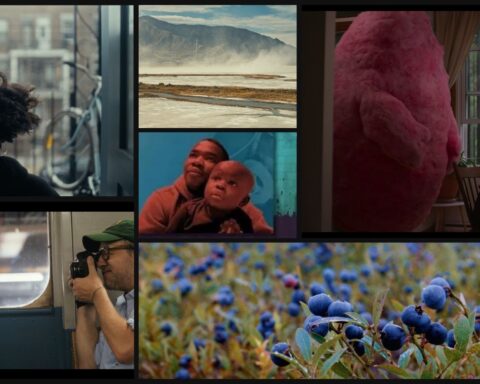




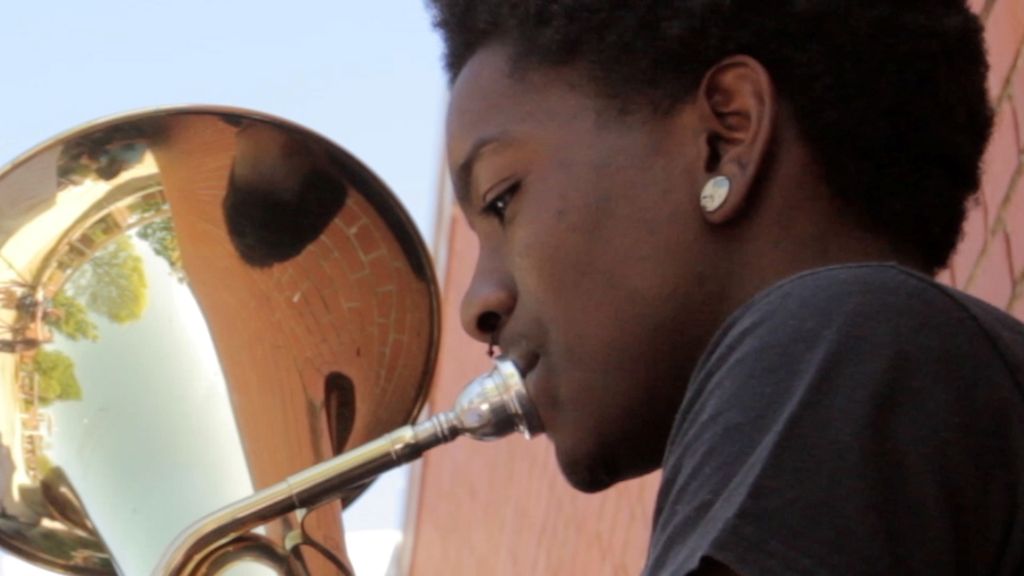
“His gravitational force is so strong that it’s not a surprise that he’s no longer here,” says What Will I Become?co–director Lexie Bean. This observation stresses the compelling presence one of the documentary’s key figures: Blake, a musician, athlete, activist, and homecoming king. Footage from a previous documentary by Blake’s classmates conveys his gravitational force while chronicling how he made headlines as a young trans student to win the crown. The film, directed by Bean and Logan Rozos, has its Canadian premiere at Toronto’s Inside Out 2SLGBTQ+ Film Festival after a prize-winning debut at Berlin.
What Will I Become? zeroes in on Blake’s story alongside that of Kyler, a soft-spoken young poet and musician. The film tells how Blake and Kyler both died by suicide, and Bean and Rozos consider what it means for society when over half of transgender men have attempted suicide or have considered an attempt.
“We say it in the synopsis,” Bean adds, commenting upon Blake’s life force in the film. “We say it at the beginning, but there are moments where it’s easy to forget that he’s no longer here. That’s often how grief works for anyone we know and have lost. It’s a constant remembering and forgetting. Offering solidarity with that feeling while also not exploiting it feels like a powerful use of that footage.”
What Will I Become? dextrously balances this sobering reality with a refreshing sense of levity as Bean and Rozos draw upon their own experiences as survivors while learning about Blake and Kyler’s lives from their parents and friends. The film takes to heart advice that Blake, an avid blogger on Tumblr, shared on his page: “Remember me for me or not at all.”
The film creates a safe space to keep lost friends alive while inviting others into important conversations about mental health, support networks, and the tools to help trans people survive and thrive, from respectful language to packers—the latter offering a playful bit of levity with the story of an artist who crafts bespoke accessories that let people feel comfortable in their bodies. The shared vulnerability on display makes for a remarkably nuanced conversation about growth both personal and collective.
POV spoke with Bean and Rozos ahead of the premiere of What Will I Become? at Inside Out.
POV: Pat Mullen
LB: Lexie Bean
LR: Logan Rozos
This interview has been edited for brevity and clarity.
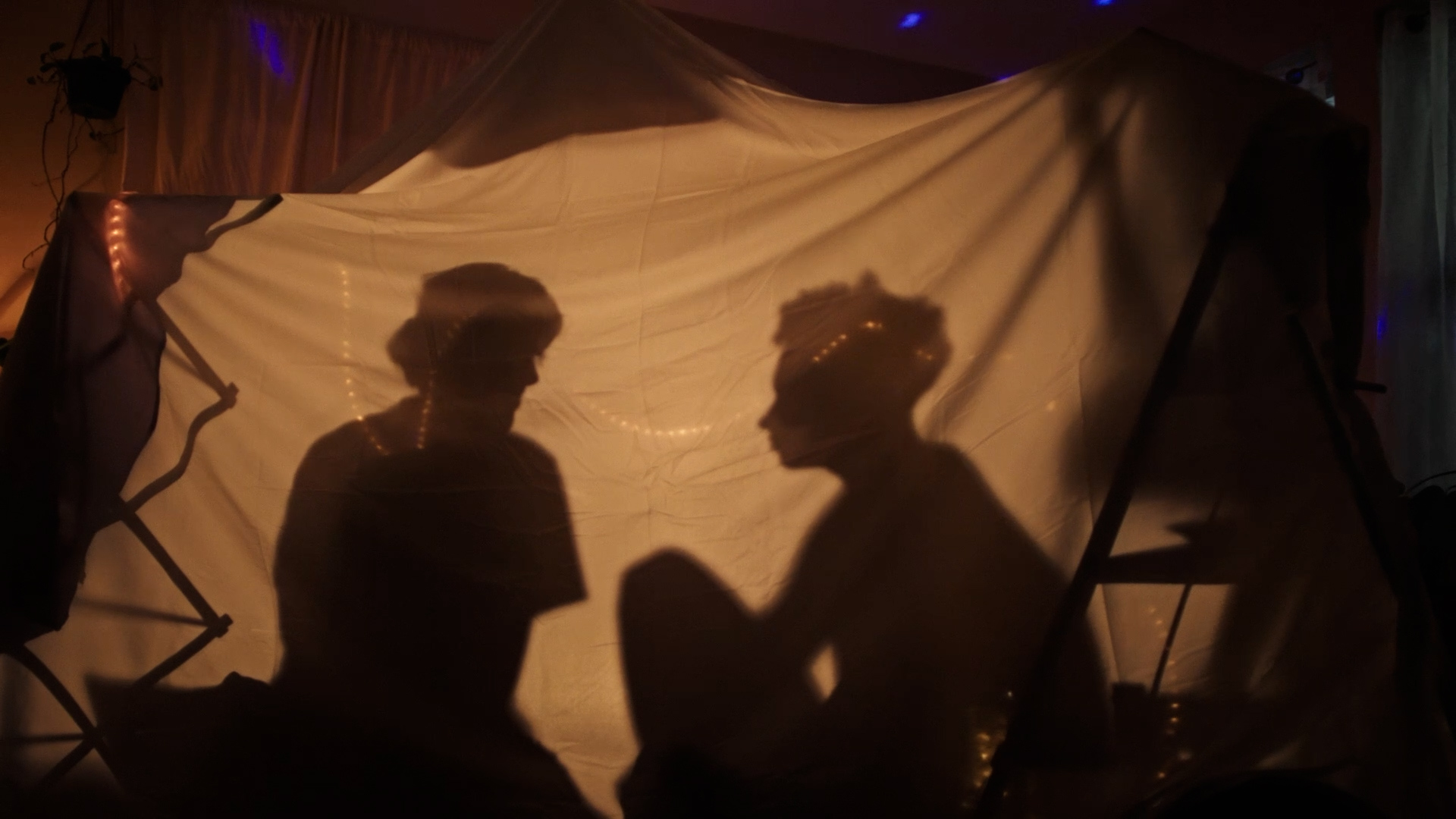
POV: One thing I really like about the film is the space you create for each other, like the bedroom fort that you share when you’re watching some of the footage on a laptop or you’re discussing the project. Why was it important for you to create that safe space to work through the creative process as part of the film?
LR: We didn’t originally conceive of ourselves as being in the film. We thought it was more about those two subjects. For one, with the density of information in the film, there’s a lot that we’re trying to get across: You meet a lot of people and go a lot of places. And two, with the sensitivity of what was being discussed, it felt like our audience wanted to know who was behind the camera and wanted someone to guide them. The blanket fort, which was built by our producer, David [Sherwin], felt like a place that was safe to us in the moment. It also communicates a sense of safety, childhood, and dreamy imaginativeness that creates a contrast to the harsher outside world.
LB: In the context of something that’s exploring masculinity, too, it feels healthy and useful to establish some level of playfulness. There’s a lot of reasons why we need to build trust with the audience and to let the message be clear that these conversations can be manageable. It is such a severe contrast to the news footage that we see throughout the film that more communicates how we typically hear conversations about suicide.
POV: How did you decide how much of your own stories to share?
LR: We were both pretty reluctant to do it and had to get a lot of feedback from other people that it felt necessary to want to do it. I wanted us to be in there only insofar as we were helpful telling the stories of these two young people who were no longer with us. It feels very different to be talking about someone else’s story versus your own. When I hear myself talking about my own life, it went back to being so uncomfortable and unfamiliar, which I hope also gave me perspective and reverence for the people who chose to share their stories with us.
It is uncomfortable and it is really vulnerable to tell people your story and to talk about dark times in your life. We spoke with so many people for whom the loss of these people was such a formative trauma in their life. They hadn’t talked about it in years, but they felt safe to talk about it. Knowing how precious that disclosure is, having to do it myself really drove it home.
LB: Some of the hardest parts for me emotionally were the voiceovers, having to do multiple takes saying something so hard and being in a mental place to do that over and over again while also rejecting on a certain level any ideas of goodness. Also, if we’re going to do something about dead trans people, we have to include as many living trans people as possible.
That realization really was a turning point for me to see that we should be in the film because, in a project like this, there’s a lot of pressure to force hope at the end because it’s hard. Some of the stuff can’t be undone. It just is. To force hope at the end is to potentially cheapen or ignore the fact that people are still living with this. It isn’t just better. Including us is inherently hopeful and that inherent hopefulness of our basic presence of surviving does a lot of the unspoken work.
POV: What about Blake and Kyler’s stories caught your attention as the two stories to look at?
LB: They both died around the same time that we were both coming out and had our own attempts, so they definitely had an impact on our own stories. Seeing Blake die so shortly after he was in the news for winning homecoming made a really strong impression for me, that visibility is not good enough or has serious risk. Especially in those years, that was framed as the thing that was going to save us. With Kyler, he had a really supportive family and was in a blue state and that’s also not enough. That meant something to me at the time too.
LR: Blake was someone I knew through his popularity on Tumblr. His death happened around the same time as the death of a young trans girl, Leelah Alcorn. And I remember their deaths hitting me really hard: these two people who were not much older than I was and who seemed like they had friends and community and were celebrated, had both passed away by suicide. There were images that were really resonant to me: Blake smiling, Blake with children, and Blake in a tutu. And Blake just being a normal kid and having fun, expressing himself, and having accomplished this historic thing [being crowned homecoming king], and for him to still die that way really scared me.
Kyler also passed away around the same time and he was born a few months before I was. Hearing how he was let down by institutions and spaces that are meant to be safe for young people who were struggling was not necessarily surprising to me, but still very upsetting and tragic.
LB: In the early articles I read about Kyler that detailed his hospital experience where he was consistently misgendered at the hospital in the time before his death, one of the nurses said to him, “You’re too pretty to be a boy.” That hit me so hard at that time because misogyny was such a huge part of my own coming out journey. People, especially in medical and therapy spaces, were not taking me seriously, so I really connected to Kyler in that moment.
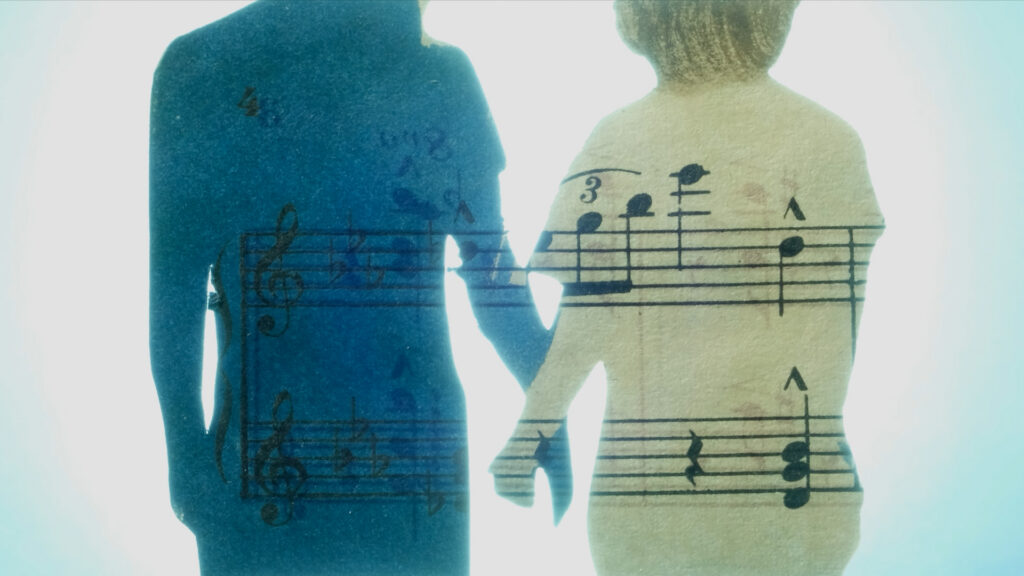
POV: One thing that struck me is the contrast between what we get to see of Blake’s life, while there’s virtually no video of Kyler. That fact becomes quite powerful when you bring Kyler’s words into the film as a song. What was the creative choice to use his writing as a song?
LR: The idea of their own words being the primary narrator for both of them was what we wanted to do. For Blake, we had a lot of video of him using his own words. And for Kyler, we had this piece of writing that was the main example of something that he actually said in first person. We’re already leaning into animation to tell Kyler’s story because we lacked photos and video, and it opened up this wonderful space where we can use different mediums to tell Kyler’s story. They were both artists, both of our subjects, and we can use different art forms to make them feel present, especially with Kyler. We were able to get queer and trans musicians to voice and to play the instruments for his words, which felt so special.
When we played the song for the first time for his mother, Katharine, she told us that it was like hearing his voice again. He was there and the fact that it passed her test meant a lot to us.
LB: The song is also a testament to the value of not coming to this film with a traditional film background. It’s easy to say, “Don’t put a music video in the middle of a film. That’s ridiculous.” By consequence of arriving with our own lived experience in different art forms, we are less in our minds about the rules. For anything I’m working on, whether it’s a film or a book, I want people who never read it or never watch it to be able to benefit from it or to engage with the theme somehow. I was excited and continue to be excited about the music because, even if someone never watches the film, we can release the song and they can engage with it. They still get to know Kyler. They still can know a piece of themselves or grieve something.

POV: The conversations you have with the family members and friends seem therapeutic in that they get to talk things out and have space to grieve. How do you take care of yourselves when you’re sharing such heavy space with interviewees and processing these stories on film?
LR: It was tough. A lot of what made it feel safer was that our team was community-based. It was all basically queer and trans people, or people who had directly lost someone by suicide. We travelled a small crew on shoots. It was just us, our DP, and one sound person and a line producer. We didn’t have to explain anything about our subject’s lives to the people on the crew. We had a lot of subjects who weren’t used to being on camera or who weren’t used to talking about their grief. We give people the option, for the first hour of the interview, saying, “We’ll just point the camera at your hands or we’ll look at your feet and we’ll get to your face later, or you can always tell us that you don’t want to answer a question.” Often we were doing an activity while we were interviewing people. There’s a shot of us in the movie playing with chalk because we were drawing while we talked to someone.
In making this film, we all went through periods. It’s always tough to make a film, especially in this climate for funding and for institutions not wanting to touch trans stories and queer stories. And then on top of it, it is sad to continually reckon with the fact that these two people aren’t with us anymore and to feel really close to them. But there are moments of real levity and humour that we had with everyone and then remembering that they’re not here, it’s always hard.
LB: For almost every interview we did, the other person thanked us for even being willing to talk to them about something that no one wanted to talk to them about, but they were still holding. People assume or often provide the feedback when working on something like this that it must be so heavy. Or, “You’re doing a film related to trans suicide: yikes.” Actually for me personally, the filmmaking process did not feel heavy. The interviews did not feel heavy. They felt like they were full of responsibility or they were activating, but no, they were not heavy. It was a huge gift as a survivor. The heaviest parts of this whole process has been feeling like we have to convince people that it’s important. That is heavy because we know and we know that it implicates everybody and that this isn’t just a trans problem.
In surviving suicide attempts, I don’t think people realize the idea of being missed. One usually believes that they’re doing everyone a favour by not being around, and to see how deeply untrue that is in this process was really informative, honestly. I hope that is a takeaway for viewers who maybe have felt the same.

POV: I think it’s important for people to hear that and they understand how the creative process involves confronting and working through many emotions. Did you show the film to Blake and Kyler’s families throughout post-production?
LR: We showed it to all of the major subjects before it was publicly exhibited. They didn’t necessarily have editorial input, but it was very important to us that they felt that, first of all, that everything was accurate—that there was nothing that in hindsight that they were like, “That wasn’t to the best of my recollection what happened.” And also that there was nothing there that could bring anyone any harm. Kyler’s parents have been attacked by people online for letting their child be trans, so it was important to us that we not repeat that victimization. It also just made their participation all the much more commendable and noteworthy. They were willing to speak to us when they were under no obligation to do so and knew for a fact that people respond to these things in bad faith.
When we showed it to Ian and Gibran, the two older people at the end of the film, it was really fun. We watched it together over Zoom and Gibran’s wife was there and showed us their new pets. It was a happy moment and a really fulfilling one.
POV: I like the fact that the film ends with the elders and their perspectives. What did you learn from them?
LR: We talk in film about how I just don’t know a lot of older trans people, especially not when I was younger. A lot of the older trans people I know came out when they were older. It’s sometimes hard to get that elder role model, that fatherly advice that you would want. It’s the same thing with trans women, of course, that so many people either don’t come out until later in life because they’re so bullied and repressed in their identity, or they are sadly taken by violence or by suicide. Or they have poor access to healthcare, things like that. It makes the normal intergenerational exchange that a lot of communities have really difficult.
Obviously, we experience the same thing as gay people too, having lost so many elders in the AIDS crisis, that it’s hard to get that advice: “How do I save for retirement? What do I do in my workplace with coming out?” Things that should be fairly basic are really difficult to access. It’s just heartening to meet people who are older. A theme that kept coming up in the film was the idea of taking things slowly. Meeting Carl’s tortoise [a tortoise that keeps returning to the home of Kyler’s father] was a reminder to stop living in survival mode and take a minute and be like, “I might live a long time, so I’ve got to live accordingly and take things at my own pace.”
LB: That [the scenes with Ian and Gibran] was the first thing we filmed, so that made an interesting compass throughout the rest of the film. I’m actually so grateful we started with them. That wasn’t intentional. That was just scheduling, but starting with some of the oldest trans guys I’ve ever met allowed that experience to always be there in our pocket as a reminder while we went into everything else. We don’t show this in the film, but Ian and Gibran have boards with their hopes and dreams on them. I thought that was so charming to see because while they’re both older and retired, they are so clearly not done with their becoming. That’s something that people can learn from trans people in general: it doesn’t stop. That’s a beautiful thing about so many trans people and built into the identity itself, this invitation to keep finding out whatever it is.