




Cover-up
(USA, 117 min.)
Dir. Laura Poitras, Mark Obenhaus
Programme: TIFF Docs (Canadian premiere)
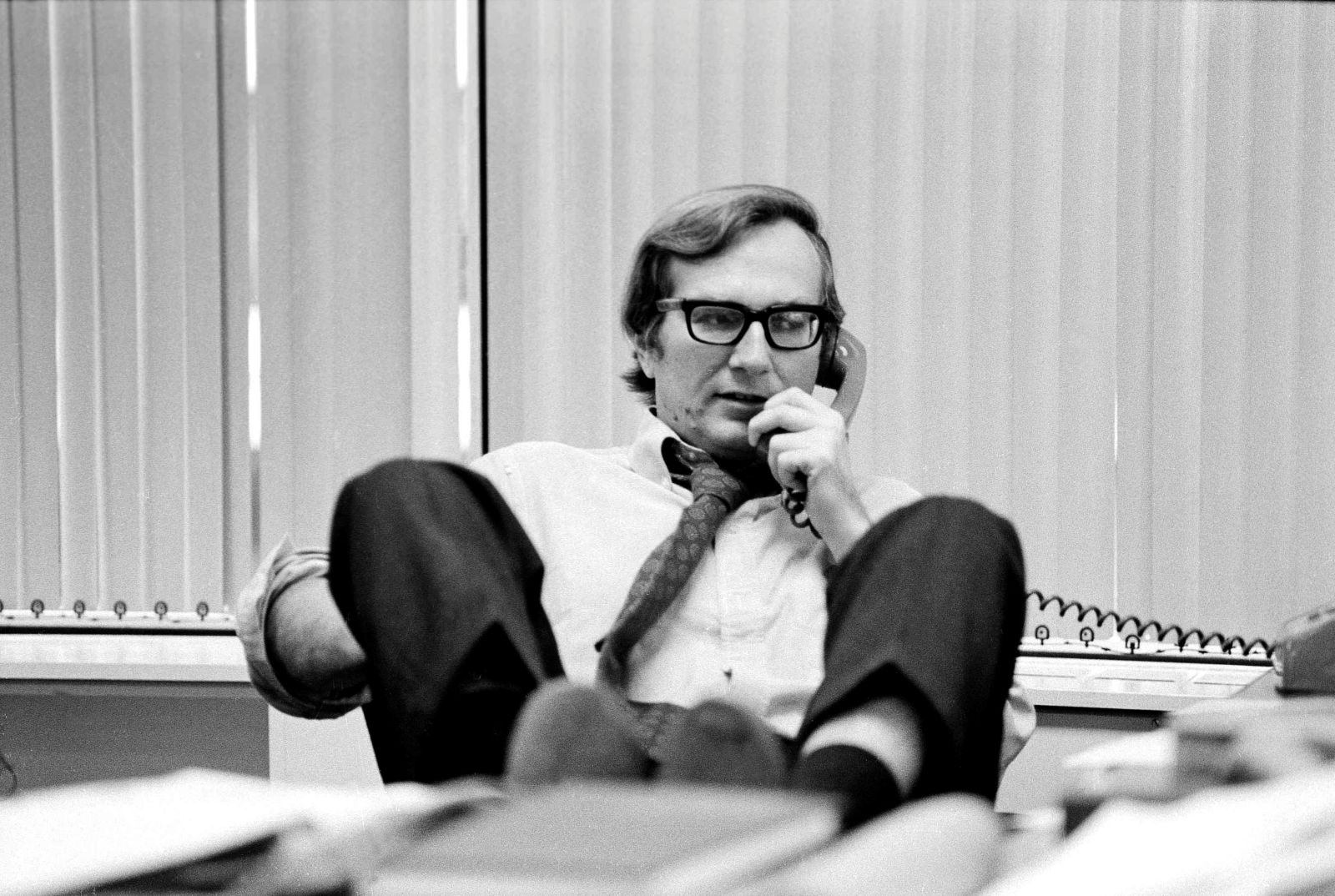
Seymour Hersh knows how to ask a good question, but he doesn’t particularly like answering them. The Pulitzer Prize winner and unabashedly cantankerous journalist squirms when filmmakers Laura Poitras and Mark Obenhaus flip the dynamic to which Hersh is accustomed. One might expect Hersh to respect the nature of the job that requires the filmmakers to ask tough questions, as well as some personal ones. Hersh, however, generally fires back with questions of his own. He often proves as tightly lipped as a celebrity navigating a minefield of bad PR. However, Hersh’s discomfort with the hot seat makes Cover-Up a work of fascinating insights. He lacks vanity and holds himself as an old-school journalist with integrity when the field overall—including many once-revered publications that bear his byline—have struggled to uphold the same standard.
Journalism serves as the unofficial theme of the TIFF Docs slate at the year’s Toronto International Film Festival. It’s therefore only appropriate that the highlight of these journo docs sees the best investigative filmmaker in the biz turn her lens upon a cantankerous reporter who proudly personifies independent adversarial journalism. Poitras delivers a worthy follow-up to her Golden Lion winner and Oscar nominee All the Beauty and the Bloodshed with Cover-Up, and the insightful documentary reflects the filmmaker’s indebtedness to Hersh for the obvious impact he had on her career. The film results from nearly twenty years of courting on Poitras’ behalf, which seems fitting for a participant like Hersh whose career has rarely known easy gets. Working with Hersh’s sometime collaborator Mark Obenhaus, Poitras creates an intimate yet expansive portrait of a man and his historic portfolio of clippings.
Cover-Up invites Hersh to reflect upon key stories he broke throughout his career. Each one burrows into his practice and, when he permits, his personal life. But the stories about the stories prove absolutely riveting. The film transports audiences back to an age when emails and Zoom calls were science fiction. It firmly plants Hersh’s tale as a feat of on-the-ground journalism when ferreting out a scoop required more than reliable Wi-Fi. It’s a master class in relationship building, developing a gift for gap, and developing a sixth sense for reliability. His stories unfold with a dual sense of duty and justice as they use the forum of the press to inform, engage, and enrage the public.
The film borrows an effective tool from the story of Nan Goldin by buttressing Hersh’s oral history with visual evidence of his handiwork. Whereas All the Beauty and the Bloodshed mirrors Goldin’s extraordinary slide shows, Cover-Up takes a visual tour through Hersh’s hand-written notepads and extensive archives. Redacted reports abound, and newspaper clippings with Hersh’s byline credit a hefty chunk of American progress to his scribbled notes.
Hersh’s reportage about the My Lai massacre during the Vietnam War, for example, speaks to his tenacity for breaking stories that other journalists, editors, and publishers prefer to hide. Hersh recalls getting a tip about a soldier facing punishment for being a little trigger happy with civilians. However, after snooping around town, scanning headlines, and recognizing a name that sounded like the one on his notepad, Hersh follows clues to a seismic tale. The reporter still shakes when he speaks about his investigation into civilian deaths in Vietnam and learned that the charges the lone soldier was facing weren’t an anomaly, but the norm. Moreover, he tells Poitras and Obenhaus that soldiers generally sang like canaries when asked about marching orders to “clean up” villages with no Vietnamese women or children left behind.
His stories leap into institutional malpractice and abuses of power, but he’s never content to let bit players be fall guys. Hersh’s coverage of the My Lai massacre earned him a Pulitzer Prize, but Cover-Up credits it with greater laurels as it explores the cultural impact of the story. Hersh recaps how he learned of a soldier named Calley, who pulled the trigger at My Lai but was merely taking orders from above. The story forces a cultural reckoning with America’s relationship with the banality of evil, only having helped stop another war rife with state-sanctioned killing two decades before.
But the impact of Hersh’s My Lai story expands Cover-Up’s own probing inquisitiveness. For all the power of Hersh’s stories, and all the attention brought to scandals, cover-ups, and tragedies, history keeps repeating itself. From Hersh’s story about biological weapons in the ’60s’ to his exposé on a massacre in the Gulf War to his breakthrough reports about torture at Abu Ghraib prison during the invasion of Iraq, the faces of the bad guys change, but their positions in America’s systems of power remain roughly the same.
Hersh’s doggedness to tell a good story remains evident in the glimpses of character that one observes throughout his prickly interviews. Seated in his cluttered office, which is packed with enough files and notepads to double as a bomb shelter, he holds a reporter’s duty to the story dear. Even in exchanges with Poitras about sources, Hersh gets really cagey. Let’s not forget that Poitras worked closely with whistleblower Edward Snowden and kept his secrets safe, becoming a subject of surveillance on her own and even burying secrets under concrete. (Watch Cameraperson if you don’t know the latter!) A handful of sources appear in the documentary, in one case sharing her name for the first time, which again makes the doc another feat of access, but also a contribution to and continuation of the larger narrative that Hersh’s stories form.
Even though Hersh finds himself seated across from a colleague and a filmmaker among the most trustworthy artists in the field, he observes, “It’s hard to know who to trust. I barely trust you guys.” He then exits the project.
The journalist only quits for about five minutes (of screen time, anyway) and the departure speaks to his idiosyncratic run at outlets like The New Yorker. But it also reflects the weight of carrying so many secrets for years and holding so close to the sacred trust of sources that their stories take a personal toll. Secrets are a burden, but Cover-Up credits Hersh for admirably doing the heavy lifting. The film’s a call for a new generation of journalists to accept the challenge.