



On the morning of September 15, just a month before The Battle of Chile was set to screen at the MUBI Festival in Santiago, and only three days before the Fiestas Patrias holidays, the country woke to mourn one of the world’s greatest documentarians.
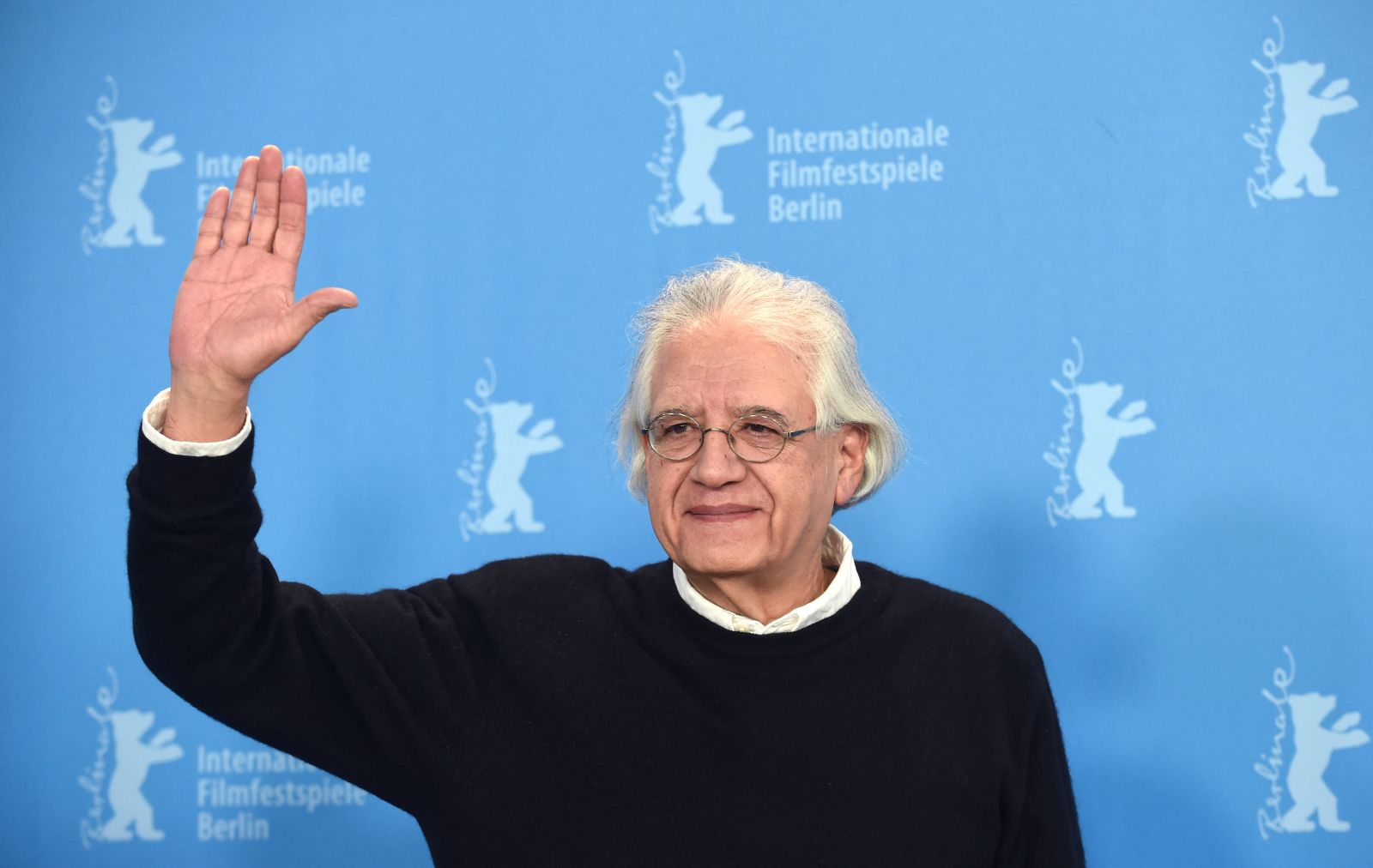
Patricio Guzmán died of cardiopulmonary arrest in a Paris hospital at the age of 85. Though he had lived in France for over two decades, he never stopped revisiting the central heart of his filmography: the memory of his homeland.
His Invaluable Cinematic and Social Legacy
There is no history of Chile without Patricio Guzmán. His cinema taught others what had happened when they were not there and revealed stories that, through censorship, often continued to be denied.
His voice, soft and measured yet assertive, never changed. It was the same in his documentaries as it was in his masterclasses. His passion was the same: telling the stories that had gone unheard.
Through his filmography, Guzmán gave images to silenced stories, and what he did changed the world’s understanding of what was happening throughout an entire country, placing memory at the centre of an indelible portrait through his renowned body of work.
The Early years and The Battle of Chile
Born in Santiago, Chile, in 1941, Guzmán’s first steps in cinema were as an assistant to the founder of the Film Institute at the Catholic University: the priest and filmmaker Rafael Sánchez. As time passed, Guzmán decided to continue his studies in Spain at the Official School of Cinematography in Madrid.
When Patricio Guzmán returned to his homeland in 1971, he began documenting the government of Salvador Allende, who began his term as president the year before.
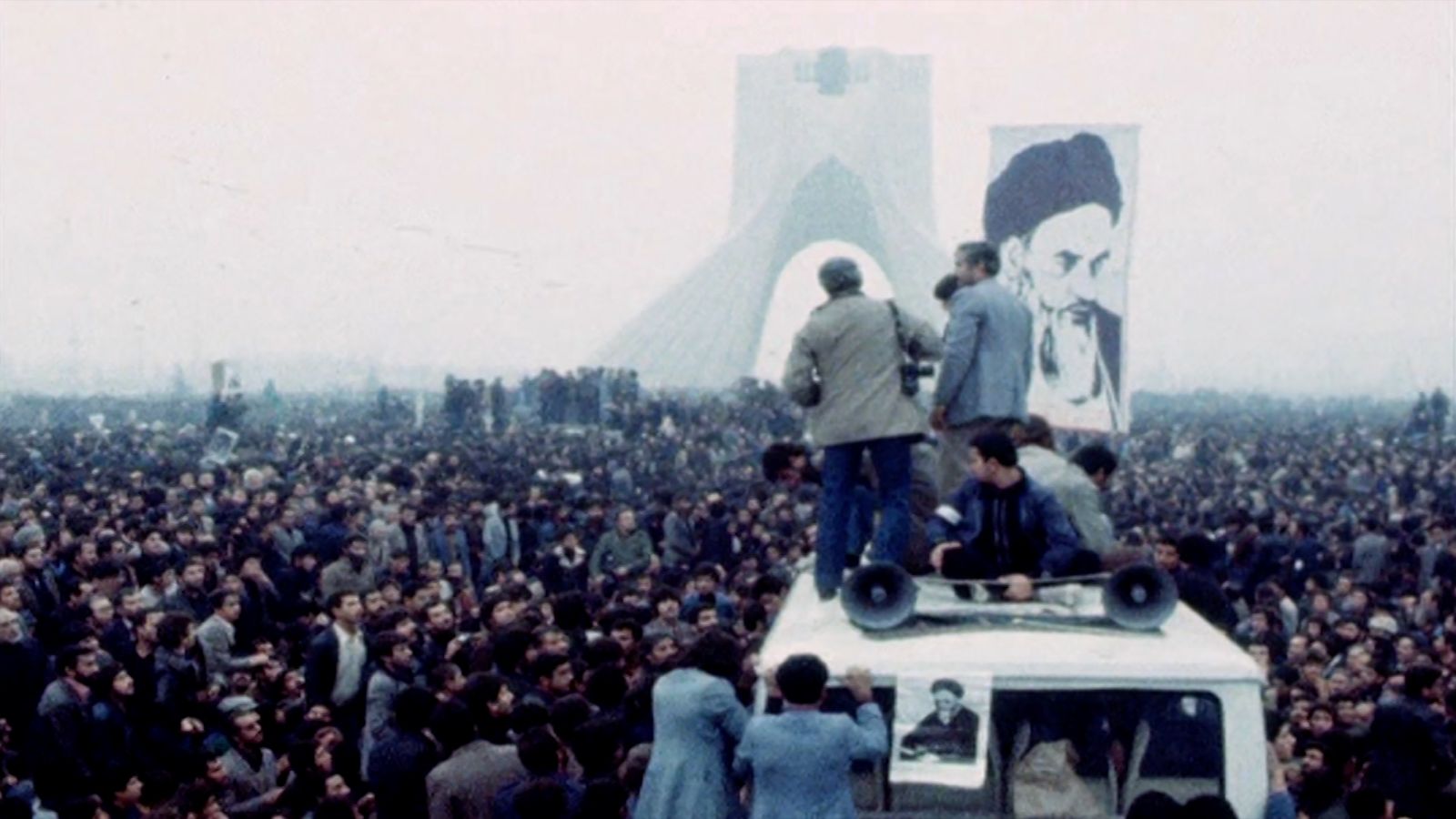
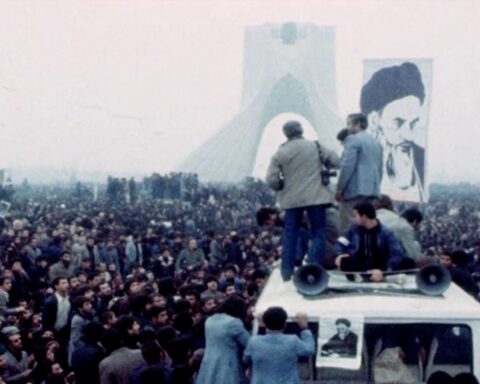
He wanted to portray the new administration and proposed the idea to the Catholic University. That project, which came after making a short film called Viva la Libertad in 1965, would become his first feature film, First Year (1972). Among other milestones, it covered Fidel Castro’s visit to Chile in 1971 and what would become the first year of the Popular Unity government in Chile. The documentary filmmaker’s sharp eye began to portray a historical process that would become what we know today as The Battle of Chile.
During the dictatorship, the director was detained at the National Stadium, and the film, which would not be broadcast on Chilean open television until 2021, was taken out of the country through a maximum-security operation involving a suitcase filled with 16mm film reels, whose destination was with Guzmán in exile.
The plan involved the collaboration of Sweden’s then-ambassador, Harald Edelstam, who played a vital role in rescuing the reeks. As the director revealed in various interviews, the diplomat ultimately transported the reels to his country, from which they were later sent to Cuba.
There the film began to take tangible form.
While in exile, Guzmán met with Pedro Chaskel, his editor, and French filmmaker Chris Marker, who had changed his life by purchasing the rights to his first feature film and exhibiting it in France. It was in Cuba where they conceived the acclaimed triad, The Insurrection of the Bourgeoisie (1975), The Coup d’État (1977), and Popular Power (1979), the three-part documentary that he would narrate and record, together with cinematographer Jorge Müller Silva and Gustavo Moris, the story of the government of Popular Unity.
International Acclaim and the common thread of his filmography
Guzmán was a frequent guest at one of the world’s most prestigious festivals, the Cannes Film Festival.
He screened the first two parts of this trilogy in the Directors’ Fortnight. Also, in the context of Augusto Pinochet’s arrest in London, he presented The Pinochet Case (2001), which was screened at the Critics’ Week.
At the same time, from his youth in Valparaíso through his years as president, the filmmaker revisited the life of Chile’s president in Salvador Allende (2004), a film that screened as part of the official competition.
This was followed by My Imaginary Country, which premiered at the same festival in 2022, a deeply immersive documentary in which the filmmaker portrayed Chile’s social uprising of October 18, 2018. It would prove to be his final film.
Among his many accolades and initiatives, Patricio Guzmán was a recipient of Chile’s National Award for Performing and Audiovisual Arts and the founder of FIDOCS, the Santiago International Documentary Film Festival. Meanwhile, in Europe, he continued his work without losing the link to his roots.
Chile, Obstinate Memory, Patricio Guzmán, offert par l’ Office national du film du Canada
He made Obstinate Memory (1997), in which he reconnected with his previous protagonists and filmed their reactions to their past, before continuing his explorations through another of his renowned trilogies. The documentary was co-produced by the National Film Board of Canada. The film won the inaugural award for Best Canadian Feature at Hot Docs in 1998 and was later nominated for a Gemini Award.
Nostalgia for the Light (2010) recounts, through Guzmán’s characteristic voice woven among interviews, the dichotomy between the beauty of the astronomy in the Atacama Desert in northern Chile and the intangible traces of what happened there to those who were disappeared during the dictatorship.
He then amazed the world with The Pearl Button (2015), a work that combines majestic visual and narrative textures, using water as a bridge to reflect on the ancestral and political past including Pinochet’s coup d’état. He later concluded the trilogy with The Cordillera of Dreams (2019), a film that became one of his most personal projects, in which he recounts his experience of leaving the country and the impact of what happened to him. The film won the l’Œil d’Or for best documentary at Cannes.
What is fascinating about the filmmaker’s legacy is that it transcends the perspective of a political eye bound by simple partisan logic; his reflection moves toward “the political” as a concept. It manifests as an immaterial social practice that constructs realities and societies—one that ultimately forges a shared social fabric around a theatre seat. In that context, the filmmaker appears beyond the image he captured.
Guzmán supported organizations defending human rights, such as the Vicariate of Solidarity (Vicaría de la Solidaridad), which provided assistance to victims of the Pinochet dictatorship and their families, and used his platform to advocate for voices silenced by the system. He dedicated his days to making a film focused on how the Catholic Church took a position on what was happening in Chile during the dictatorship, as demonstrated in In the Name of God (1987). The filmmaker also openly accused the country’s public television channel of censorship in 2013 for broadcasting an edited version of one of his documentaries.
The death of the director is still being processed by the cinematic world.
The filmmaker was preparing to return to Chile for a project he had been working on with his producer, Alexandra Galvis, a collaborator since The Cordillera of Dreams. She revealed to the Chilean newspaper Culto that the filmmaker was planning to return to his homeland to shoot his next feature. She also noted that, in the opinion of one of those closest to the documentarian, “no one interviewed like him,” referring to the human and almost ethnographic quality that Guzmán brought to his conversations with the people who became part of his projects.
It was precisely through that exercise of being a participant observer, even while not physically present in his country, that he knew so well what to portray through active listening.
His filmography carries that rhythm visible through each of his frames. It permeates that particular tempo of reconstructing collective discovery.
The director portrayed, without grandiose resources, the open wounds of a country and set out to reveal them without the need for doctrine, using only his images and analogies, demonstrating that he never doubted the intelligence of his audience.
Guzmán knew how to use his vision behind the camera to portray the most intense moments in Chile’s political history, as well as intangible subtleties of such value as light. While he was born in Chile and died in Paris, yet the entire world feels as if he was one of their own. This includes a presence at festivals worldwide, including many of his films screened at the Toronto International Film Festival and Hot Docs, with the latter presenting him the Outstanding Achievement Award in 2015 for his life’s work.
Festival pages, distributors, major figures in cinema, and those who loved his work have taken to social media to bid farewell to a master, while an entire country remembers its history through a brave filmmaker who made the impossible possible and the unseen visible.