


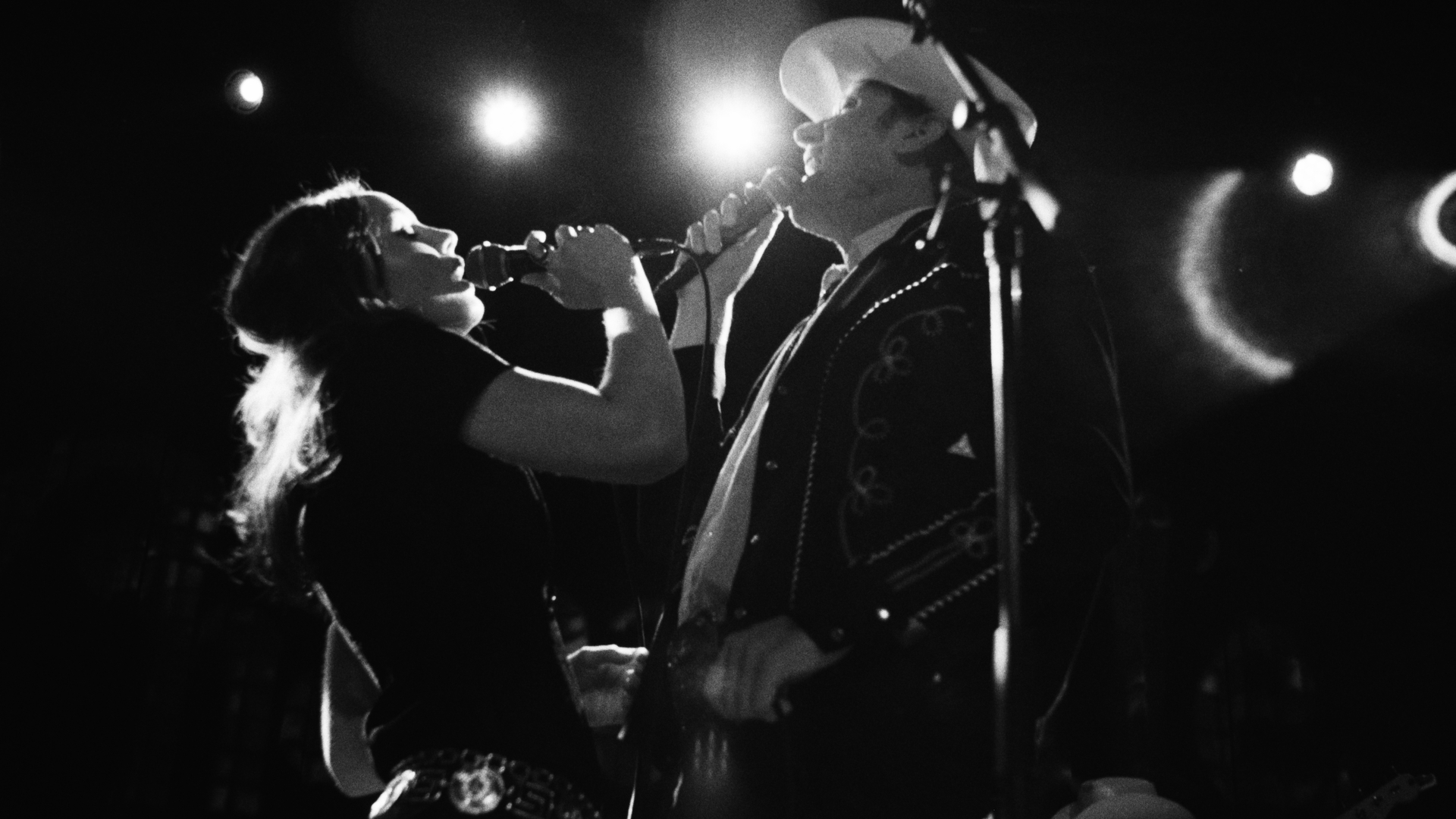

Anyone eager to discover what love sounds like must see Bleeding Hearts. The swoon-worthy music doc premiering at this year’s Toronto International Film Festival chronicles the origins of the upstart bluegrass band Chaparelle. The band has three members—Jesse Woods, Zella Day, and Beau Bedford—but at the core are two voices intimately joined in harmony. Jesse and Zella are lovers in addition to being bandmates. Their performances truly ignite sparks. This documentary by Andrew Morgan plays like a bluegrass Cold War as the monochrome images capture lovebirds united by song.
It’s clear to Morgan, too, that the music of Chaparelle sounds a lot like love. The director, speaking with POV by Zoom ahead of the film’s TIFF premiere, says that a friend sent him an early take of the band’s track “Bleeding Hearts” and it instantly hooked him. The black and white thumbnail on the SoundCloud link also served some inspiration. “Something in the sound really spoke to me,” says Morgan. “You could tell there was something very real and something very personal about the whole thing. It clicked. There are certain moments in life that are split second things where you just connect to something deeply, and it was one of those moments.”
Catching the Chaparelle bug early means that Morgan’s faith in the band offers a music doc that audiences haven’t seen before. The film intimately observes what it takes to make it in the fickle business as Jesse, Zella, and Beau write and record their music and hit the road playing gigs. The demands of launching their career might seem like a daunting episode to commit to film, but Morgan says Chaparelle liked the alignment between his pitch and their vision for the band.
“I’ve always been interested in making a music film from the beginning,” explains Morgan. “A lot of music docs are made from wheelchairs and everything’s worked out. There’s no suspense because it all went great. I grew up playing in bands and that first year is so volatile. It’s so make or break.”
Anyone tired of music doc clichés—spinning gold records and newspaper headlines, self-congratulatory soft-ball interviews, or greatest hits archival snippets will find Bleeding Hearts as refreshing as Chaparelle’s music. There’s no iconic number of the band singing its number one hit at a sold-out stadium since that milestone has yet to be written. But audiences probably haven’t heard a cover of “Dance with Somebody” that’s ever sounded so soulful and sexy.
The cameras capture everything from sparks of inspiration, captivating performances, and creative clashes. There are moments where it seems as if either the band, the couple, or both, could easily break up given the tension that arises with life on the road.
Morgan says that he had to prepare for any outcome—success, failure, or separation. However, that’s the appeal of doing a music doc with a band in the making.

“Honestly, I get very tired of watching things that are just two hero interviews and archive footage and there’s no suspense and there’s nothing pulling it forward,” says Morgan. “What I just had to grapple with from day one was that we’re not going to do anything false in this narrative. And number two, we have to be okay with anywhere it goes. The film is about the two of them, and it’s about the very precarious, beautiful, fragile process of building a relationship first and foremost. Because that was the focus, it was exciting.”
The relationship between Jesse and Zella gives Bleeding Hearts its foundation in lieu of the typical greatest hits ingredients. It’s a portrait of a relationship feeling itself out, just as the band itself needs to find its groove in a crowded market. “It was the process of them building a relationship together, and not just any relationship, a very intimate relationship where they’re together all the time. They’re writing together, they’re building this thing,” observes Morgan. “That was the most interesting thing to me from the beginning. It was pretty amazing to be in some of those ‘firsts.’ Yes, I didn’t have them playing Live Aid, but I had the first of a lot of things, and that was kind of thrilling. I hope that you feel that energy and nervousness and excitement in the film.”
Notable firsts that Morgan captures include Chaparelle’s Spotify debut. They watch with anticipation as numbers rise. They’re on their way to their first hit.
While Bleeding Hearts may not feature something as iconic as the former concert that closes Bohemian Rhapsody, there’s no shortage of great material. The band travels across the country from gig to gig, doing about a show per day. The changing landscape beautifully captures the range of their efforts. “It was an absolutely relentless year for them, and touring is really hard. One of the things I liked a lot was being able to show the parts of this process that are hard,” says Morgan. “We gloss over that a lot in life, and we polish things. We make things very effortless, but I liked making a film about people trying.”
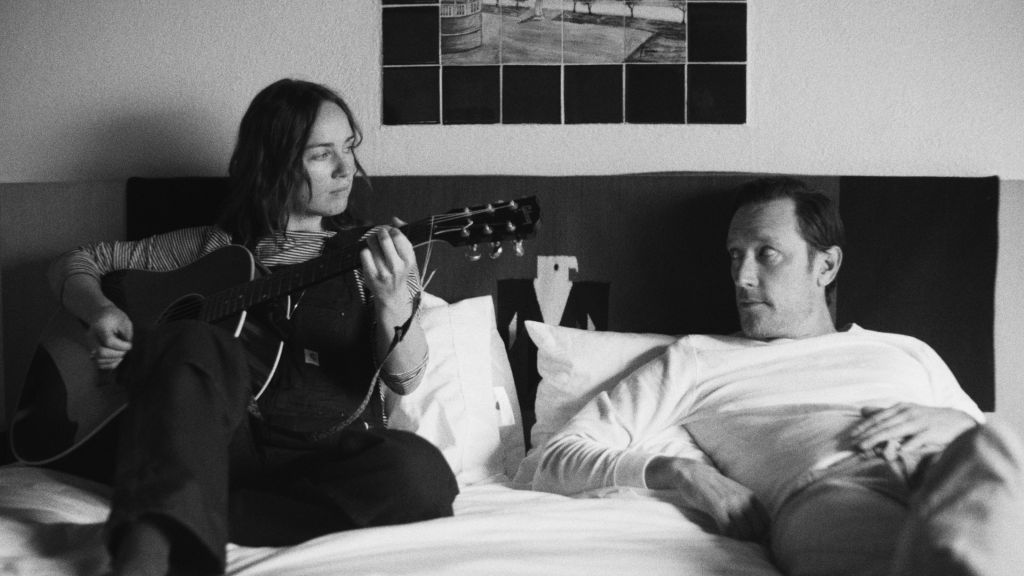
Morgan adds that being capturing Chaparelle throughout the relentless pace of their tour adds to the heart of the film. Besides the great musical coverage, the bandmates let their guards down backstage. “It was fun to see the effort that went in, the exhaustion that went in,” adds Morgan. “Them being exhausted and out of their comfort zone, not in their home routines, really made them great subjects. Some of the best interviews we would do would be late after a show or after they had already burned off a certain type of energy. They were incredibly honest because they didn’t have the energy it takes to spin anything.”
Jesse and Zella get very candid as they reflect upon the paths that brought them to Chaparelle. Bleeding Hearts sees as the partners navigate the stories they tell themselves, but also what they see are different stakes across collaborators. For example, the docs shows how Zella walked away from an earlier music career because she didn’t feel authentic with the songs she was recording. But she still sells out huge shows in China as the cameras tag along for some solo gigs during Chaparelle’s tour. The new band’s a gamble for her, but it feeds her creatively while her former career offered more financial security. For the elder Jesse, though, he worries that Chaparelle may be his final shot at a making it. Country singers pushing 40 aren’t hot commodities in the age of American Idol and The Voice.
Bleeding Hearts intuitively observes the distinct dynamics that Jesse and Zella bring to the stage. The film captures the X factor in way that few docs do. Jesse really has the artist’s poetry and the skill. Zella has all of that, but she ignites that intangible extra spark that distinguishes stars from artists. And the camera absolutely falls in love with her too.
Morgan says he’s never experienced anything quite like being in Zella’s orbit. “Zella really is a star, and you feel it being around her. You feel it in the way people interact with her, and when you turn on the camera, it goes up. It actually exponentially goes up,” he says. “It’s maybe what my friends who work in scripted film talk about when there’s a movie star and you can’t put your finger on it. There’s just something when they’re in front of the camera, it’s off the charts. Zella had that for sure.”
Bleeding Hearts conveys this aura with the extended musical performances that structure the narrative. The camera soaks up Zella’s stage presence as the harmony clicks just right. Watching the film evokes the sense of receiving a personal serenade. But it also speaks to the sense of watching the genesis of the band finding its voice. Her performances alone show what it means to go all in.
“I think that’s part of what makes her such an interesting character because she is giving so much and she’s exuding so much,” says Morgan. “Part of me was interested in the cost of that, and the cost of that in your relationship and to your mental wellbeing. It really is a Mick Jagger-like quality where you see it happening on stage and you see it happening in the camera, and it’s just different. There’s something very magical about it.”
This magnetic star quality plays especially well in Bleeding Hearts’ striking monochrome palette. Morgan says he was inspired to “sand down the edges” after watching music docs like Dont Look Back and Truth or Dare when finding the right look to capture a moment. “There’s something in the film that is trying to be modern, but also timeless. There’s something about their story that it’s a little bit outside of time,” he says.
The cinematography by Lance Coon further ensures that the films’ musical numbers forever play in the present tense. These dynamic performances give the sense of being there in the moment as part of the band, often with the camera’s POV right there with them.
“We tried to make the concerts feel like they were more from their perspective. So you see a lot of stuff that’s on their eye line or beside them or behind them, which was a real gift,” says Morgan. Once he saw himself and Coon up on a Jumbo Tron during a shoot, he admits to recognizing a sense that Chaparelle passed a milestone in its trajectory.
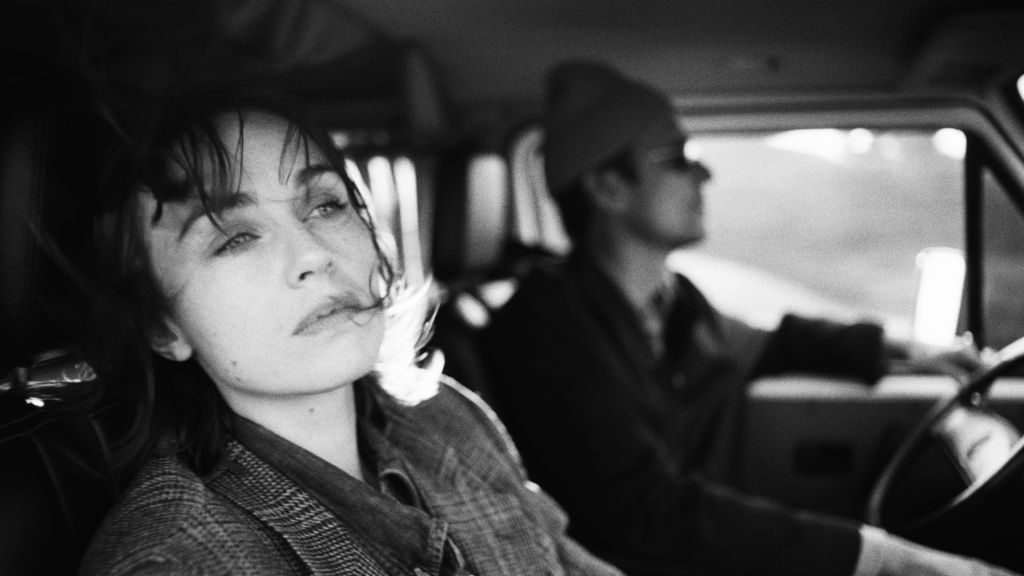
“This type of access isn’t going to continue,” he remembers thinking at the time. “How lucky that we got to be, not just in these small rooms, but right in their perspective with the whole thing.”
Morgan says that Chaparelle didn’t dictate the set list, either, in terms of the music that Bleeding Hearts highlights. There are, after all, no greatest hits in this story at the time of filming. Morgan says it was also important to avoid delivering a straightforward concert film given the range of coverage from Chaparelle’s performances.
“We shot so many shows, so we had so many versions of so many different songs, and it was about really finding those ones that felt magical, and then also finding a way to try to use the music to move the story forward,” he explains. “There are moments in the film where we’re very specific about what song that we’re using after an argument or before. It became a narrative tool more than anything.”
Chaparelle songs like “Bad Loving” naturally connect perspectives about working with the one you love. Tracks like “Baby Jesus” buttress views about faith and upbringing. “All Things Considered,” one of this writer’s personal favourites, underscores the gamble of going all in. Original music by Duncan Blickenstaff seamlessly connects the music and dramatic stakes, so audiences new to Chaparelle never quite know when a song ends and the score begins, injecting the doc with a sense of perpetual creative sparks and discovery.
For himself, too, as an artist, Morgan says that his time being in a band, albeit in an amateur capacity, gave him a sense of how to capture the music and heart of the story cinematically with an appreciation for the relationship between songs and story. “Music was my way into film because when I was a kid, the movies that I was making in my backyard were rip-off versions of Cameron Crowe movies,” he explains. “My earliest short films were the music montage in a Cameron Crowe movie. It took me a long time to understand why there was no power because there was no story. It was just that payoff of a big song hitting.”
Morgan adds that his way into film, besides music, was a journey he look following the loss of his father in an accident. He says he worked through the tragedy by travelling the road and having conversations with people to help process grief, but the cycle of making a film itself taught him the passion of what it means to really put your heart into something the way that Chaparelle does through song.
“I’d never gone to film school, but the one-to-one human real-time thing of sitting soul to soul with someone, and asking them for their story…that was a drug and I got hooked on that,” says Morgan. “It is so unbelievably fulfilling to have these adventures, and follow a sense of curiosity into some world or some topic or some story. It’s like this has just been my life and a big part of what I’m trying to figure out right now, and then now we get to put it together as something special.”