



Snow Leopard Sisters
(UK, 95 min.)
Dir. Ben Ayers, Sonam Choekyi Lama, Andrew Lynch
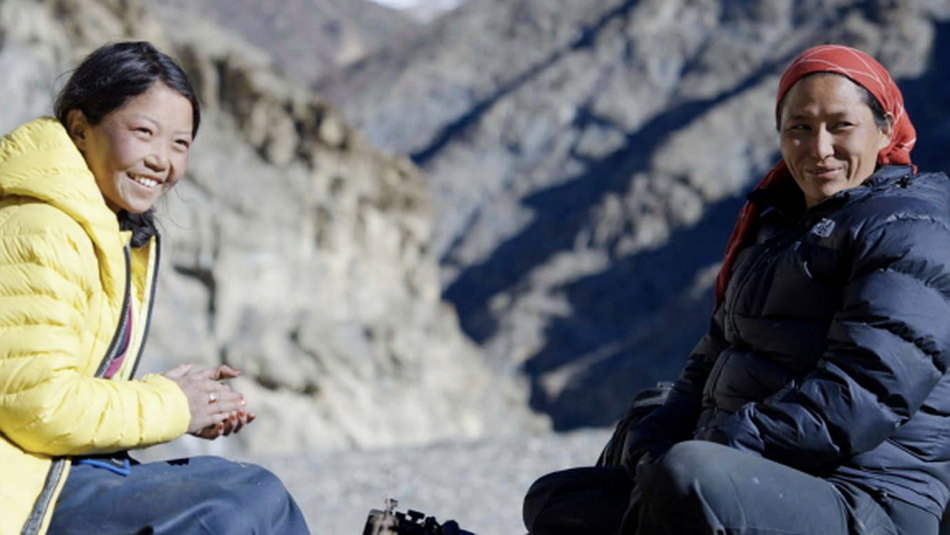
Set in the expansive and breathtakingly beautiful Dolpo region of Nepal, Snow Leopard Sisters is a heartwarming concoction of nature, nurture, and girl power, offering a feminist perspective to wildlife preservation. The film follows two women, Tshiring Lhamu Lama and Tenzin Bhuti Gurung, as they work towards saving the dwindling population of snow leopards while navigating their own personal stresses. Tshiring is a snow leopard conservationist who has devoted over a decade of her life to saving these creatures in Nepal. Having pursued a degree in wildlife conservation and ecology, Tshiring understands the value of education and its unparalleled importance in her quest towards changing hardened mindsets and lifestyles, as many of the local herders do not share her views. They consider snow leopards to be little else but a goat-eating predator, and resort to retaliatory killings to ensure the cats refrain from interfering with their husbandry livelihoods.
Forming a part of this population is Tenzin and her family, who lost nearly 40 goats in a single snow leopard attack. Tshiring decides to take Tenzin under her wing for an apprenticeship, hoping to change her and her family’s outlook towards snow leopards while researching ways to save the animal from extinction.
Told entirely through the narration of Tshiring and Tenzin, the film offers an honest insight into their experiences as women on a quest traditionally reserved for men. For Tenzin, the apprenticeship is a means of escape from the shackles of patriarchy, after her father’s imprisonment and her elder sister’s untimely demise forces her to drop out of school while her family finds an eligible groom for her. Tenzin’s reluctance to get married solidifies during her mentorship with Tshiring, whom she views as a typification of the boundless possibilities accessible to her through a path of education and hard work.
Tshiring stands out as an ideal mentor for not just Tenzin, but for millions of girls across the world who are disallowed and discouraged from pursuing their dreams. The audience sees Tshiring trek across mountains and valleys with her infant son, Sontse, strapped to her back. “If I get tired of carrying him, so be it. Sontse is my best friend,” says Tshiring. Her silhouette reminds one of the fearless, Queen of Jhansi, who at the age of 23, led her army against the British forces following the sepoy mutiny in India, all with her son tied to her back. Tshiring’s defiance is similar and her will is equally as unwavering in her quest not only to save snow leopards but also to use her education to uplift the local communities in and around her hometown. She aims to work with monks, women, herders, and children to unify efforts of environmental preservation by including sections of the population most affected by it.
In the modern age of brain drain, Tshiring’s is a story of giving back to the land that raised her. A story that reflects the respect and care that Indigenous people exude towards their land across the world.
The film’s authenticity ascribes an inimitable innocence to it. Neither Tshiring nor Tenzin appear to be manufacturing a crisis or fabricating an origins story. Their dialogue retains a childlike determination that is complemented effectively by the visual construction of their journey. The audience is offered several shots of the two protagonists against the mammoth mountains of Nepal, which simultaneously comments upon the magnitude of their task and their defiance in undertaking it.
“If I can save just one snow leopard, it’s worth it,” says Tshiring, for whom the concern isn’t merely that of saving an animal from extinction but rather for rejuvenating the entire ecosystem in pursuit of a cleaner, more balanced, and self-sustaining environment. The film’s layers traverse societal evils, environmental degradation, and the conflict between human and animal, deftly unravelling periodically without the pressures of an external force. The editing is extremely engaging in this regard, picking and choosing moments that advance the story while consistently diving deeper and deeper into the personal toils and psyches of the two protagonists.
In a heart-wrenching scene, Tenzin describes her internal state by saying, “If I tell people how I feel, they might be sad too. That’s why I keep it inside.” The beyond-her-years maturity that Tenzin demonstrates by speaking these lines with an unflinching smile on her face is extremely saddening. It’s reflective of not just the turmoil of this one Nepalese teenager, but also of the complete societal failure where she has no avenues for redress or grievance. In preserving a beast that the rest of the population is seeking to hunt, the two women thus overcome logistical obstacles, societal challenges, and contrasting beliefs, ultimately felling a more heinous and ideologically threatening beast – patriarchy.
Throughout the film, the conservationist and her apprentice trek across mountains in search of a snow leopard, finally spotting one in the film’s concluding moments. They break into a joyous dance, waving their hands around and screaming like a pair of elated schoolgirls. The jubilation in that scene signifies the success of their quest. Huddled around a monocular, observing the snow leopard from afar, the two are unbelievably excited in having contributed to lengthening its lifespan.
This encounter, in a cinematic sense, is reminiscent of the climactic wolf encounter from Wes Anderson’s animated film Fantastic Mr. Fox (2009). In that moment of triumph, the snow leopard represents far more than just an animal, much like Anderson’s black wolf. It represents the victory of Tshiring and Tenzin over their respective demons, the heights that women are capable of scaling and offers a glimpse into a future of peaceful co-existence of man and animal; perhaps the only future where our existence is possible.