


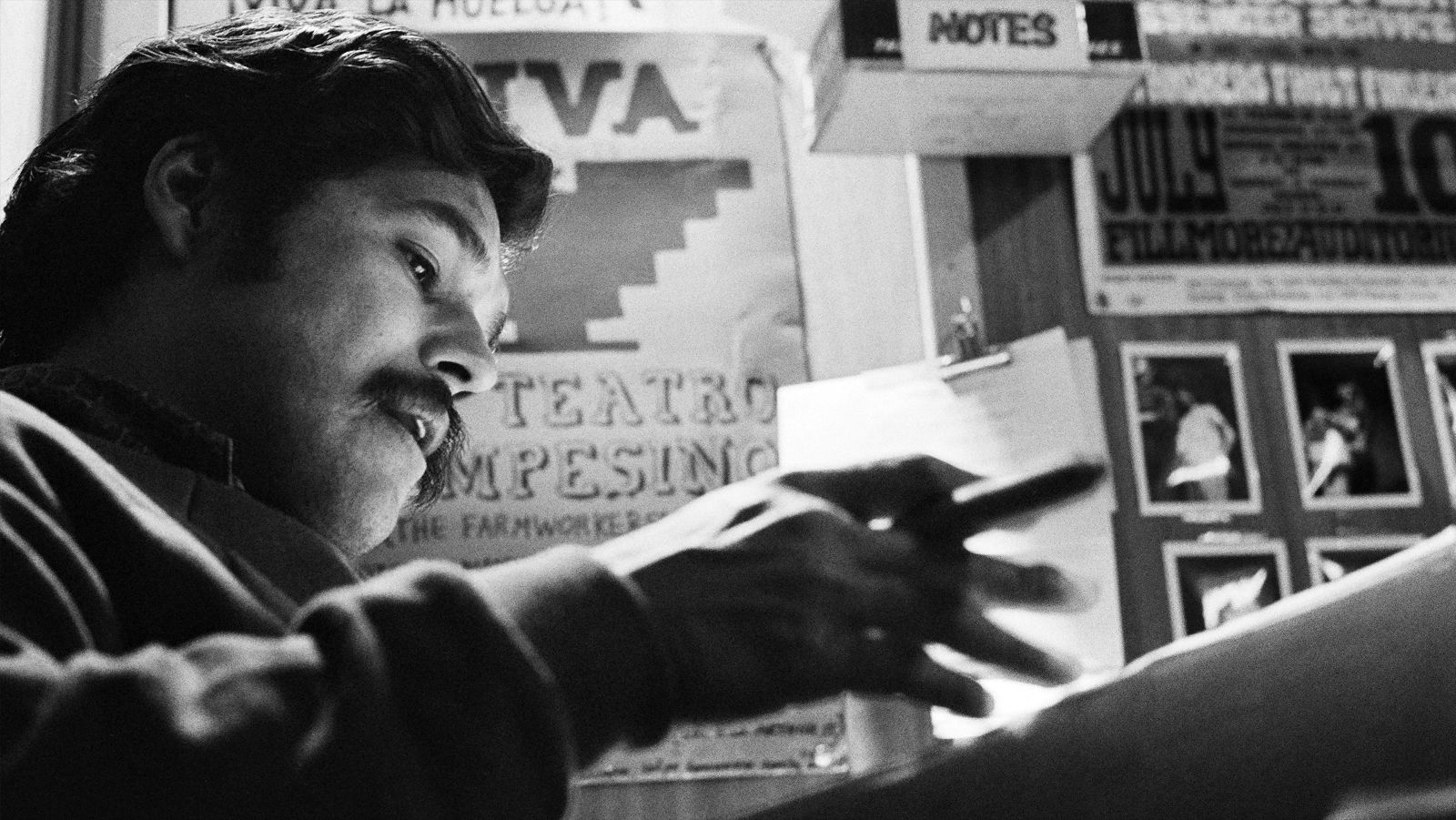

American Pachuco: The Legend of Luis Valdez
(USA, 92 min.)
Dir. David Alvarado
Prod. David Alvarado, Lauren DeFilippo, Everett Katigbak, Amanda Pollak
Programme: U.S. Documentary Competition (World premiere)
Before Luiz Valdez’s 1987 film La Bamba put Ritchie Valens’ life and music back in the spotlight, the man was almost relegated to the point of mere trivia. The singer lost on “the day that music died” in 1959 as per Don McLean’s paean, saw his story grow years later in cinematic form as Valdez’s box office hit revitalized love for Valens’ music. Above that, the film explored the singer’s Chicano roots, his struggles with dominant American culture, and other aspects that go beyond the bubble of pop stardom to speak to deeper social and political issues of a nation as complex as the USA. While La Bamba is perhaps the most broadly known of Valdez’s works, David Alvarado’s jaunty and playful portrait of the playwright, filmmaker and political agitator mirrors the work that Valdez did himself to complicate a character who otherwise might be considered in narrow terms.
Valdez’s history is a fascinating one. Born to migrant farmers, he travelled from place to place. His iterant childhood was interspersed with occasional outlets for his burgeoning creativity. With an older brother fascinated by math and science, he used those skills to become part of the military industrial complex and escape the limitations of his upbringing. Luiz found himself drawn to the arts, soon using drama as a weapon for social and political change.
Valdez’s connection to the celebrated labour leader Cesar Chavez is highlighted by some exceptional archival footage, and the spirit of late 1960s’ anti-establishment rebelliousness is captured in some of his troupe’s troublemaking. Looking back, Valdez, along with family members and other famous collaborators, provide honest assessments of their time at the frontlines of the labour struggles and the role that their then groundbreaking embrace of Chicano cultural expression had on the greater community.
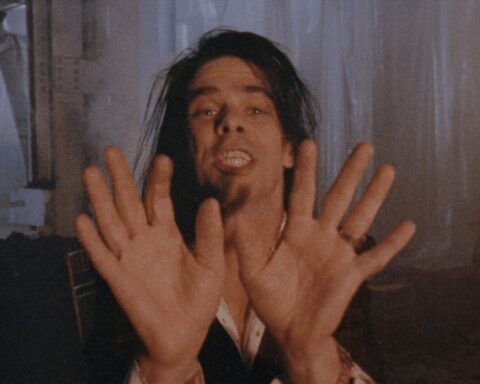
Edward James Olmos is one of the interviewees, and he also serves as narrator, speaking in character while echoing his role from the Broadway play and film Zoot Suit. A flurry of flashbacks provides chronological coherence with a touch of zaniness, making even straightforward, talking-head style interviews more engaging thanks to the buttressing of these disparate elements.
Valdez speaks of the concept of “rasquachismo,” which he translates to “funkiness.” More broadly, it refers to notions of deriving something beautiful from something distraught or dismissed. This term serves not only as an articulation of the his aesthetic, but also of his own personal journey, his own life illustrating the tenacity and creativity required to bring the story of his own life and that of his community to a wider reach.
Filmed for PBS’s American Masters series, the documentary follows a relatively steady course, and while the more political and acerbic elements are highlighted, it never devolves into being didactic or strident. At the same time, this is no mere hagiography. While deeper questions of Valdez’s personal journey, aside that from his childhood and relationship with his partner and siblings, are beyond the scope, there’s still enough here to recognize that not every project was an unabashed success.
The film is at its best when it reminds audiences of Valdez’s remarkable contributions, rising from relative squalor to be one of the most celebrated members of the Chicano artistic community, all while demanding to be taken as part of the intrinsic fabric of American cultural life. The contradictions inherent are well articulated, such as coming to terms with his own lineage and being part of both the dominant class and the conquered holding both Hispanic and indigenous roots. Even his own relationship with the likes of Chavez is seen in nuanced fashion, and the question about whether art can change the world is left up for further discussion.
Luis Valdez is an impressive figure, and for some viewers he may be a relatively forgotten one and for others, a legendary character ripe for discovery. Alvarado’s frothy film does wonders to make the man’s life and career the center of attention, and provides a welcome showcase of a talent more than deserving of such a stylish, considerate, well-crafted portrait.