



Walk with Me
(USA, 90 min.
Dir. Heidi Levitt
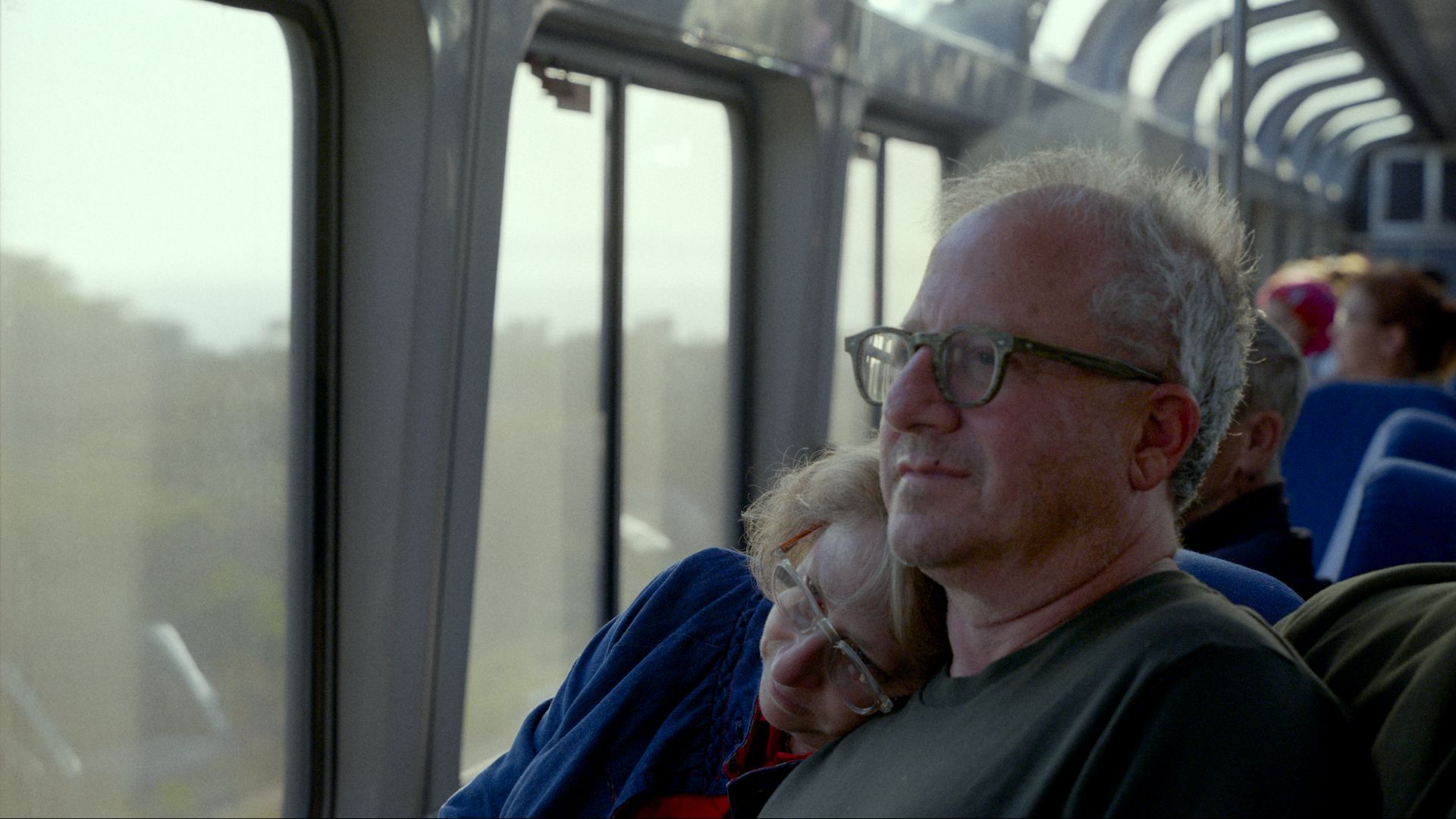
Heidi Levitt’s Walk With Me offers a measured glimpse into the permanence of wedding vows, documenting the journey of a marriage in sickness and in health. The film casts a broad look upon the debilitating and destabilizing effects of Alzheimer’s disease on a person’s relationships in addition to their cognitive abilities. Levitt’s husband Charlie Hess—a long-time creative director, graphic designer, and illustrator—is the film’s primary subject after being diagnosed with early-onset Alzheimer’s at the age of 57. Levitt’s relationship with Charlie provides an intimate sheen to the film, which effectively blends 4K video, 16mm film, and archival footage to create a doc that is expansive in scope but intimate in its execution.
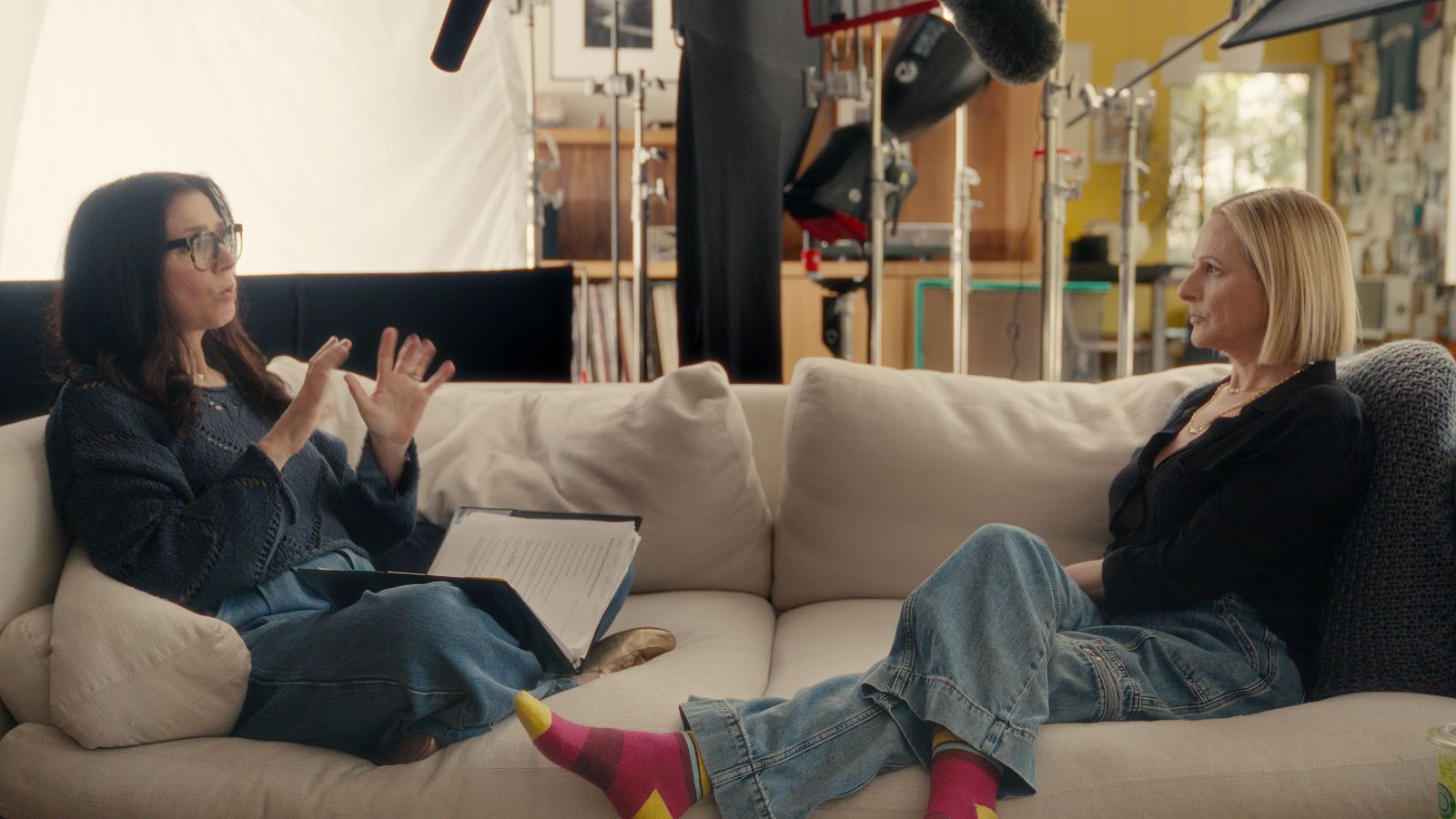
For Levitt, the idea is not to merely document the gradual but deafening development of Alzheimer’s in Charlie but rather to capture the ripple effects that the diagnosis has on their family and on Charlie’s idea of himself. Interviewing everyone from scholars of neurology to doctors, to family members, to other people battling Alzheimer’s, Levitt—best known as a casting director of films like the Oscar winning The Artist—constructs a far-reaching document of a quest to understand the disease in its entirety through Charlie’s experiences. Levitt, who prides herself in her investigative ability and problem-solving nature, leaves a personal imprint on the film which simultaneously operates as a must-watch for anyone who knows someone diagnosed with Alzheimer’s disease (or may have it themselves) and those looking to watch an intimate portrayal of a family coming together to face a looming crisis.
The film’s spread-out nexus of relationships is complemented vividly by emotionally tense moments where Charlie attempts to reformulate his idea of himself. As Charlie showcases work from his past, taking us through intricate designs, typefaces, and illustrations, commenting upon how he struggles to undertake these tasks, which, for most of his career, were an average day-at-the-office, we are invited into Charlie’s interiority. Throughout the film, Charlie attempts to reconcile his identity with this new version of himself that he is struggling to understand, attempting to find an authentic self in both his past and his future. This internal struggle often lends itself to external outbursts, as menial tasks either prove difficult or incomprehensible. Heidi’s compassion and empathy in this regard creates a moving image of how a specific disease impacts both the one suffering from it and the primary caregiver. “You know that caregivers die at a rate 63% higher than their same age group,” Dr. Pauline Boss, a Professor in the department of Family Social Science, informs Heidi.
Often Levitt brushes away or downplays events to comply with Charlie’s memory and protect him from learning of the truth, which ultimately makes her the occasional emotional punching bag, susceptible to be attacked at any instance. Levitt’s stoic resolve and compassion is immensely moving and offers a quiet and defiant side of romance that we seldom see in modern cinema. “Heidi’s a powerful person but when this happened, she just kicked ass,” says Charlie, when asked what he’s learned about marriage since his diagnosis. Although their story is endearing, there is a slight bitterness to the stereotypical construction of their relationship: Would similar outbursts be met with a silent supportiveness if the gender roles were reversed?
There is also an intrinsic American quality to the film in that the husband and wife with their successful (and artistic) careers are almost a singular and separate entity from their adolescent children. While the film actively pushes against the Western idea of subjecting the elderly to an old-age care home through Heidi’s explicit disapproval of them, the children’s apprehension to play an active role in helping their parents upholds a different Western attitude regarding family. A dinner table conversation amidst the four family members plays out as a rather mawkish encounter where accommodation seems to be a forgone and forgotten ideal. “That’s gonna be really hard for me because I’m a college student and I don’t feel really ready or comfortable slowing down for my father,” says Charlie and Heidi’s son, Tobias, on a discussion about making things easier for Charlie. Tobias’ comparatively increased regard for his own age and education with respect to his father’s sudden and unassailable illness speaks towards the void between the personal and the community in the Western world. Heidi’s active attempts to provide her children with an understanding of their father beyond his disease, in order to introduce them to the man she knew instead of the one they see, contrastingly provides a tender undertone to the film.
Towards the end, we see Heidi and Tobias dig through Charlie’s diary from his time in Florence as a teenager. As Tobias marvels at the tender and intricate sketches of Italian statues, architecture, and life, he discovers a version of Charlie that he’s never known, acknowledging and separating his dad’s personality and identity from the symptoms of the disease. “I’m seeing myself more in him now,” says Tobias while breaking down. The individual character arcs are provided a lasting sense of fulfillment which is a compelling by-product of Levitt playing director both on and off screen to her family. Her role as a caregiver is not merely restricted to Charlie but rather extends to her children, her parents, the cast and crew, and the film itself.
There are a lot of talking points within the film, which often plays out as a meandering yet traditional documentary. However, the commitment to capturing this story over time allows the film and its characters to discover themselves and each other without the restriction of a timeline. It also affords a frank sense of Charlie’s decline over time.
The formless nature of the doc is also addressed by Charlie who says, “I am really tired of this…this filming,” which according to him is headed in a direction and a place of uncertainty. While the intimate nature of the doc has its merits, at times it feels like infringing upon the privacy of a family that one knows nothing about beyond their reactions to their father’s diagnosis. Levitt films some of Charlie’s moments of anguish using an iPhone, offering a raw insight into his life but at the same time constructing a frame of reference to the social media videos of public outbursts of people who may or may not know that they are being recorded. In this manner as the film draws to a conclusion, it feels as if we know too much about a family that we really know nothing about.