



The Gas Station Attendant
(USA, 83 min.)
Dir. Karla Murthy
Prod. Karla Murthy, Rajal Pitroda
“Dad, how did you get up and keep going?” filmmaker Karla Murthy reflects in voiceover in The Gas Station Attendant. Murthy considers her father’s life, and the countless untold stories of other immigrants in America, by interrogating his livelihoods and legacy. Livelihoods is plural here, if only because the singular seems inappropriate. Murthy’s dad, H.N. Shantha Murthy, never quite landed a consistent occupation.
Murthy tells how her dad tried many hats during his life in the States. The Jack of all trades yet no trades opened restaurants and then closed them. He worked a bit as a jewellery salesman in local markets, gaining mostly social capital. He tried starting his own business, but it failed due to lack of financial capital. Shantha even took a stab at being an engineer for Boeing. His new vocations often proved short-lived, though. Murthy’s story settles on the job with which her dad seemed most comfortable: working at a gas station. Through the Murthy history, The Gas Station Attendant deftly explores personal histories embedded within the national fabric.
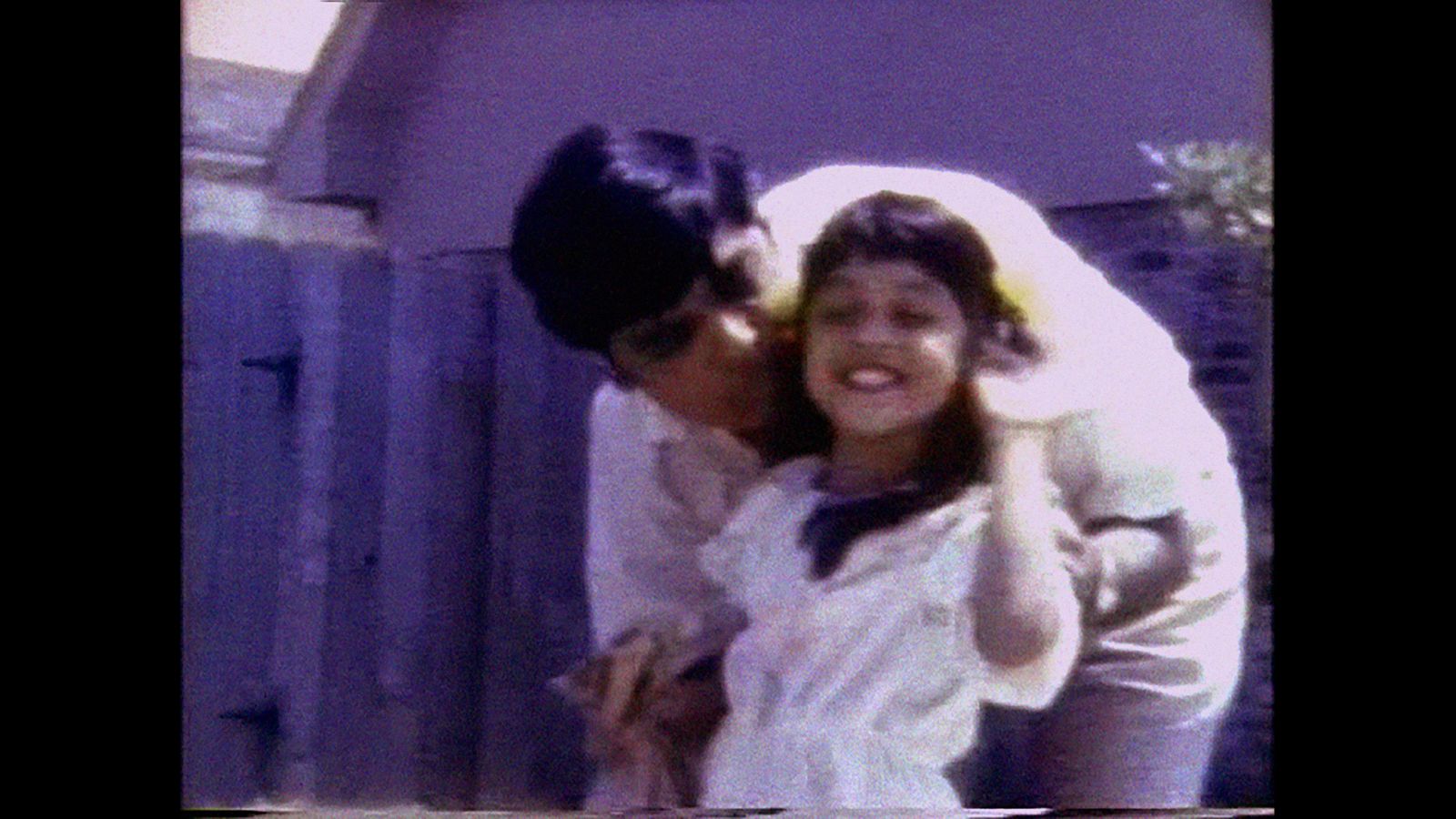
Father Murthy’s nomadic nature offers a somewhat natural extension of his life in America. As snippets from various Murthy home movies skip here and there to create a collage of the family story, Murthy reflects on her dad in voiceover. She tells how he used to share stories about being homeless on the streets of Bangalore, India. His memories speak of train rides that filled the time and odd jobs that kept him fed. Murthy finds a humbling nature in this tale, as her dad fully bought into the American dream. The retrospective makes a fair case that Shantha found a better life in America, yet Murthy makes clear that it never came easily.
Shantha’s life as a gas station attendant becomes a focus of Murthy’s inquiry. She recalls reading an article about the work habits of immigrants in America. She finds herself struck by a line about how people get jobs using skills they carry over from the old country. As Murthy’s voiceover continues, she wonders if that argument over-simplifies her dad’s life and the experiences of others. However, Murthy can’t avoid the grain of truth in the story. For all the ambitious career pivots that pepper her dad’s tale, they’re all brief beats within a bigger picture.
The Gas Station Attendant extends the family’s challenges to those that many families of immigrants face in America. Murthy surveys her childhood growing up as a mixed race kid with an Indian dad and a Filipina mother (and Filipina step-mother when her birth mother died). Growing up in a suburb, her story evokes the lonely nature of being the only one in the room, and the only Brown family on the cul-de-sac. This reality means that, no matter how much work her dad put into one of his restaurants, his entrepreneurial skills couldn’t compensate for the fact that white neighbours didn’t yet have a taste for curry and biryani.
All this hard work and long hours, moreover, makes people like Shantha vulnerable in a fractured system. Murthy tells the story of another immigrant who, like her dad, worked a gas station. But an assailant fatally shot him during a robbery. His story became a cautionary tale back home about the perils and futility of the American dream. Murthy knows that her dad could have been on the receiving end of a bullet had he stuck with the gas station gig. Instead, she wonders if the worst that Shantha faced was the stigma invited by The Simpsons and Apu. Navigating stereotypes is part of the reality that Murthy combs through while turning over facets of the family story, including the ways in which they may have shaped her path.
While Murthy acknowledges some hardships the family faced, her framing of Shantha’s ups-and-downs consistently favours love. There’s a well-earned sense of respect and pride as Murthy tells how her dad had a wide network of friends thanks to the diverse, sometimes intersecting, but mostly roundabout paths in his life. It’s a story about being rich outside the material sense. This familial love poignantly hits the filmmaker as some bad business moves strain her relationship with her dad, and distance grows between them in later years. Voice messages left by her father pepper the audio tracks between Murthy’s reflections. They evoke the sound of a man who has lived a hard life, but manages to add a laugh to every call.
Murthy’s easygoing exercise with the family archive juggles elements of the personal. One can sometimes feel the strain as she earnestly tries to fit the pieces into a collective puzzle. The challenge with mining home movies is that audiences might inevitably struggle to relate to snippets of unfamiliar memories weaved together with fuzzy VHS snapshots. However, the personal framing can inspire viewers to associate these images with memories of their own. Particularly for audiences within the diverse mosaic of American families, these home movies offer stand-ins for the countless stories that often go untold, but are no less meaningful in our personal and shared histories.