


Public Access
(USA, 107 min.)
Dir. David Shadrack Smith
Prod. Sara Crow, Anne-Marcelle Ngabirano
Programme: U.S. Documentary Competition (World premiere)
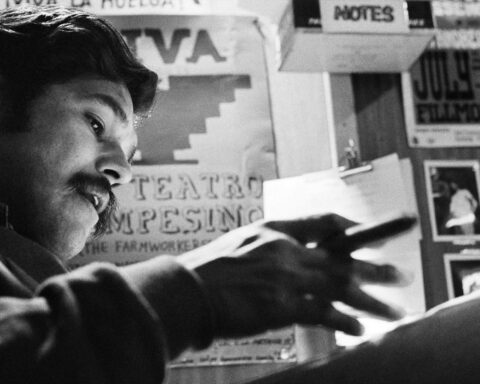
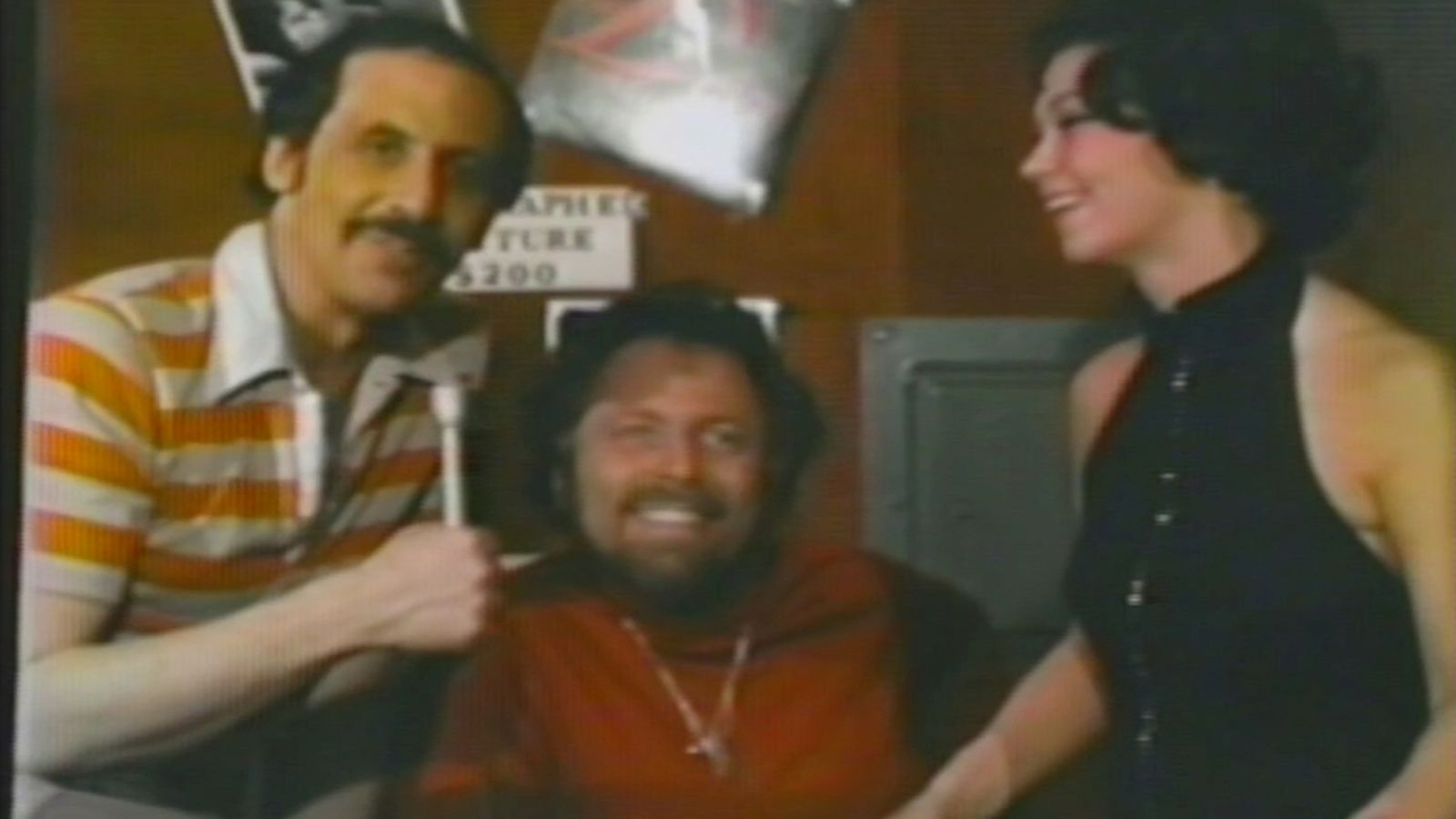
“It made for this clusterfuck of ideas,” Debbie Harry says in voiceover in Public Access. Harry’s comment lands during the segment of Public Access that discusses the chaotic hangout show The TV Party, but it encapsulates the entire spectrum of programming on New York City’s Manhattan Cable. The heyday of public access programming in the Big Apple serves as this retrospective of the democratization of airwaves.
Director David Shadrack Smith presents an all-archival excavation of the slag heap that arose in 1976 when Manhattan Cable created Channel J as part of its deal to monopolize the city’s TVs. Public Access remembers these days when a free-for-all of content creators coughed up fifty bucks to get their shows on their air. The results were strange and mostly stupid, but they occasionally yielded a public service that private channels failed to provide. Cable J walked so that social media could both run and face-plant.
The parallels between the story and its contemporary equivalents are fairly clear, and Public Access offers little more than a waltz through the most titillating precursors to blogs, YouTube, Pornhub, TikTok, Twitter, etc. But the film finds in the storied legacy of Channel J a case study in the power of free speech. It’s an all-American tale of soapboxes, tuning in, and tuning out.
Most impressive in this documentary is the extensiveness of the archival research and the editing job that pulls it together. It. Film editor Geoff Gruetzmacher and his team stitch together many acts of televised stupidity. The film increasingly ups the ante as Channel J’s history progresses from one nadir of human behaviour to another. It shouldn’t come as a surprise that the early days of public programming inspired a sea of moronic, pointless, time-wasting content. Smith trucks out a series of hang-out shows where guys sit around, shoot the breeze, and run down the clock. Voices from the channel overlay the visual archive and illuminate how they programmed the all the glut.
Public Access then quickly shifts its focus to the naughty bits of Channel J. It comes as no surprise that when the world offers one opportunity, the masses respond with a pornographic equivalent. But the Channel J interviewees share how they stickhandled the right to free speech with questions of taste. In a way, it’s baked into the Constitution not to yuck someone else’s yum.
Their biggest challenge, Public Access explains, was Alex Bennett and Al Goldstein’s pornographic series Midnight Blue. It offers, as Bennett notes, “a full night of tits and ass.” Inevitably, it becomes Channel J’s biggest hit. New Yorkers love to tune into boobs and spanking, but lengthy crotch-shots and bouncing erections invites a censorship war. And when Midnight Blue introduces “Spermathon” and one woman’s quest to bed 75 men in a single evening—the open call draws nearly 400 applications—cable brass intervenes.
Public Access briefly escapes the boob parade of Channel J as it segues into a look at The Emerald City. Dubbed the first gay TV show, The Emerald City takes audiences into bathhouses and onto New York City docs to explore the sex lives of gay men. It’s a step-up from Midnight Blue given that it at least combines skin with the democratic impetus of public programming. But when the AIDS epidemic besieges NYC, Public Access tells how The Emerald City gamely rose to the challenge. It shows how voices from the queer community used the power of public TV to spread correct information about AIDS and safe sex. It’s groundbreaking work about the ways in which public platforms like TV, or social media, can harness positive change through the power of authentic representation and audience engagement.
But for all the impact of that one show, Public Access illustrates how, more often than not, open-access platforms elevate the depths of depravity. The misogyny and vitriol of Twitter find a classic counterpart in Ugly George, a personality who used the talking-on-the-street format to harass and degrade women. Meanwhile, a segment on SquirtTV tells how a young teen become an overnight star by inviting audiences into his bedroom for innocent, if inane, chatter. He became a heroin addict shortly thereafter.
Like most of the programming it shares and the contemporary equivalents it evokes—influencers, lip-syncing influencers, online flashers, etc.—Public Access often resides on surface-level novelty. It nevertheless impresses as a technical accomplishment. The editing resurrects an archival puzzle that leaves little desire to further explore all the nuggets left on the cutting room floor. Alternatively, the perspectives about the idiosyncrasies of navigating public programming are fine, but there’s a missed opportunity to explore deeper questions of exhibitionism and voyeurism.
In the age of OnlyFans and Heated Rivalry GIFs on X/Twitter the content itself seems an inevitability of human behaviour. With the question of why so many people whip their clothes off when given a camera and some bandwidth, and why so many people tune in, Public Access could easily explore beyond the obvious. That’s an inadvertent pitfall of getting stuck in the archives. It doesn’t really ‘go there’ for any of the deeper topics in this history of mediated narcissism. But for the perpetually online, there’s enough mindless audacity in this vintage rabbit hole to get your rocks off.