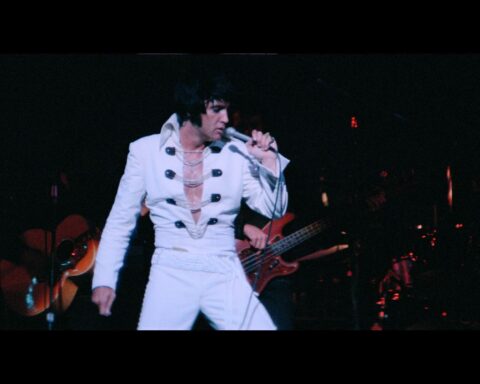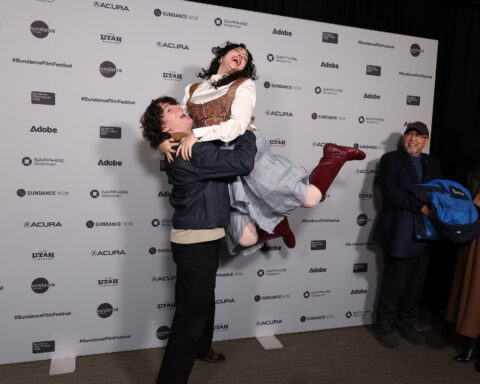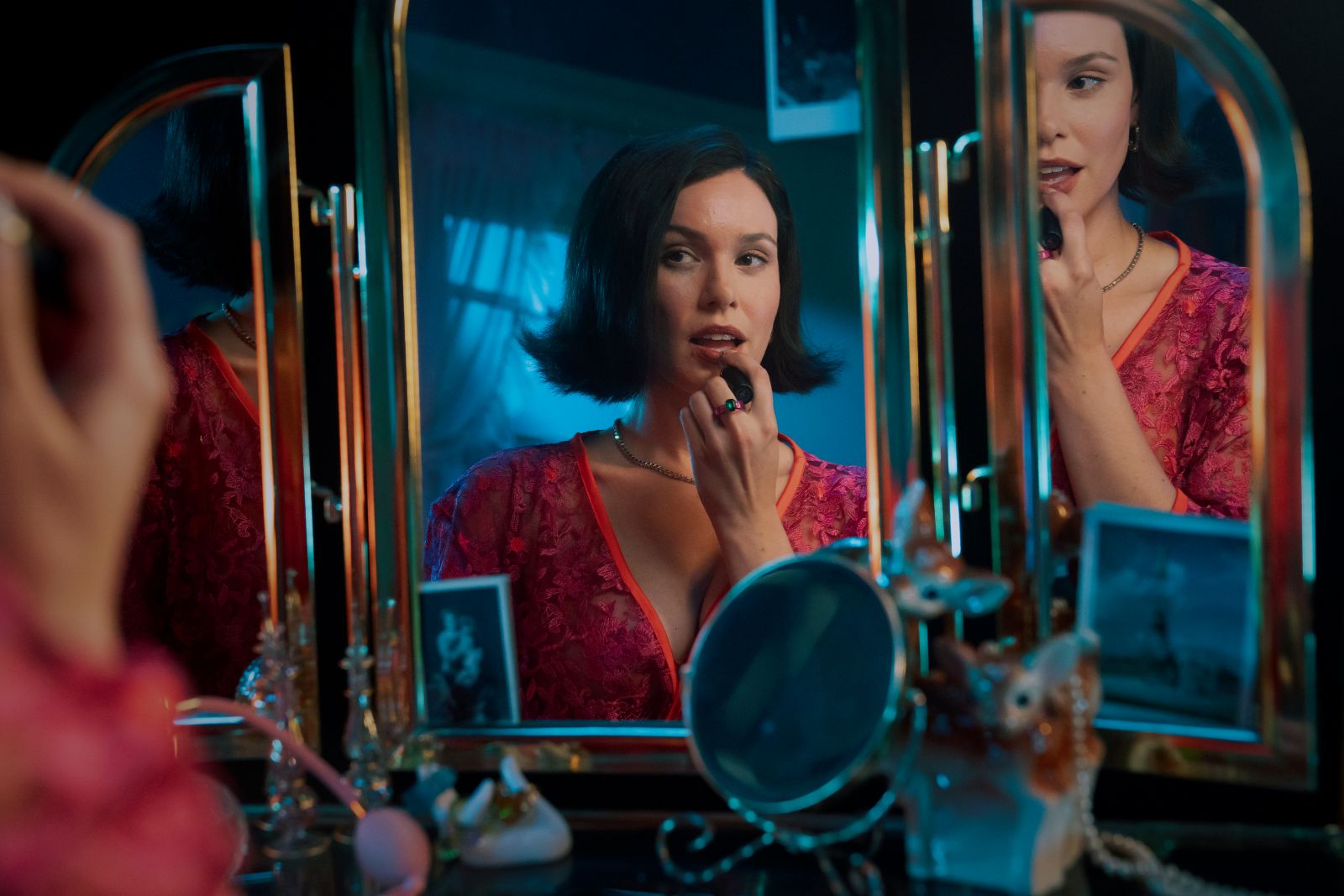





“Isn’t that the hope of life, that it’s a feel good tragedy?” asks Song Sung Blue star Kate Hudson. Hudson, speaking with journalists virtually, reflects upon playing Claire Sardina, part of a musical duo inspired by the real life musical act Lightning & Thunder. Song Sung Blue offers of one the season’s best surprises with Hudson recently earning a Golden Globe nomination for Best Actress for her turn as a Patsy Cline interpreter. Hudson is heartbreakingly good as she completely loses herself in Claire’s passion for the stage, but also the ache that comes when her love for performing is cut short by a freak accident until she finds hope again through music.
“When you talk to any spiritual leader, religious leader, gurus,” continues Hudson, “the thing that we know that we’re going to experience is tragedy. What we don’t know what we’re going to experience is joy and levity and light and laughter. It’s actually a much more challenging thing to nurture or to motivate.”
The bittersweet notes of the film have all the staples for a great Hollywood ending, but Song Sung Blue actually draws inspiration from the Lightning & Thunder’s story, which was first told in the 2008 documentary of the same name by Greg Kohs. Don’t be surprised if a Broadway musical pops up in the near future.
Song Sung Blue offers a tragicomic musical as it tells how Claire fell in love with Mike Sardina, a Neil Diamond performer who struck gold when he followed her advice to be a Neil Diamond “interpreter” rather than an “impersonator.” Mike, played by Hugh Jackman, enlists Claire’s Patsy Cline vocals to harmonize his Neil Diamond covers. They make beautiful music together surprising crowds in bars, and eventually the audience before Pearl Jam, with their renditions of “Sweet Caroline,” “Forever in Blue Jeans,” and Mike’s favourite “Soolaimon.” It’s a terrific story about pursuing one’s passion, told with an eye for the working class reality of making it from gig to gig as an entertainer on the bar scene.
“The broad strokes of their life were already almost too good to be true for a narrative feature,” Brewer (Hustle & Flow) tells POV in a separate interview. “One thing that audiences always love is a good surprise where they think that a story’s going one way and then wham, something comes along and changes that. And in my opinion, the documentary had that in a perfect way.”
Both the documentary and the drama follow the doozy of a twist that life throws at Claire, while her comeback story in the second act ends with a twist one wouldn’t necessarily believe in a Hollywood movie. But sometimes, the right bit of dramatic interpretation, like a fan’s rendition of a beloved musician’s song, can accentuate the real story with the right dramatic punch.
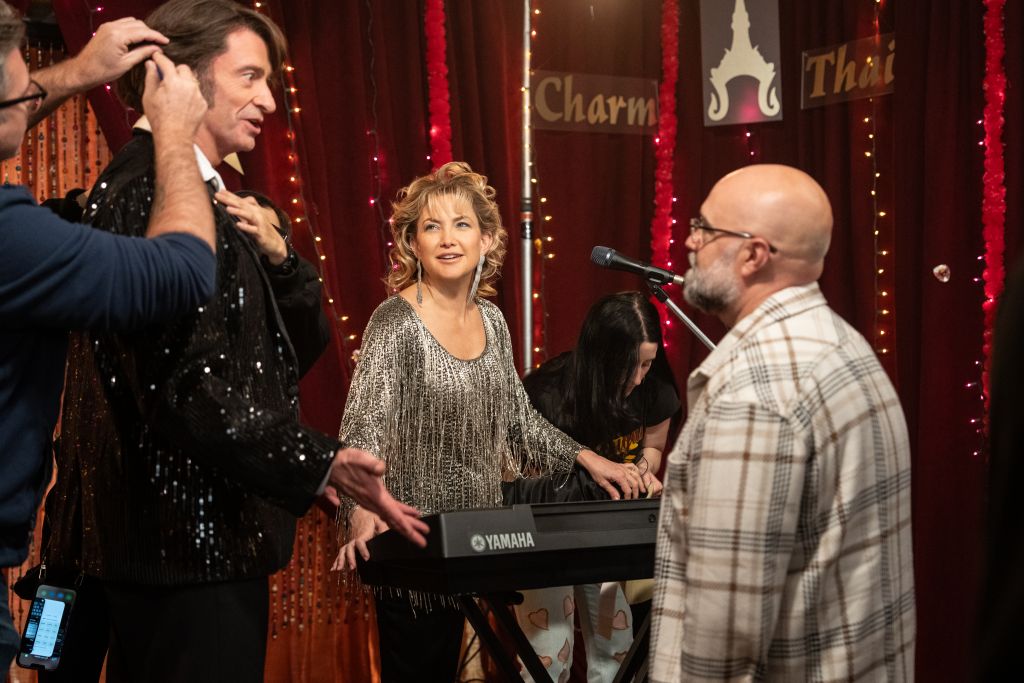
Brewer says that he approached the adaptation by speaking with Claire and the surviving members of the Sardina family to learn more about their lives. “They provided me with so many moments that Greg Kohs, the great documentary filmmaker, just probably didn’t have room in his movie to put in,” says Brewer. “But when I heard these moments, I was like, ‘Ah, that’s a real cinematic moment.’”
The director cites one example as the character development for Mike and Claire’s teenage daughters, as both singers have kids from previous relationships. The reality of supporting kids as a musician adds to the grounded and authentic portrait of Mike and Claire’s hustle. Brewer says these conversations also revealed nuances that developed the characters.
“Rachel [Claire’s daughter] had this really interesting relationship with Mike once they started working on cars together,” explains Brewer on developing that storyline. “Mike wanted to be a good dad to [his daughter] Dana, but Dana wasn’t really into fixing up cars, but here’s this teenage daughter saying, ‘I’ll do it.’ And I thought that’s a very interesting way that this girl could get to know her stepdad. She was such a character that seemed to be taking care of everybody. It seems that she would be the kind of girl who would do her own oil changes.”
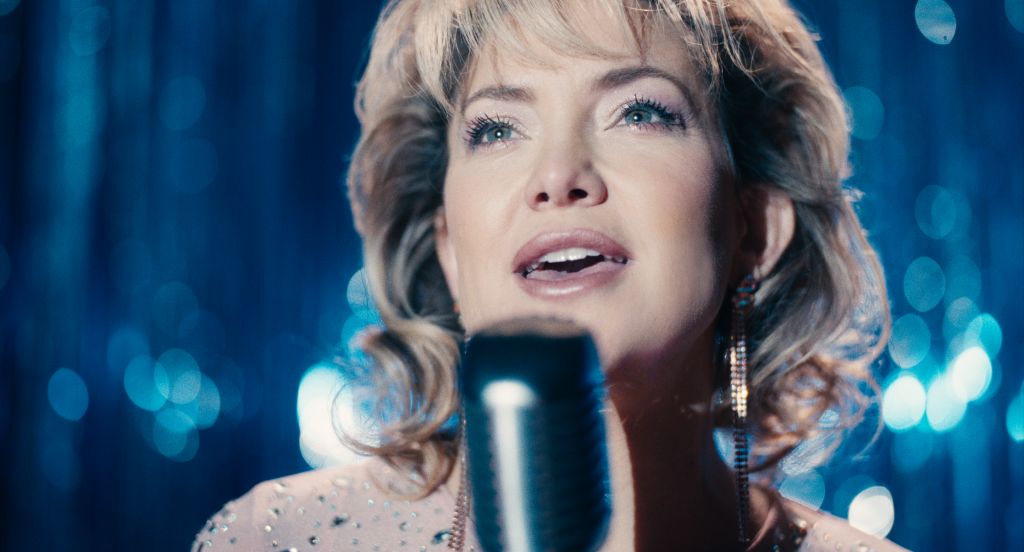
For Hudson, having the documentary Song Sung Blue was a great resource for researching her Claire in terms of technicalities and perfecting her Milwaukee accent, but she took Brewer’s lead in terms of approaching Sardina herself. “Craig didn’t really want me to get too close to Claire because he wrote a great script and didn’t want me to be on set saying things like, ‘Well, what about that story that Claire told me? Why isn’t that in the movie?’” says Hudson.
“I think finding Claire’s voice was a mixture between honouring what Claire was for Mike, which is that she really was his support and harmonized him. It was all about picking him up and making him look the best he could possibly look and supporting him and loving him like crazy,” Hudson continues. “We had to find what the song sounded like as a duo, other than the Patsy Cline songs, but for us—as me supporting him, finding the harmonies, and making some songs feel like a duet even though he is at the centre of it.”
But the actress says that making the music itself and going into the recording studio were key parts of bringing the character to life anew. Hudson says it was also important to find the best in the music to give Song Sung Blue a powerful soundtrack that inspires audiences to rock out. “With Hugh, we went in the studio first and it allowed us to connect differently than if we started shooting right away,” says Hudson. “Because when you’re recording, you have to make so many awful mistakes. You have to try to hit notes and find notes that sound horrible and you have to be able to laugh at yourself.”
Brewer adds that he wasn’t too worried about Hudson and Jackman recreating the styles and sounds of their real life counterparts too much as they reinterpreted the characters. In doing so, they remain true to the spirit of Lightning & Thunder. “One thing that we did early on was take our cue from the real Mike Sardina and say we’re not here to do exact impersonations of everybody because they’re not doing exact impersonations of anybody,” notes the director. “They’re not trying to do a note for note impersonation of Neil Diamond or Patsy Cline. They’re taking that presence and that image, but they’re also putting their own artistry into it, so it was important for me to give Hugh and to give Kate the room to create their own characters from this.”
However, Brewer admits that visits to the set from family members generally confirmed that the performances were spot on. “Even though we tried to not be anchored into them, we found our way back to them in a way,” he says.
Hudson adds that she could easily relate to the Sardinas’ passion for music given her own background as a performer and singer. Besides appearing in movie musicals like Rob Marshall’s Nine (2009) and films deeply rooted in a passion music, like her Oscar-nominated performance as “band aid” Penny Lane in Almost Famous (2000), inspired by director Cameron Crowe’s experience as a music critic for Rolling Stone, Hudson released her first studio album, Glorious, in 2024.
“Making my album, which started four years ago now, I think was the first step to Claire in the sense of understanding what it is to not be able to live without music, and finding your strength and your courage to own your voice,” observes Hudson. “It’s like when Claire says, ‘I disappear in the music and I should have never let anyone take that away from me.’ I understand what that feels like, even though it’s a different circumstance.” (The star admits she’s never seen a Kate Hudson impersonator, although she has encountered people interpreting her characters like Stephanie from Nine or Penny Lane in Almost Famous.)
However, Hudson acknowledges that working as a recording artist and live performer proves a different beast from making a music film. Song Sung Blue lets the documentary exist as its own vérité chronicle of Lightning and Thunder’s musical life, while Brewer favours some highly stylized concert moments to immerse audiences in the thrill and passion the performers feel while taking the stage.
“Music movies are really hard to make well, and I think that the directors who do them the best are those that have music in them,” says Hudson. “They have the soul of a musician. Cameron Crowe lived that life. He knows it so well. Craig Brewer, he’s a Memphis music guy. The people who really know how to give us the experience are people who live and breathe music, and can then create the visual medium to go with it.”
Ask Brewer about staging the musical numbers and he can easily pinpoint the moment he felt lightning strike when bringing the Neil Diamond songs to life: Lightning and Thunder’s performance of “Play Me.” In fact, Brewer says the song was on his mind as soon as he imagined giving the documentary the Hollywood treatment. “I remember thinking, this is how I’m going to show two people falling in love with each other in less than two minutes. It’s very hard thing to do it, and so I had this whole way of filming it in my mind,” says Brewer.
The song appears early in the film when Claire and Mike realise they share a spark. Claire invites Mike home and gives him advice about being a Neil Diamond tribute performer, and he strums a ballad when her mom asks them to shut up. Claire, struck by the beautiful music, pulls out her keyboard and follows along. She eventually joins Mike as a duet, harmonizing his vocals just as the song hits the lyrics, “You are the sun, I am the moon / You are the words, I am the tune” and the camera rotates around them in a two-shot.
However, come the day of filming “Play Me,” Brewer says he had only 20 minutes to get the shot—an impossible feat when one considers the duet between Jackman and Hudson that makes the film. “I felt like, okay, so the one scene that has gotten me here, I’m now going to ruin,” laughs Brewer.
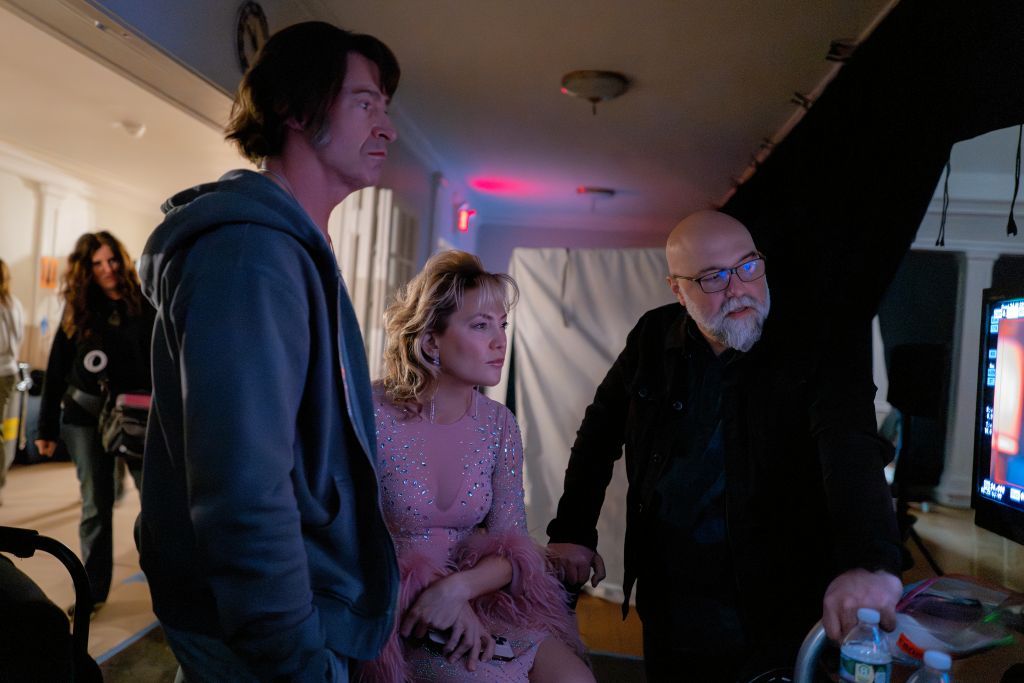
“But I went over to my cameraman and I said, ‘Look, I just want you to glide. I’m not going to tell you where to put the camera. I want you to trust my dolly operator and move where you think you need to move,’” he says. “And I went to Kate and Hugh and I said, ‘Here’s the very basic staging of what I think. I’m going to go over to the monitor and we’re going to hope for the best.’ I look at that scene now every time the movie plays when they’re singing to each other at that last note. And it’s one of the most magical moments I’ve ever seen in my work where I can’t believe we’re getting what we’re getting and it’s just happening completely organically.”

As euphorically great as the musical numbers are—you’ve never heard “Soolaimon” like you have here—Hudson says that tapping into Claire’s comeback arguably proved the greatest challenge. The singer recalibrates in the film’s second act as she seeks to return to the stage following her accident and subsequent struggle with addiction. “For me, the physicality wasn’t necessarily difficult to play. It was the mental with the physicality,” says Hudson.
“Then at the ‘Holly Holy’ scene, she completely reconnects back to the love and that connection with him.” Much like Brewer’s use of “Play Me” to convey the story of Lightning and Thunder falling in love, Song Sung Blue uses Diamond’s hits in jukebox musical fashion to convey narrative arcs, like with “Holly Holy” expressing Claire’s recovery and using the emotional appeal of the music to find her voice again as the crowd joins the therapeutic refrain “Sing, sing, sing, sing.” Claire’s passion for performing carries the family through the second tragedy that awaits.
“Getting the levels as we were shooting it is when you start to take your work really seriously,” says Hudson. “When you’re playing someone who’s a real person, you realize how important it becomes because just want to get it right for them.”