




“You could say it’s a call to arms,” says director Shane Belcourt on his film Ni-Naadamaadiz: Red Power Rising. “I’ve always thought of it as a call to spirit.”
Whether one takes Ni-Naadamaadiz as a call to arms or spirit, or both, the documentary premiering this week at the Toronto International Film Festival captures a watershed moment in the fight for Indigenous rights and the land back movement. The film throws light on an overlooked story in Canadian history as Belcourt (Beautiful Scars) and writer/producer Tanya Talaga (Spirit to Soar) revisit the 1974 occupation of Anicinabe Park near Kenora, Ontario. Ni-Naadamaadiz tells how 150 people sought to reclaim the green space that served as a gathering place for the community in Treaty 3 territory. It shares how the late Louis Cameron fearlessly led the Ojibway Warriors in a stand that drew attention to government inaction, systemic violence, illegal land sales, and neglect for the community, including concerns regarding water tainted with mercury—issues that remain tragically relevant today.
“Whether you go back to the Northwest resistance of 1885 or before, you’re going to find a lot of the same elements: dislocation, an inability for families to thrive in lands that they once did. It breeds a desire and a need for people to step up and to find a way to resist the encroachment,” says Belcourt. “But it’s not just an act of violence. It really is an act of love and it’s an act of love from the leadership to say, ‘I will step forward and put myself in harm’s way.’”
The film tells how the might of the state inspired a larger movement as the spirit from the occupation joined with similar factions, leading to the People’s Caravan that went all the way to Parliament Hill. “When you tell the story of Louis Cameron or the occupation of Anicinabe Park in 1974, what you’re really telling is a story of Indigenous self-love and Indigenous perseverance,” says Belcourt. “That is something I grew up with in my family home. My dad’s an Indigenous rights leader, who’s been fighting for Métis non-status and off-reserve Indian rights. That began in 1972, so that’s something I knew very well from seeing it firsthand.”
Ni-Naadamaadiz tells this story of perseverance by drawing from the mere eight minutes of video archive available from the 38 day occupation that culminated in a disproportionate police presence in Kenora—a historical note in itself of settler Canada’s apathy to Indigenous causes That’s a meagre amount of material for a film that Belcourt says he initially envisioned as an archive-driven work in the spirit of MLK/FBI or Attica. But the filmmakers’ find an innovative approach by using the records available to them, pooling resources to create a film that’s both an essential historical record, but also a compelling tool for issues in the present.
Talaga, who is of Anishinaabe and Polish descent from Fort William First Nation, says she first encountered the story of Anicinabe Park while researching her book All My Relations. While further looking at the story in her Audible podcast Seven Truths, she says she saw the need to go deeper into the story with a documentary. But with only eight minutes of archival video available, Talaga says that exploring the story in a visual medium posed a daunting task over years.
“We went far and wide. We were looking through newspapers, old footage, radio footage, magazines, journals, everything possible,” she says. “And of course, as is always the case, the people that helped us most are in the community and actually in Kenora itself. The newspaper articles, for example, are privately held because they’re no longer in the Kenora public library. Those news clippings are somehow all gone from the time of the occupation. They were privately sourced from someone in Kenora, and that was huge. But the photos too are huge.”
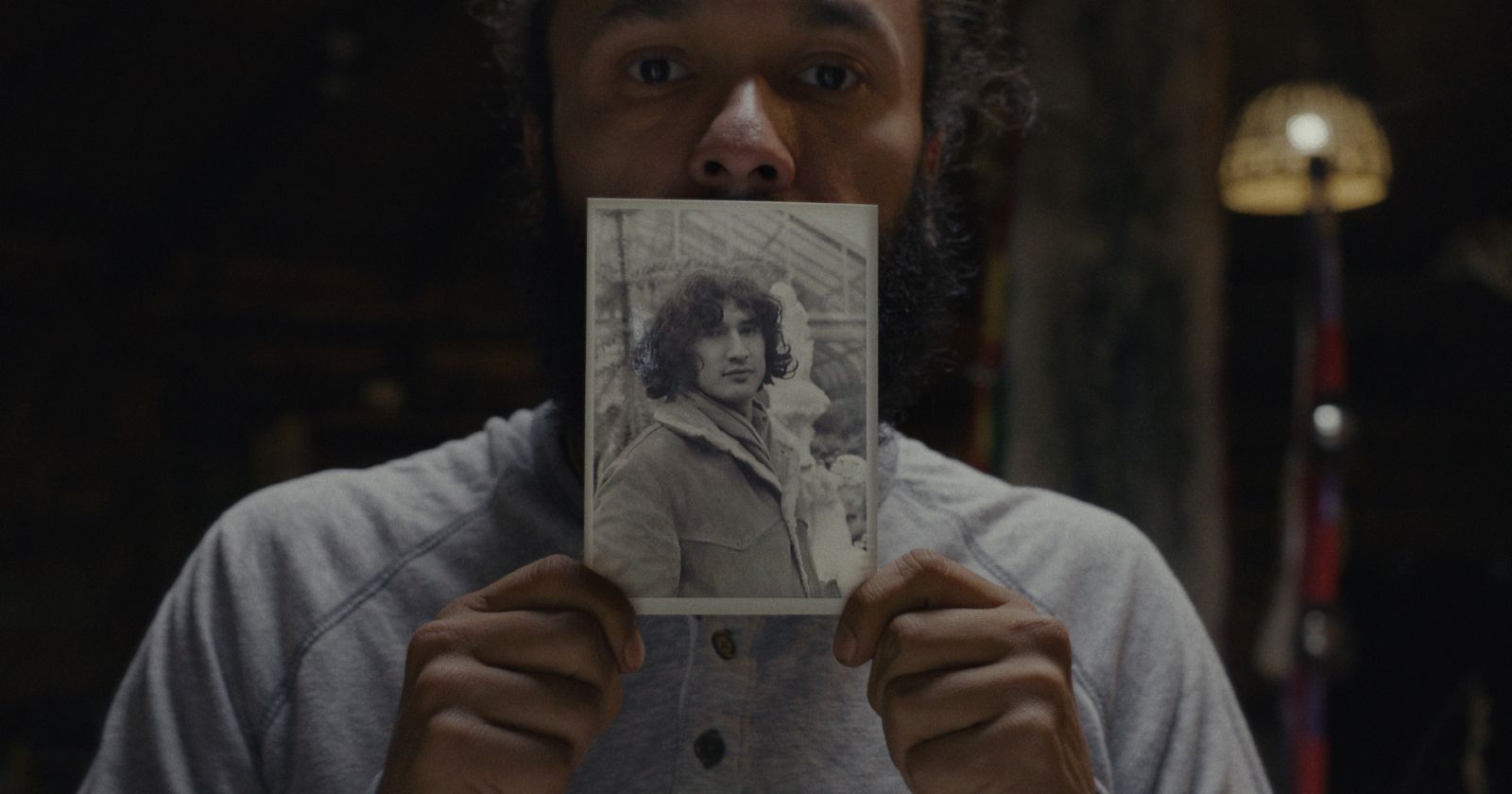
Talaga notes that finding photographs of the young Ojibway Warriors was an especially compelling and inspiring part of the research process. After writing and voicing the story for her podcast, she says that finally seeing the faces of the young activists had an impact. “When I was visiting with some of the community members and the warriors that are in the film, they brought out these photos and you’re just like, ‘Whoa!’ They were so young. A lot of my work is around Indian residential schools and particularly the situation of our rights in northern Ontario, so seeing this come to life through the words of Louis and his manuscript, through getting to know Lynn [Skead] and Louis’s sons. It was just wild seeing it and knowing that nothing really has changed in Kenora.”
The journalist and filmmaker cites numerous contemporary echoes that one sees in the events leading up to Anicinabe Park. “The three communities that are situated where Anicinabe Park is are presently in court fighting the government of Canada to get that land back 50 years later,” she observes. “We’re in court now trying to get that land back for our First Nations. That is the number one thing that speaks so clearly to me. It was about a year ago that a man from Wapekeka First Nation. [Bruce Wallace Frogg] was killed by police in Anicinabe Park. And I’m thinking as well of Delaine Copenace, a young adolescent girl who was found floating in the water, just a stone’s throw away from the police detachment headquarters and her death has gone unsolved.”
But Talaga points out that while the film deals with heavy subject matter, that’s not the complete picture. “We are funny people. We have great senses of humor, and I always say that that’s what gets us through, right?” she says. “There’s a lot of dark shit going on in our communities and that fight still to get our land back, and it still goes on.”
That sense of humour resonates, for example, in one of the film’s most memorable interviews when Winona Wheeler recalls the violence that Warriors faced from the police and settler community. She remembers carrying a bucket of coffee across the park for the Warriors and hitting the ground when someone took a shot at her. She simply laughs at the camera while recalling how she regained her footing and scurried low with the coffee, but noticed that her feet were wet: the bullet punctured the bucket, spilling coffee all over her. “Excuse my language, but ‘Fuck, that was close!’” she chuckles.
The absence of archives, however, means that Ni-Naadamaadiz builds a riveting oral history of the Anicinabe Park occupation through the voices of warriors who defended the land. Cameron’s voice appeals through excerpts from his unpublished memoirs, which his son Tyler reads in Ojibway in voiceover. “It is never clear when it is the right time to chronicle something,” Louis says via Tyler. The narration shares his haunting memories of residential school that fuel his need to fight for his people. “It was upsetting and terrifying and the cause of my nightmares,” Louis reflects.
Belcourt and Talaga credit the film’s voice coach, actor/filmmaker Jules Koostachin (WaaPaKe), for drawing out Tyler’s presence in the film. Her own voice can be heard in some of the candid interviews with Cameron as he revisits memories of Louis’s life. “She’s from Attawapiskat, and we thought there’d be a way for Tyler and Jules to connect and she could become an acting coach for him to work through the lines and help him connect to the words,” explains Belcourt. “While we were taping those [sessions], she would just ask questions like, ‘What do you think about what you just read?’ We wound up using the off-the-cuff conversations with Jules.” That image of the collaborators reconstructing their history underscores the theme of community that echoes throughout the tale of the occupation.
“I work in many different formats, and for me it’s always about making sure that our people’s stories are heard and we need a team to do it,” adds Talaga.
Other voices in Ni-Naadamaadiz include Louis’s wife, Lynn Skead, who recalls Cameron’s unwavering spirit, but also the price he paid for being a warrior. Skeads notes that their kids had to take her name to avoid potential payback. Winona Wheeler, meanwhile, speaks to the collective action entailed in keeping the occupation going thanks to folks like her who peeled potatoes and fed the Warriors. The diverse perspectives grant the doc a great range of coverage, so to speak, as individual experiences build the collective story.
“I’m 52 now, and if you asked me, ‘Could you tell me the story exactly, with perfect detail, what happened on this day when you were 21 or 18? It’s amazing that people could remember things,” observes Belcourt. He says that the gaps in perspectives—simply with people doing different tasks and being in different places as events unfolded—necessitated a Greek chorus-style approach. “But the elders who were there were really central. There’s something about the authenticity of people from a place: the way they speak, the temperament, the tempo, those things that have a je ne c’est quoi about how you’re framing and hearing the story.”
“It was amazing to see how it was actually women who were the ones who really came through with the storyline too,” adds Talaga. “That really popped out, which was so beautiful to us too, especially Lorraine Major and Lynn Skead, Tyler’s mom. Sadly, both women passed away since the filming ended.”
That collective spirit, and the sense of continuity, carries a stirring throughline in Ni-Naadamaadiz as story moves from the Acininabe Park occupation to the People’s Caravan, and eventually the stand on Parliament Hill—which erupted in brutal violence when the RCMP descended upon protesters with militarized force. That jarring turn in the story evokes the ongoing fight that the Ojibway Warriors had begun near Kenora.
“It would be false to make a film that is based on reality and try to tell people, ‘See, everything’s great.’ Go to Kenora right now and you’ll see the nuclear fallout of residential schools all around you,” says Belcourt. “Now, there’s a piece of that where everybody sees the trope of the fallen Indian, but that’s not the majority and that’s not the total story. We tried to balance this idea and this feeling that there’s all this shit, there’s all this struggle, but behind that is the perpetuation of people to keep going—that spirit that Louis and Tyler have generation to generation.”
Belcourt says that audiences can see from Louis’ example how to carry that spirit and transform it into action. “Where are the micro steps forward? Where are the micro steps backwards? How do you organize yourself?” Belcourt notes these are just some of the questions he would have liked to ask Cameron, and they are likely ones that audiences will find asking themselves afterwards. “His ability to see from that 10,000 foot lens, but then make it personal at the same time [made him] just an extraordinary visionary speaker and writer. I would wonder how do we better balance elected leadership, which is an important role to engage in that nation to nation government work with grassroots organization?”
“I would ask him if he would do it again, knowing what happens on the other side. I’d really want to know too how he felt after the park,” says Talaga. “How he felt with his boys, and just knowing how hard it was for the whole family. I’d asked his advice because our communities are still fighting for land. If it’s not land, clean water, or to get a seat at the table with Mark Carney’s major project legislation: how do we do it? What do we do? We need your help! How do we get the youth to keep going?”
Ni-Naadamaadiz: Red Power Rising therefore offers a historical precursor for the present Land Back movement as one of the earlier events to mobilize action. (The film tells how Anicinabe Park, for example, drew solidarity with the American Indian Movement.) The filmmakers hope that audiences see the echoes in the call to spirit. “Land Back sounds like taking where it’s really more just maintaining,” says Belcourt. “And it’s an interesting term, ‘Land Back,’ where an outside audience [might say], ‘You’re going to come and take my backyard.’ No. We’re saying stop moving in ours because there’s nowhere left for us to go. I’m so amazed by young people because it didn’t start so much with an idea of land back, but it started with language back. There are so many speakers using language and that worldview to entrench their connection to where they come from and their land. ‘Land Back’ is like ‘Me Back.’”
“We’ve always been the land. The land gives us our language. The land gives us life. It’s who we are, the land, the water. And that’s what it’s always been about. Our people were squeezed onto reserves, but that’s never how we lived,” adds Talaga. “This is our home. This is our land. And there are treaties that we have with Canada [and] with Ontario to make this country. And those treaties are law. They have been ignored for so long, but they can’t be. We have to go back to those treaties and realize it and do what’s best for all of us, how we create a better country.”