





Ask Degrassi: Whatever It Takes director Lisa Rideout what character she might have been in high school, and she can’t help but laugh. “I was like, ‘I hope nobody asks this question,’” she tells POV over Zoom. “What is crazy about when we went to school is that we had a smoking section. I was the kid who was in the smoking section, going to parties. I don’t want to say I was troubled, not in that bad group of kids, but obviously as an adult, I think about what I was going through as a teen and why I was acting that way: lots of partying, lots of not going to school, and being in the smoking section.”
Where it gets funny is that, prior to our call, I’d asked my dad, who was Rideout’s principal (and mine) at St. Paul Catholic High School in Nepean, if he remembered her. He quickly recalled a student who was a smoking section staple. (But no mention of “that bad group of kids.”) Rideout was a few grades older than me, but it’s a very Degrassi-esque confluence for two people in documentary film getting a chance to discuss a landmark Canadian production about authentically representing teen life.
As Degrassi: Whatever It Takes gets set to premiere at the Toronto International Film Festival on September 8, audiences can expect a surprising trip down memory lane revisiting episodes that guided their adolescence through times both good and bad and gave them a reason to pick up the phone and discuss it with friends. Or, in later years, chat about it on ICQ or MSN Messenger, or, eventually, TikTok.
Rideout (Take a Walk on the Wild Side, Sex with Sue) perfectly captures the legacy and history of Degrassi, which grew from a short documentary to become the longest-running dramatic franchise in Canadian TV history. (And surely rivalled only by The Simpsons and Law & Order.) It’s a quintessential Canadian story about a band of inspired individuals, led by schoolteacher turned showrunner Linda Schuyler, who changed the landscape for youth programming with a shoestring budget and DYI spirit.
Degrassi: Whatever It Takes gives Schuyler’s brainchild its due. Rideout’s film draws together a who’s who of actors and collaborators from different generations of the franchise to consider the storied history of Degrassi and its impact on youth culture. The film asks why Degrassi struck a nerve with audiences across generations and found avenues to help them understand facets of growing up, whether they had a crush, needed to come out, or felt alienated. The participants acknowledge that Degrassi didn’t always get it right when trying to capture many teenage experiences, but they credit it for making headway regarding onscreen representation—a conversation that Hollywood didn’t really take seriously until the #OscarsSoWhite campaigns of 2015 and 2016 made the issue too loud to ignore.
The film looks at how Schuyler and collaborators like Kit Hood broke ground by representing young people authentically beginning with the 1979 after school special Ida Makes a Movie. Participants in the film recall a casting process that wouldn’t fly today, as posters plastered Toronto seeking age-appropriate kids who were willing to act. “No experience necessary!”
But Whatever It Takes tells how that after school special connected with audiences, and with Schuyler and Hood, who decided to keep the story going in The Kids of Degrassi Street (1982). As the actors aged, and the viewers with them, the franchise evolved into Degrassi Junior High and new iterations with new classes of students.
Rideout admits that capturing the story of a franchise that spans over 40 years and 500 episodes is no easy task. “Stefan Brogren [who played Snake] sums it up in the opening where he says, ‘You have a challenging story to tell,’” says Rideout. “What we did at the beginning was identify what we called our ‘pillar episodes’ – which episodes were the first that were ever seen in terms of subject matter on TV that pushed the boundaries, that got banned from television, that did anything that was groundbreaking. We decided to root the narrative in that. That also helped us figure out who should be in the film, because you have a franchise with such a long history, but also they were ensemble casts. There were so many actors on that show.”
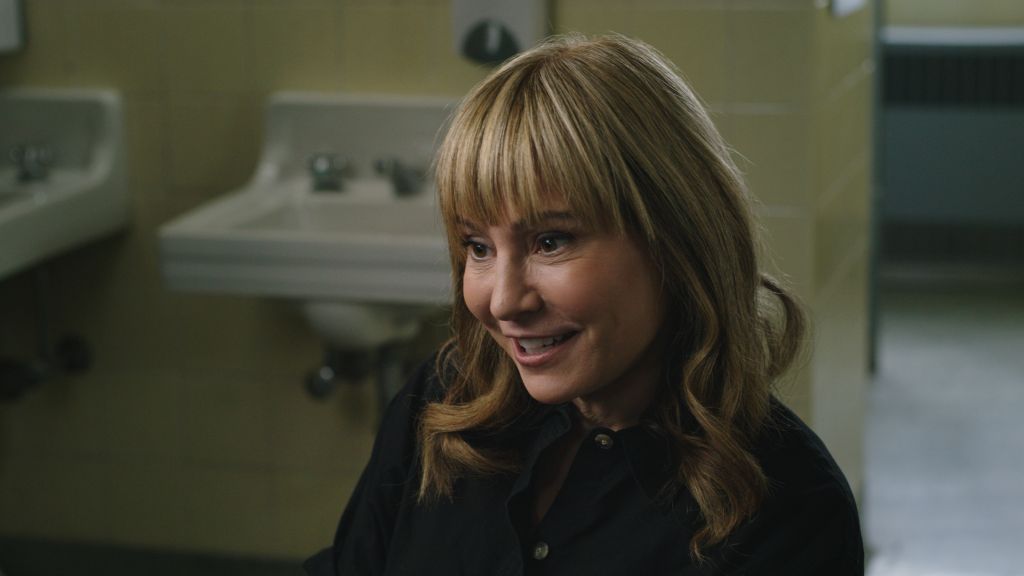
The film revisits landmark moments in Degrassi, particularly in the formative years of Degrassi Junior High and Degrassi High when the show really hit its stride. For example, Amanda Stepto remembers the controversial episode in which her character Spike—known her iconic ’80s’ hairdo—learns that she is pregnant. It’s a deftly handled storyline, particularly as a product of its time made for a younger audience. Rideout’s film smartly uses this story to explore how Degrassi itself was akin to a living thing as Spike’s daughter Emma became a central character in Degrassi: The Next Generation.
Likewise, the film gives plenty of space to the Degrassi High episode in which Erica (Angela Deiseach) became pregnant, but decided to have an abortion after debating the issue with her twin sister Heather (Maureen Deiseach). The film gives CBC credit for airing the full two-episode arc, which ended with Erica walking through a group of protesters outside an abortion clinic and going inside, leaving little doubt that she went through with the procedure, while PBS re-edited the ending in the States to remove the protesters and leave it ambiguous.
Episodes in subsequent iterations of the franchise take audiences further into the clinic, and show more of the pro-choice process, meeting varying degrees of censorship internationally. Other pivotal growing pains include the episode with Spinner (Shane Kippel) popping a boner in class, while Brogen asks at the outset of the film if Rideout plans to include the “penis pump” episode. (Spoiler alert: she does.)
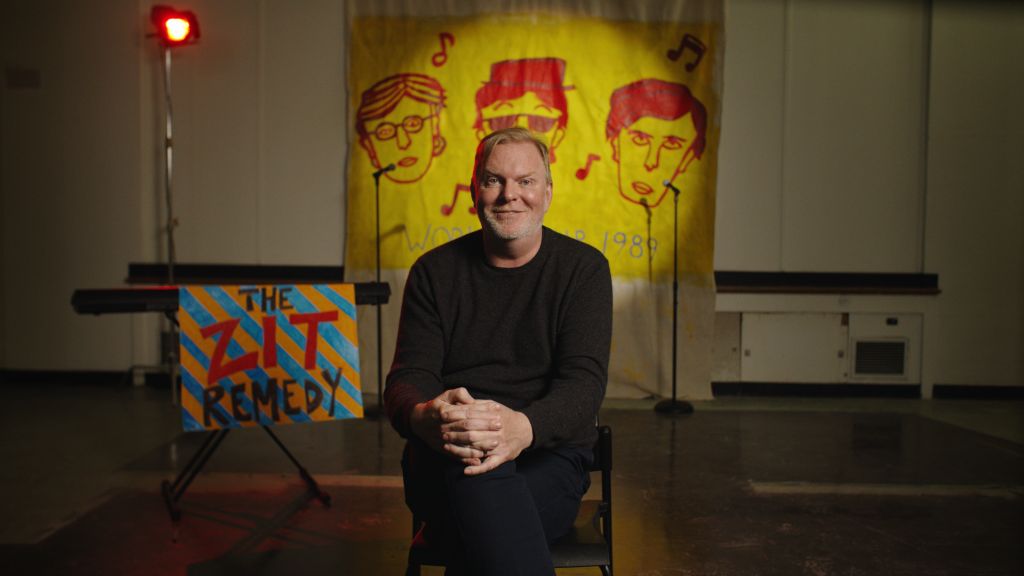
Rideout says that picking key episodes to explore in depth, and to structure the story thematically, rather than chronologically, let voices from different generations of Degrassi speak to its growth. “We came up with the idea of ‘teen beats’ because when I was researching, I tried to put myself back and think about what characterizes being a teen and all those emotions that we have,” explains Rideout. “It really is that everything’s a first for you, so you have this heightened experience of your first kiss, your first party, and I really wanted to include that because it would resonate with people and it would put us back into that mindset of being a teen.”
Moreover, actors share how many of the “firsts” experienced by their characters were also firsts for them as young people. They relate how a first kiss is doubly intimidating (and somewhat unfair) when it’s filmed for the world to see. “Being a teen actor is something that not everyone can identify with it, but you can identify with actors who have had their first kiss, so that was one of the devices that we used,” says Rideout. “And then, obviously, the history of Degrassi and the behind the scenes. I see it as three parallel storylines that we weave.”
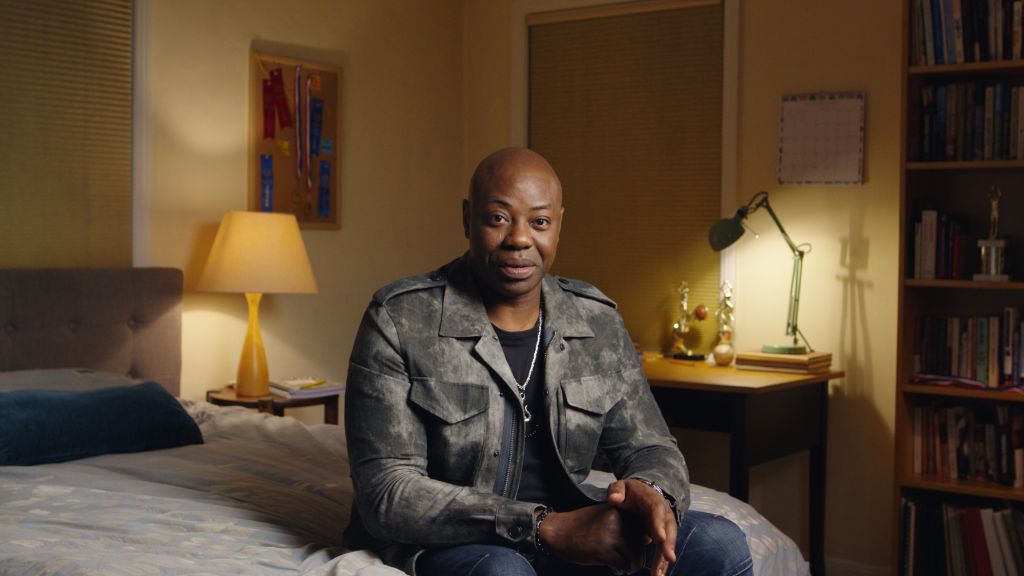
Sometimes the film offers tough love for Degrassi while zeroing in on pillar episodes. For example, actor Dayo Ade remembers the episode “Black & White” in season three of Degrassi Junior High in which his character BLT fell in love with a white girl, Michelle (Maureen McKay), and the show tackled interracial dating. But Ade notes that for all the seemingly progressive elements of this Guess Who’s Coming to Dinner? episode, it focuses on Michelle’s perspective as she seeks approval from her parents for wanting to accept her Black classmate’s invitation to prom. The film shows how, for all Degrassi’s efforts to draw upon its young stars’ experiences and translate them into the show, it didn’t quite understand the depth and nuanced entailed in representing a diversity of experiences. Ade recalls BLT getting that token episode without having many meaningful storylines otherwise.
“It seems like they learned as they went—and that’s what they were doing,” says Rideout. “It’s this whirlwind of making this thing. Linda Schuyler started as a teacher, made a documentary, then made The Kids of Degrassi Street, and I’m sure they were just going like this,” she says making a snaking motion with her hand, “which is not to excuse things. I think they could have had more complex voices and voices of people from different backgrounds. But what we try to do is show all those different perspectives.”
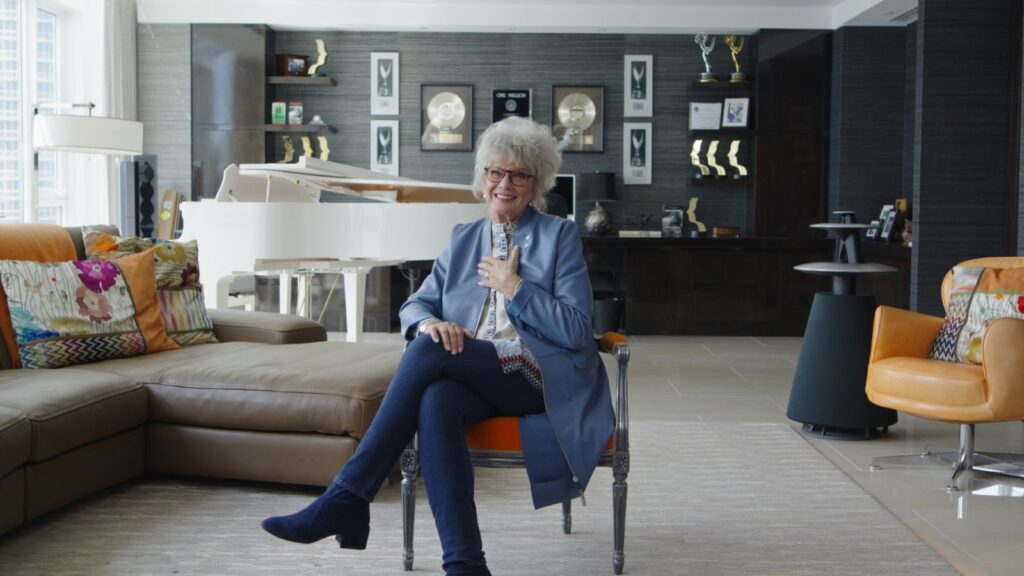
To Schuyler’s credit, she addresses every question that Rideout gives her in the documentary. In most cases, she owns Degrassi’s failures as much as its successes. The phrase “it was a different time” abounds when fielding questions ranging from work conditions (child actors made their own lunches in the early days) to casting (including cisgender actor in The Next Generation’s introduction of a transgender character, Adam, who was quickly killed off). The imperfections partly illustrate what Degrassi achieved in a medium that was, and continues to be, controlled by straight white men while Schuyler was ambitiously endeavouring to correct so many layers of onscreen representation.
“I think multiple things can be true, and there were so many different experiences: If you were an actor on the set, or if you were Linda who was running this big production, or if you were Kit Hood, whose voice we didn’t get to hear. [Hood passed in January 2020.] But it was a time where there was nothing else like Degrassi on television,” observes Rideout.
“What they were doing was that they were changing the representation of teens. Linda was trying to reflect what she saw in her classroom,” she continues. “I think that’s why it felt so authentic and raw. You have someone like Andrew Phung [who appears in the film to talk about the show’s impact] who was like, ‘Yick [Siluck Saysanasy], he was my guy. I’ve never seen anyone like him on television before.’ I think so many of us had that experience in terms of diversity on screen, where for me, it was Lucy [Anais Granofsky] who was the first mixed race person I ever saw on television. It was like my mixed race family that I never see represented—not the same mix but something positive.”
The film also looks at how Degrassi continually evolved with varying success by situating the school’s abnormally high tragedies-per-capita ratio within timely events. For example, the film zeroes in on the 2004 episode “Times Stand Still” from Degrassi: The Next Generation in which Jimmy (Aubrey “Drake” Graham) gets shot following an altercation in the halls. The cast, including Drake in a rare appearance to talk about his Degrassi days, remembers a shift in the air, almost as if Degrassi lost its innocence when it tackled Columbine-era gun violence.
Rideout says that rewatching episodes like “Time Stands Still” as an adult gave her perspective about what Degrassi was trying to accomplish, including the subsequent storylines in which Jimmy, a star athlete prior to the shooting, adapts to life in a wheelchair. “They wanted it to be an educational tool, but they also wanted it to be from the point of view of teens and to not have it so neatly wrapped up,” she notes. “It was about the consequences of their actions.”
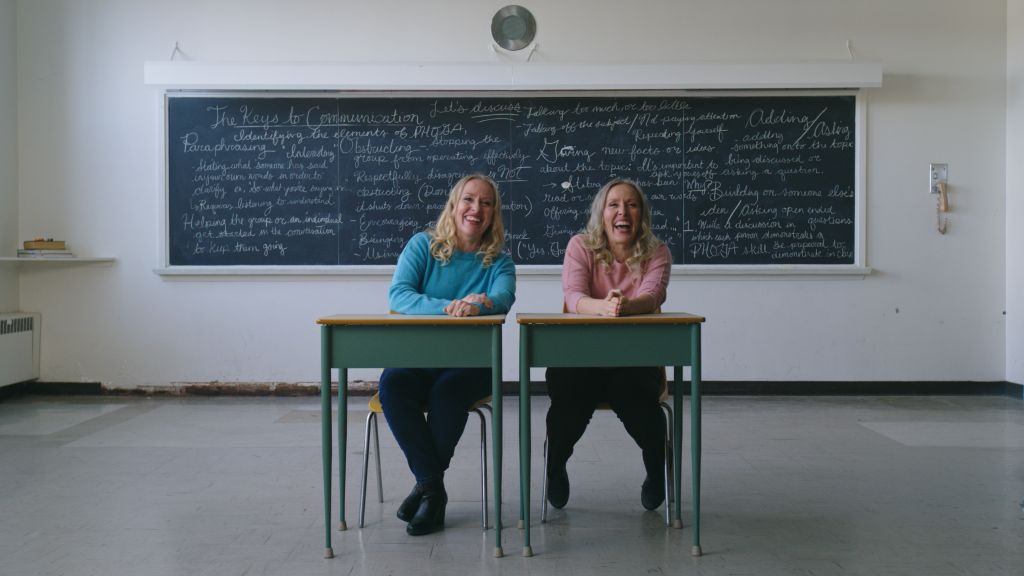
The film also shows how Schuyler and company had to expand the writing staff as production evolved, especially in later years when the show shifted to Netflix and had to learn the language of Gen Z. “To keep that voice authentic would be very challenging,” says Rideout. “As an adult, talking about technology that a 12-year-old would use right now is really hard. So then if you are writing those words from their mouths, it would just take a lot of work and a lot of research and a lot of talent to make it feel not fake.”
Even if the later seasons of Degrassi don’t quite have the same effect as the formative episodes do with their ’80s fashion and wholesome mix of cheese and sincerity, one can’t help but give the franchise credit for laying the foundation for later 1990s’ shows like Breaker High, Boy Meets World, or Sister, Sister, and contemporary youth-oriented shows like Skins, Euphoria, and Heartstopper that push the envelope while bringing authentic teen life to screen. The show’s legacy, perhaps, is the tagline “It goes there” that advertised the Next Generation years. Even when Degrassi wasn’t perfect, it went places most shows were afraid to explore.
Rideout says that philosophy is a takeaway from Degrassi and cites the 1990 episode “Bad Blood” as an example of its depiction of the straight male school bully anxiously awaiting the results of an HIV test when AIDS was devastating the gay community with many people dubbing it the “gay disease.” Rideout notes that Degrassi brought in two HIV positive men from the Toronto organization People with AIDS to help with the show.
“They were pushing boundaries, not just on the screen, but also behind the scenes. What that does is open up the conversation, and I think when it’s a popular show, it normalizes things in a way that you can’t do potentially in indie film. If you’re pushing these narratives, then people have access to it,” says Rideout. “If every show could do that, it would be incredible. But Degrassi normalized these uncomfortable feelings and conversations that people were having. Degrassi does a good job at making you not feel alone. That’s especially important in the classic era when we didn’t have access to Google and could see that everyone else was asking the same questions.”
Degrassi: Whatever It Takes premieres at TIFF on Sept. 8.
Get more coverage from this year’s festival here.