




You Had to Be There: How the Toronto Godspell ignited the comedy revolution, spread love & overalls, and created a community that changed the world (in a Canadian kind of way)
(USA, 98 min.)
Dir. Nick Davis
Programme: Special Presentations (World premiere)
“It was like Paris in the ’20s,” says actor Martin Short in You Had to Be There. The acclaimed actor reminisces about the Toronto comedy scene in the early 1970s. His expressive and (very) funny interview in this rollicking documentary situates the scene of a comedy revolution. Short recalls sharing a house with Eugene Levy on the drolly named Avenue Road, that no man’s land for people who can’t quite afford to live on the Yonge Line or its crooked western counterpart. He remembers the haven as a place where like-minded artisans and comics would mingle, drink, smoke a little reefer, and let creative sparks fly.
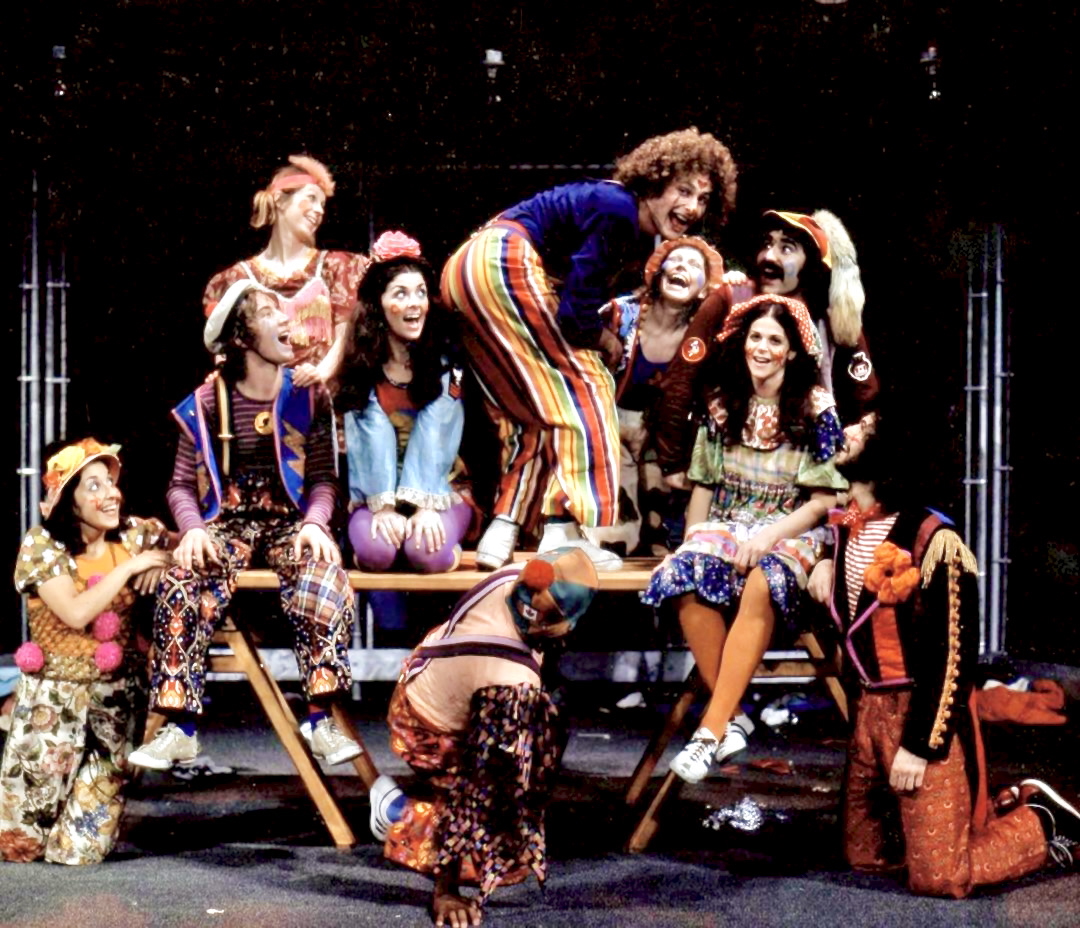
But instead of Gertrude Stein, Ernest Hemingway, Salvador Dalí, and other characters from Midnight in Paris, Toronto had Martin Short, Eugene Levy, Andrea Martin, Jayne Eastwood, Victor Garber, Gilda Radner, Dave Thomas, and a host of other very funny people. As luck would have it, the story goes, they all starred in the 1972Toronto staging of the hit musical Godspell. And as everyone says, “You had to be there.” This musical truly is the stuff of legend.
You Had to Be There revisits this fabled musical breakthrough that ran at Toronto’s Royal Alexandra Theatre where its vertiginous slope and knee-crunch seats invited theatre-goers to witness history in the making. Director Nick Davis’s terrific return to this historic event offers a laugh-a-minute trip down memory lane that’s not merely nostalgic. It’s a valuable oral history of a defining moment in pop culture.
The documentary does exceptionally well in revisiting the 1972 Toronto Godspell production, particularly since it has minimal archive to work with. Nowadays, all the boomer “you had to be there” docs offer nostalgic romps through the archives, but this one puts the adage of ephemeral experiences to the test. The film impressively meets the challenge of capturing a moment in time of which few recorded elements exist.
There are photos and media clippings, but you really had to be there for Godspell ’72. Since nobody was taking the Toronto scene too seriously, and since Canadians generally have a shoddy legacy when it comes to cultural history—and, frankly, lack the support and subscriber base to do adequate arts reportage—this film does a wonderful reconstruction of the landmark event by piecing together memories from the gang. Retro-style animation fills in the gaps with a comedic spirit that captures the mood and anything goes artistry of the time.
The film considers the revolutionary nature of John-Michael Tebelak and Stephen Schwartz’s reinterpretation of the Gospel of St. Matthew and how Godspell offered the secret ingredient for Toronto’s comedy scene to pop. While Tebelak passed years ago, Schwartz returns among the film’s many interviewees and reflects upon harnessing the humour of the Bible and refashioning it through clowns. He relates how the story of Jesus and his disciples has all the makings for comedy greatness—it’s just that nobody ever played it for laughs.
The cast revisits the competitive audition process in which they all gathered to watch their friends belt out show tunes or, in Short’s case, classic crooner numbers while vying for parts. Everyone but Andrea Martin remembers getting a callback. She shares the dejected feeling of being so close, but the odd one out. However, as history goes, a casting shakeup brought her into the revolutionary fold.
The stories fly by with tales of starving artists recognizing an opportunity and feeding their hunger to entertain audiences. Victor Garber has lots of fun recalling his first run playing Jesus, while Eugene Levy ups the ante by conveying the subversive edge that arose when Garber left to do the Godspell movie and the producers asked him, a Jew, to fill the vacancy. Jayne Eastwood, meanwhile, captures the energy that she felt in the auditorium each time she stepped out to do a number. Paul Schaffer speaks to the musicality of the production that electrified Torontonians.
You Had to Be There features some real nuggets to satisfy fans of the legendary show. Short, it turns out, recorded audio of a performance by fixing microphones to the set. The quality of the recording inevitably proves lacking, but the film thrills by sharing the young voices hitting their collective stride.
It’s not all happy memories, though. Things take an emotional turn when the gang recalls Gilda Radner’s passing at the cruelly young age of 42. Short (him again!) remembers their on-off relationship, but even memories of a lost friend are suffused with laughter. These comics know how to harness levity and turn frowns upside down.
Similarly, Davis expands the story of the fabled show to consider the fickle nature showbiz success. You Had to Be There asks why some people emerge stars from the same scene and enjoy prolific careers, while their colleagues struggle or enjoy different degrees of success. Avril Chown, for example, discloses a troubling #MeToo story. Without naming names, she shudders at the memory of an incident that turned her off show business. For Eastwood, it simply comes down to family matters, but she gets her due here for laying the groundwork in Canadian film with Goin’ Down the Road and other movies that helped shape a canon when none existed. Webb, who doesn’t get many words during the doc, speaks to creating opportunities while the arts scene was in its infancy and roles for Black performer were doubly slim.
The good vibes and company, however, give everyone in the cast credit for collective greatness. Without any of these performers adding to the secret sauce of Godspell ’72, one can only imagine how comedy might have shaped up in the years that followed from Saturday Night Live to SCTV to Schitt’s Creek. The documentary offers a hugely entertaining record of Canadian cultural history worthy of time and celebration. And, in perhaps the most Canadian trait ever, it’s an American production.