



We Lend a Hand: The Forgotten Story of Ontario Farmerettes
(Canada, 49 min.)
Dir./Prod. Colin Field
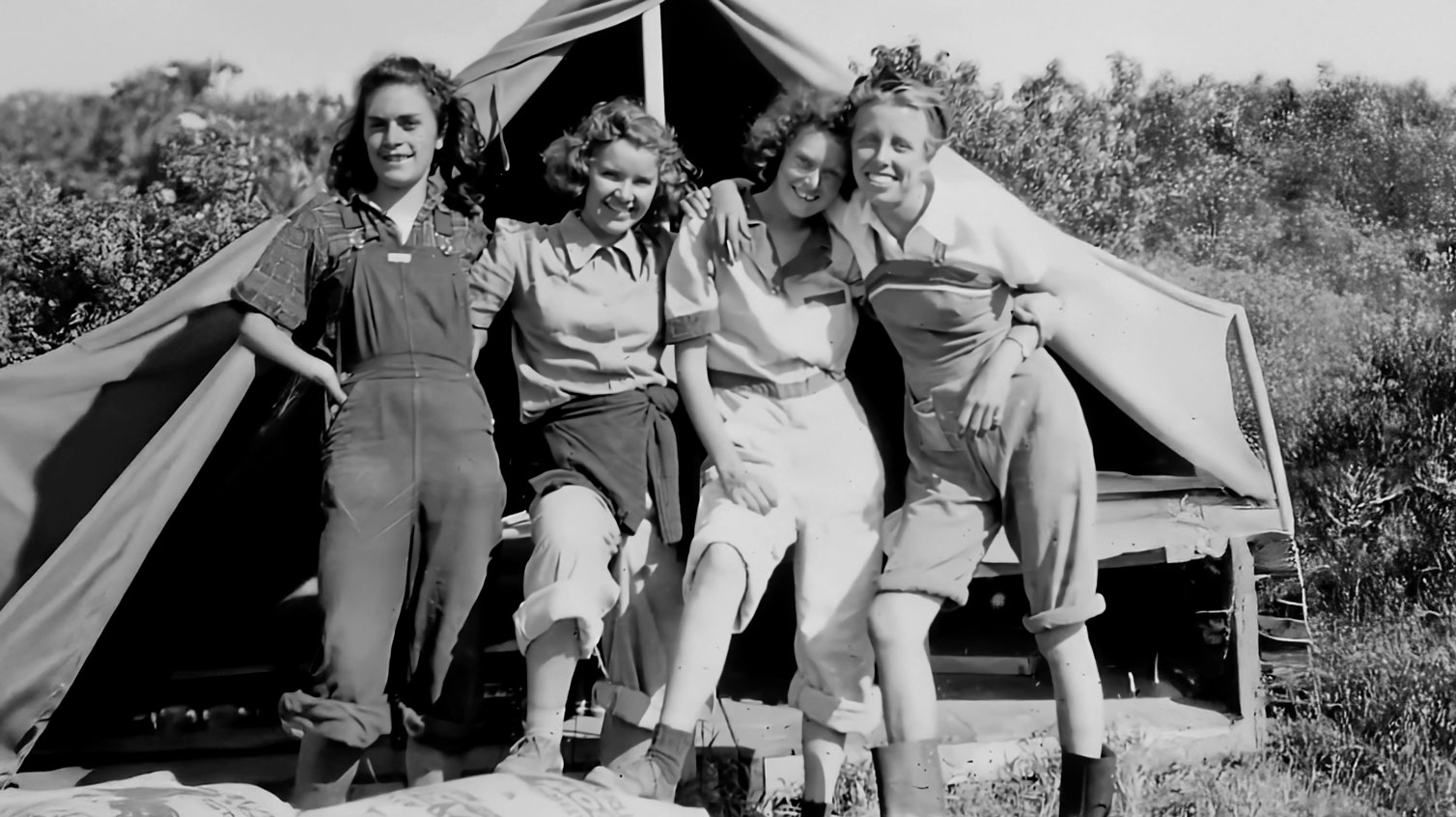
While the story of the Ontario Farmerettes has surely been whispered and at least received footnote treatment in some history textbooks, it’s high time for their contributions to the war effort be celebrated. They are to Canada what Rosie the Riveter is in America. Colin Field’s documentary We Lend a Hand: The Forgotten Story of Ontario Farmerettes honours the young women who answered the call of duty during WWII, and along the way, offers viewers a poignant retrospective of a bygone era.
Field tells the story of the Farmerettes through Bonnie Sitter, an author based in Exeter, Ontario who came across a photo of three girls with “Farmerettes, about 1946” written on the back. Not knowing anything about them prior, Sitter began researching and wrote an article for a local magazine, which caught the eye of Shirleyan English, a former Farmerette.
As it would turn out, English had put out an advertisement in 1995 asking for Farmerettes such as herself to get in touch with hopes of putting their stories into a book. While hundreds of women reached out, English didn’t write the book just then, although she held on to all of the correspondence she received. After connecting with Sitter, the two would go on to co-write Onion Skins and Peach Fuzz: Memories of Ontario Farmerettes, a wonderful companion to Field’s film.
Field interviews nearly 20 Farmerettes who offer stories that range from touching to cheeky to amusing. Across these conversations, we begin to understand not just the circumstances in which they agreed to volunteer, but how this brief period would influence their identities and decisions later in life.
The social contract of the time prevented women from toiling away on the fields, so the idea of putting on a pair of overalls and crouching down onto the dirt to harvest an onion bulb was met with trepidation. But each of these women understood that any apprehension they held paled in comparison to the larger picture that included them. Some of their efforts provided food for Canadians at home, but in large part, the produce they harvested was sent to the Front for the Allied soldiers.
Field also includes some anecdotes around the treatment of Japanese-Canadians at that time. Isobel Chowen Gibson and Joyce Finlay Jones warmly recall the friendships formed with Japanese-Canadians who had been interned on the west coast following the bombing of Pearl Harbor in the U.S. Both Farmerettes stress the camaraderie and their ability to distinguish between enemies at war and Canadians who happen to share heritage with them. Beryl Anderson Beckett remembers the strong language their camp mother used when forbidding the Japanese-Canadian girls from using the camp showers. “That was the first time I’ve ever in my life heard anyone speak [like that], because I wasn’t raised that way,” Beckett says.
While a microcosm of larger events, these particular stories dissuade excuses for racism as simply a product of the era. It’s a small part of the film as a whole, but their inclusion provides a fuller picture of life in rural Canada during this time. Although thankfully a Canadian theatre never emerged during the war, the effects of wartime, economically and socially, were prominent in daily life.
Discussions around innovations in farming techniques and equipment pop up, creating a compelling divide between then and now. It’d be easy to simply cast off our problems of today as pithy and inconsequential in comparison to those during the war, but the Farmerettes of We Lend a Hand strike a different chord. Their nonchalant, matter-of-fact recollections of the war effort represent a generation of men and women who had no choice but to help out however they could. Not a trace of bitterness or victimization can be heard in the film. They don’t bemoan how “easy” it is for teens today — that was life, there was no point in complaining then and no point in complaining now. They’re not called the Greatest Generation for nothing.
As of press time, six of the Farmerettes featured in We Lend a Hand have since passed away, including English and Jones, highlighting the necessity of documenting stories like the Farmerettes in all forms. Canadian history lessons have markedly changed in the last few decades in the name of recognizing the ignored and forgotten stories of our country, for better and for worse. The Farmerettes deserve to be revered and regarded alongside the soldiers who returned home and those who perished overseas. Lest we forget.