




Put Your Soul on Your Hand and Walk
(France/Palestine/Iran, 112 min.)
Dir. Sepideh Farsi
Programme: TIFF Docs (North American premiere)
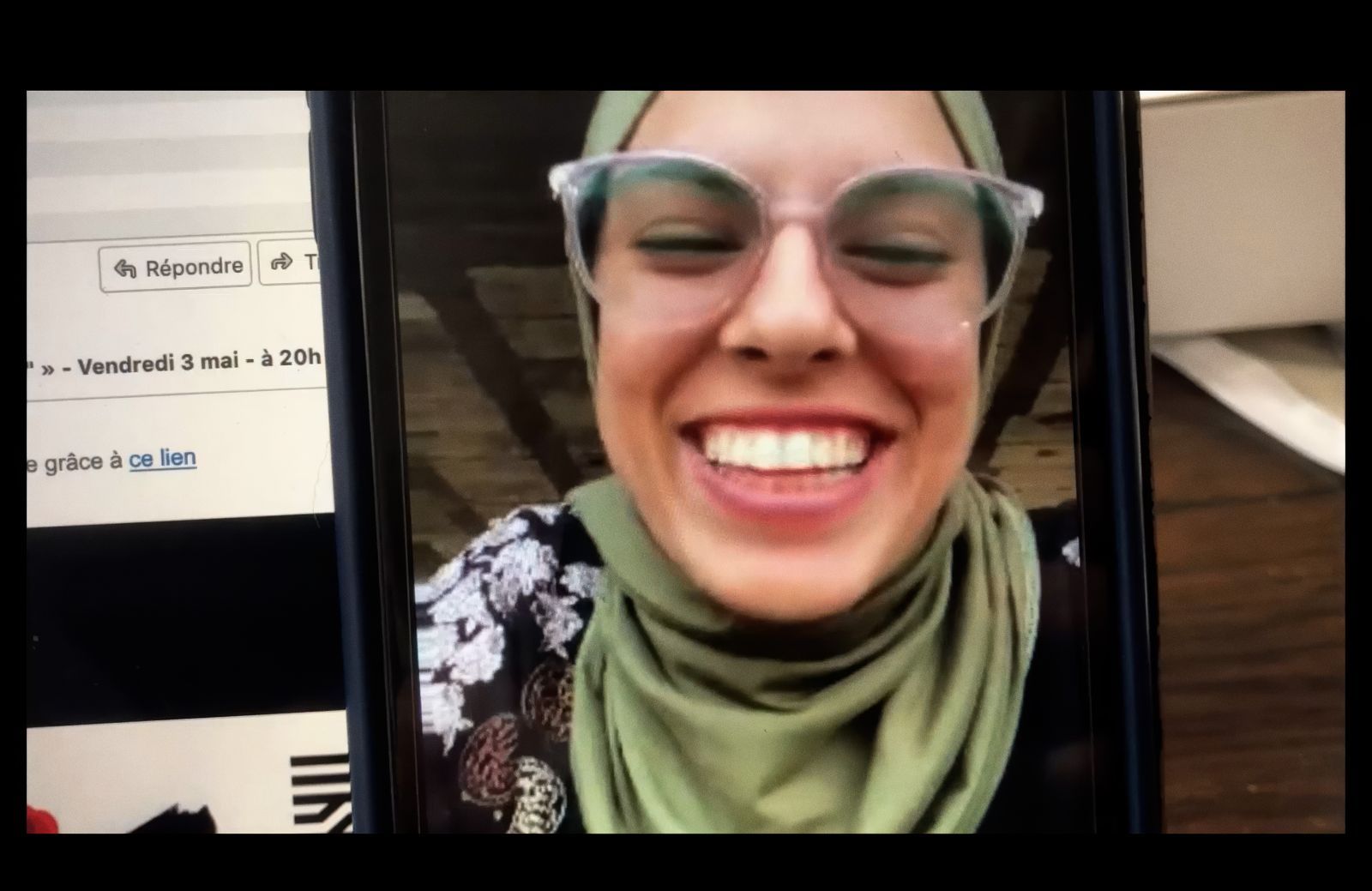
During the last year of her life, late Palestinian photojournalist Fatma Hassouna kept a smile on her face throughout the ongoing siege on Gaza. Every time director Sepideh Farsi would dial her up on FaceTime for an update, Hassouna would smile and say she’s doing well. “I’m good! I’m fine!” she would say. Even when Farsi can hear the drones and players whirring nearby, Hassouna would offer a reassuring smile. It’s as if things would be okay by telling someone else there’s no reason to worry.
Hassouna’s death in April 2025, one day after the film’s world premiere at Cannes was announced, inevitably hangs over every frame of Put Your Soul on Your Hand and Walk. However, in death, Hassouna immortalizes that smile and the resilience of the Palestinian people who refused to leave Gaza. Moreover, the tragic ending for Put Your Soul on Your Hand and Walk adds a poignant veil to every frame of the film. The inevitability of Hassouna’s fate makes the challenge of reporting from Gaza, and the risks to journalists sharing news and photos, doubly compelling.
Farsi, an Iranian director living in France and about a generation Hassouna’s senior, enlists the photojournalist to be her foreign correspondent when the war prevents her from entering Gaza herself. The director checks in with Hassouna via video calls from April 2024 to April 2025. The calls are spotty with intermittent Wi-Fi. Hassouna’s image freezes and the calls frequently cut out. Meanwhile, Farsi’s cat often insists on coming inside whenever the connection succeeds. It’s as if he too finds comfort in Fatma’s voice.
Moreover, Farsi meets Hassouna with an equal eye by filming her video calls with a phone camera. The rough aesthetic initially leaves something to be desired, especially as Farsi holds on the frustration that a shoddy connection has on an interview—but also the personal toll that a lost signal takes when the person on the other end of a call has bombs dropping all around her. But the effect of the spotty connection calls to mind the suspenseful scene in 20 Days in Mariupol when director Mstyslav Chernov struggles to find a good connection to upload his reportage. There’s a practical element at play in the film’s rudimentary aesthetic that conveys the difficulty of reporting during wartime, but also the basic daily challenges of life under occupation.
The conversations with Hassouna also offer meagre factual accounts about the situation on the ground. Their conversations are more personal updates: stories about access to food, discussions about mental health, and heartfelt reports about who survived and who was lost amid the latest bombings. Farsi breaks little ground in terms of reportage. In terms of figures and information, there’s little new here, largely because Hassouna can rarely leave the house.
What is fresh, however, is the personal element. These conversations offer a window into a soul who yearns to remain in her homeland, free of occupation. The conversations obviously prove encouraging for Hassouna as they remind her that somebody cares. She especially perks up when Farsi asks about her dreams. They’re fairly relatable too, like having the ability to visit faraway places. But Hassouna’s dreams shift from travel and mobility to basic things that audiences may take for granted, like a piece of chocolate or chicken for dinner. When she shows Farsi a bag of chips she received in a care package, she lights up as if the treat is the best delicacy in the world.
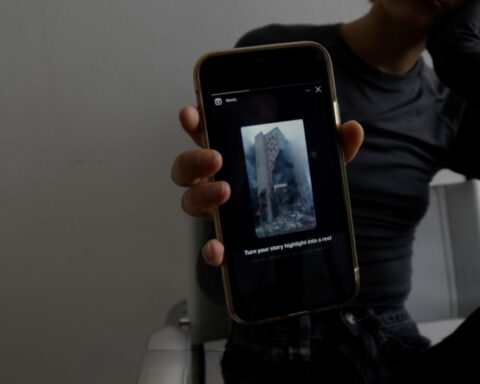
Farsi takes a special interest, too, in the adage that offers the film’s title. “Put your soul on your hand and walk” is an expression that Hassouna uses to convey the experience of taking one’s life in one’s hand and having faith while stepping out into the world. She yearns for freedom, even in the metaphorical sense. This openheartedness appears in her work, too, as she shares images of life under occupation for all to see. Select still images punctuate the film to convey the escalating horror, while Hassouna’s presence before windows presents the bombed-out shell of Gaza behind her. It’s a horrifying backdrop for her indefatigably reassuring smile.
As the conversations build towards the fateful final call, Put Your Soul on Your Hand and Walk evokes a chilling reminder about how quickly one’s life can change in a flash. The last time we see Hassouna on the video call, she’s smiling and laughing. She tells Farsi how excited she is to visit Cannes, but only if she can return to Gaza. Instead, she haunts the city forever. When the film finally puts down the phone and leaves the apartment, the camera steps into the streets for a walking tour of Gaza. The devastation proves horrifying as one gets a firsthand point-of-view of Palestine tragedy through this walking tour of the city Hassouna held dearly. One gets a sense of what Hassouna means to step cautiously, soul in hand.
Put Your Soul on Your Hand and Walk screened at TIFF 2025.
Get more coverage from this year’s festival here.
Updated (10/29/2025): Put Your Soul on Your Hand and Walk opens in Toronto at Cineplex Scotiabank on Nov. 7.