




Every year, we’re inundated with narrative biopics about our favourite singers, actors, athletes and political figures. The way Hollywood moves now, it has become a rite of passage for “legacy acts” in particular to receive the biographic treatment at some point, typically within their lifetime.
Often these dramatizations are produced adjacent to a documentary that tends to provide a more thorough and thoughtful retelling of their stories. For example, Asif Kapadia’s powerful 2015 documentary brought to life the English singer Amy Winehouse’s tragic story in a visceral fashion rarely seen to that point. Amy didn’t pull any punches when it came to Winehouse’s father who often manipulated her to his advantage. Mitch Winehouse disavowed the film but was more than pleased with Sam Taylor-Johnson’s biopic Back to Black (2024) starring Marisa Abela, which portrayed him in a warmer light—and for which he cooperated thoroughly.
In its purist form, the documentary holds its subject at arm’s length, objectively probing and examining their behaviours and decision making. This can be particularly difficult for films concerning public figures, whose brands live and breathe by their reputations and legacies, especially given the wayward nature of our politics and social culture today. Someone who was once popular may not stand up to the collective standards of today.
When HBO released Elvis Presley: The Searcher in 2018, the singer’s legacy didn’t quite align with the social values of contemporary culture. Arguably, the rise and fall of Elvis—who has maintained a base of popular support for over seventy years—shows how the public’s expectations change in multiple eras. Never a stranger to controversy, accusations of cultural appropriation and his courting of a fourteen-year-old Priscilla Beaulieu while being ten years her senior certainly have always dogged the singer, but in the twenty-first century, those issues attract a harsher glare than in years past.
The Searcher gave Elvis Presley Enterprises (EPE) an opportunity to set the record straight, or at least to consider his legacy in a different context. The Searcher pointedly references the many Black artists Elvis listened to as a young person growing up in Tupelo and Memphis, implicitly drawing a distinction between inspiration and appropriation. While nothing is mentioned of Elvis and Priscilla’s age gap, her presence as narrator and executive producer on the film subtly attempts to quash those discussions.
Within the Elvis Presley fandom, EPE has garnered a reputation as being strict and careful when it comes to the image of the King. Elvis and Priscilla’s failed marriage has always been painted as akin to a fairytale, when even a superficial reading of their relationship tells a very different story. The later years of Elvis’s life are often ignored in an attempt to will the public to forget the singer looking bloated and less than his typical handsome self. In The Searcher, the film only chronicles up until the ’68 Comeback Special.
As in life and in death, many people have much to profit and gain from Elvis. The Searcher, while a wonderful walk down memory lane of the good times he had, ignores many of the singer’s flaws and controversies. For Presley’s producers, the documentary serves as a way to keep a legacy afloat. Rather than offering a fulsome accounting of the man rather than the image, allowing audiences to decide for themselves, EPE sees the medium as a way in which to gently persuade a new generation that Elvis is and was worthy of the fame and fortune in pure absolutes.
Director Thom Zimny opts to use ex-wife Priscilla, friends, former bandmates, and musicians inspired by Elvis like Bruce Springsteen as the active voices in The Searcher. While interviews Elvis gave in his lifetime create part of the soundboard, his voice is lost in the film, arguably as it was in life. In contrast, Ryan White’s Pamela, a Love Story, about Pamela Anderson, focuses almost exclusively on its subject’s voice, partly because it’s possible but also because it lends the film its greatest strength.
For a long while, Pamela Anderson existed in pop culture as, at best, a bimbo and at worst, a whore. She leveraged being a Labatt girl picked out of the crowd at a BC Lions game in 1989 into a career as a model for Playboy and an actress on Baywatch. What brought Anderson the greatest attention, though, was the unauthorized release of a personal sex tape shot with then-husband Tommy Lee.
Although she pleaded with the courts and public to consider the legality of the appalling invasion of privacy to her and Lee, little was done or acknowledged with regards to the fact that this private tape detailing a couple’s most intimate moments was stolen from their home. There seemed to be a collective agreement that because Anderson posed nude for Playboy and ran in slow motion in a bathing suit on Baywatch, she and her reputation were fair game to dehumanize and humiliate, a task eagerly taken up by daytime and late night talk shows, comedians, tabloids and even the evening news. Anderson eventually gave up trying to persuade people; instead, she became a willing caricature of her reputation, at least in public.
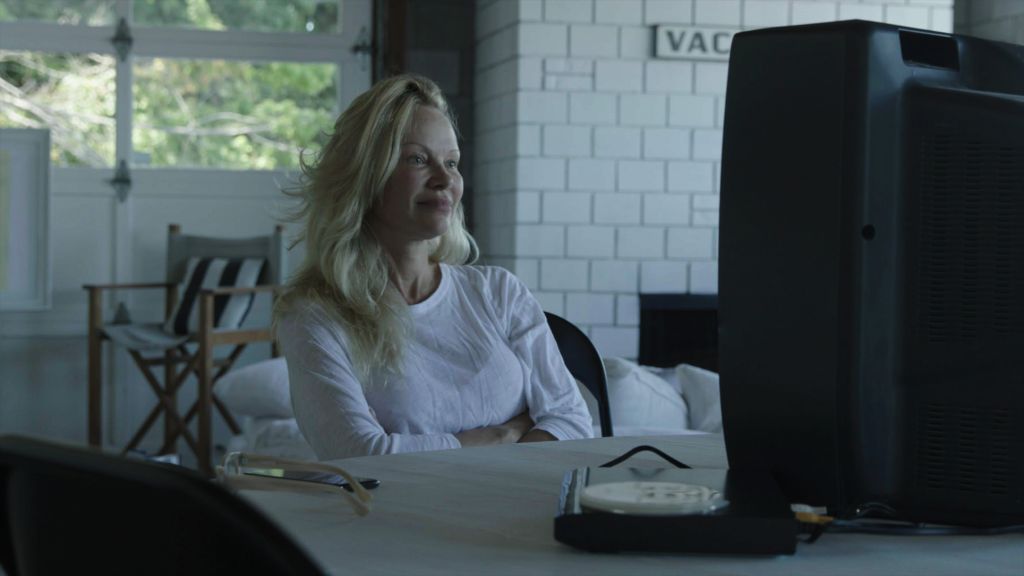
Eventually, decades later, social norms have caught up, and the Ladysmith, B.C. native now finds herself living in a time where audiences actually sympathize with what happened to her. Pamela, a Love Story debuted after the release of the Hulu/Disney+ series Pam & Tommy, a show that sought to showcase the harm done to Anderson but decided to set off her story with an undercurrent of humour. Pamela, a Love Story gave Anderson a voice in a way never afforded to her previously. The film sees a bare-faced Anderson speaking candidly about the sex tape, its publication, and the aftermath she sits with to this day. Her now-adult sons also participate in the film, giving audiences a glimpse into Anderson as a loving mother, an aspect of her life that stands in great contrast to the harlot we were made to believe her to be.
Anderson’s presentation in the documentary is unlike any she has received elsewhere. Without the presence of a journalist looking for a “gotcha” moment, or an inaccurate dramatized portrayal, Pamela, a Love Story allows Anderson to reclaim her reputation using her own voice, a privilege not afforded to all public figures in their lifetimes.
White sets Pamela, a Love Story up as if we, the audience, are having a chat with an old friend. Casual and breezy, Anderson’s testimonies carry heft because they feel unencumbered by a glossy production. It’s Anderson speaking from the heart. The Searcher never achieves this degree of honesty. Every piece of narration and commentary feels perfectly orchestrated and edited to prove a point. While it’s easy to point to Anderson’s presence as the reason, considering how tightly Elvis’s image was handled in his lifetime, it’s an open question whether he could have ever been publicly honest about his life and career.
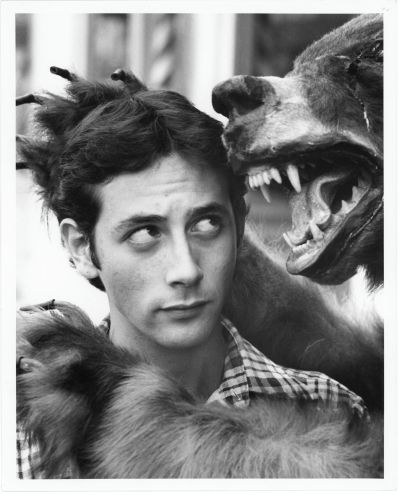
Somewhere between the sincerity of Anderson and the prescriptive nature of EPE lies Pee-wee as Himself (2025), a two-episode three-hour docuseries about Paul Reubens and his character Pee-wee Herman. In the opening of the series, Reubens looks straight down the camera and, in his tongue-in-cheek way, announces, “Turns out that you’re not really supposed to direct your own documentary. You’re not supposed to control your own documentary.”
Director Matt Wolf began working on Pee-wee as Himself without knowing that the comedian had been fighting cancer for six years. Across the two episodes Reubens attempts to provide an explanation for himself, showing us a serious side that comes in great contradiction to the Pee-wee character he created. Just prior to succumbing to cancer, Reubens stopped “cooperating” with the production, seemingly out of frustration with his lack of control over the project. Reubens clearly felt discomfort over talking about his 2002 arrest over possession of child pornography, among other illicit items.
The documentary concludes with a telephone exchange between the director and his subject where both express their grievances towards the other, followed by an audio recorded independently by Reubens the day before he passed. In that clip he explains his desire for wanting to make the film: to let people see his true self, and to communicate the pain experienced for being labelled as something he vehemently denied being.
The ending of Pee-wee as Himself exemplifies the push-and-pull of documentary filmmaking, especially when it pertains to an individual profile. In theory, individuals should be given the space and permission to speak on their own experiences; however, without a third party superseding that control, such biopics risk becoming long advertisements.
In a time when it feels like every semi-famous person can find a filmmaker and studio to make a documentary about them, whether out of genuine desire to unlock a personal truth or to add to their fanfare, understanding their place in the wider landscape of film grows tricky. Dramatizations by way of biopics fulfill the need for recreation and entertainment, but shouldn’t the documentary format take a step beyond the theatrics?
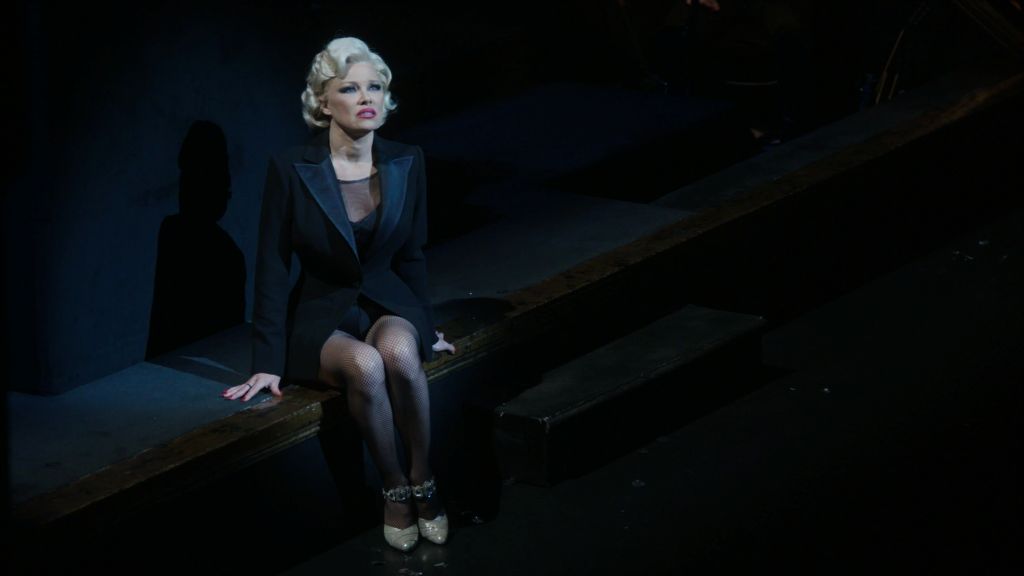
Pamela, a Love Story affords one of the most profiled faces of a generation the opportunity to add her voice to the loud commentary that surrounded her. The Searcher never becomes the introspective exploration the title implies, leaning more towards puff piece than anything revelatory. The primary difference seems to be the comfort and security Anderson conveys in her story and words, while Presley’s producers made a film that comes across as controlled and wary. Pee-wee as Himself is something in the middle—neither a tell-all nor a vanity project, but, one feels, mainly honest.
Our fascination with celebrity drives us to their stories. This makes the creation of biographies of icons a great—and profitable—area for documentary filmmakers. The problem for filmmakers is twofold: gaining access to star subjects and being given the freedom to explore their flaws as well as virtues. Where once documentarians were often allowed entry into the lives of luminaries, today’s viral social media landscape, where reputations can be destroyed by personal revelations, makes that private admittance less possible. Too many docs are hopelessly compromised by the personal agenda of their subjects. It’s only when documentarians insist upon objectivity and encourage openness that they can offer not only a look into the lifestyles of the rich and the famous, but a way with which to calibrate our social conscience in how we understand our shifting norms and values.