



The Lake
(USA, 93 min.)
Dir. Abby Ellis
Prod. Fletcher Keyes
Programme: US Documentary Competition (World premiere)
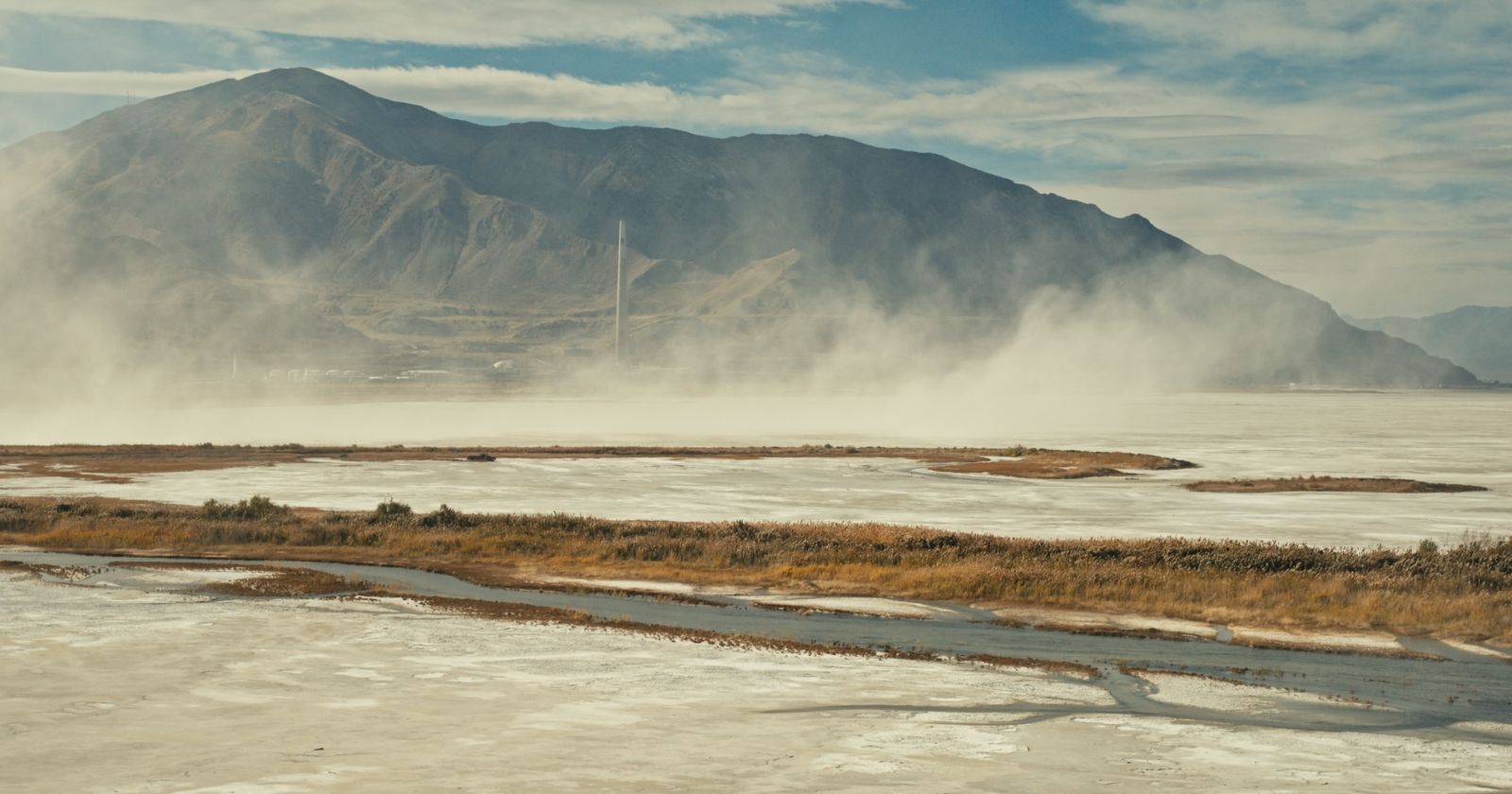
If any film might reassure a critic about his decision to do virtual Sundance, it’s The Lake. Attending the farewell edition of the festival proper in Park City, Utah might have been a fun send-off to the birthplace of the American independent festival. But Sundance isn’t the only entity leaving the larger Salt Lake City region. As the powerful documentary The Lake illustrates, the rapid decline of Great Salt Lake means that threatening amounts of dust whip into the air as windstorms carry harmful carcinogens to nearby areas. While most of the projection maps have Park City slightly outside the worst danger zone, it’s not in the clear. That’s like seeing Chernobyl at a festival in Ukraine circa 1986 and thinking, “Hey, I’d like to go there.”
The Lake resonates with a sense of immediacy that’s hard to deny as scientists sound the alarm about a situation they liken to “an environmental nuclear bomb.” Director Abby Ellis finds three key sets of eyes through which to tell the story as she captures the fight to save Great Salt Lake over a few years. The key scientists are microbiologist Bonnie Baxter and ecologist Ben Abbott. Ellis accompanies Baxter on a flight to Great Salt Lake and the first glimpse of the lake, or what remains of it, chillingly captures the fight they’re all up against.
“It’s like the moon,” Baxter’s colleague Andy remarks as he looks down from the small plane towards what resembles an arid, crater-filled desert. It’s the former site of the saline lake, enormous amounts of which are parched due to excessive human consumption. From the very first visuals of The Lake, it’s impossible not to feel compelled to learn about the problem and any solutions.
The situation looks dire as Bonnie and Andy scour the remnants of the lake bed. They turn over carcasses of pelicans and collect mud samples. The dead birds are cause for alarm. Bonnie notes that an area that previously housed 30,000 pelicans now has a population of zero. As Abbott puts the situation to a colleague in layman’s terms later in the film, people should care about the canaries in the coalmine because they protect the humans. The Lakes asks what happens when all the canaries are dead, and everybody sees that but remains slow to respond.
The scientists sound the alarm and advise the public that timing is running out. They give the lake five years to live. That’s not much for a great body of water that’s endured for years. The film observes as Abbott and Baxter defend a prediction that some dismiss as alarmist, while others debate at what point a scientist becomes an activist. Abbott in particular becomes a point of contention as he uses his platform to advocate for solutions, like when a petition seeks to trigger protection for the lake by declaring Wilson’s phalarope, a small marine bird, an endangered species. All the canaries are singing and the film watches as they find a unified tune.
The clock keeps kicking as some parties drag their feet while others play the blame game. Ellis interviews a group of farmers who worry they’re scapegoats in a witch hunt. The farmers note that their water consumption hasn’t changed in the years, and that good agriculture means understanding the land on which they raise their crops and responding to it. But they can be part of the solution if they change gears too. Everyone in the film seems refreshingly pragmatic.
Ellis laudably takes the camera through various rooms, corridors, and fields where tough conversations happen. Rounding out the primary cast is Brian Steed, the state commissioner tasked with saving Great Salt Lake. The film observes as Steed listens to the research that Baxter, Abbott, and company provide, and then reports back to the governor and makes requests to facilitate the action plan. Like Drs. Baxter and Abbott, he’s a great character through which one not only observes the situation, but through whom one becomes a surrogate to recognize the urgency of the concerns and the relevance to one’s own family and survival.
The Lake finds in the Great Salt Lake area an ideal microcosm for the climate crisis. Many of the film’s participants are deeply religious and are members of the Church of Jesus Christ and Latter-day Saints. Initially, as Ellis observes the participants praying, referring to Bible verses, or advising others to say a good word to the man upstairs, one anticipates the film to feature a collision between science and faith. Instead, the characters’ faith implores them to listen to the science. Their spirituality calls upon them to protect the land and their neighbours. They know that if God created the planet, it’s not on him to bail them out.
What follows is an essential portrait of finding common ground in service of protecting our future. The Lake captures a solutions-based approach that isn’t driven by partisan politics, economic gains, or turf wars. Those factors do come into play, of course, but the film observes how courses of action are possible when people are willing to talk and, more importantly, listen.
Abbott makes a presentation late in the film that appeals to a group of philanthropists, but feels aimed at viewers. He points out that the situation Great Salt Lake faces is without precedent: there’s never been a saline lake trying up in such proximity to well-populated areas. But it’s also a challenge within a film that’s ultimately an urgent call to action. Given all the evidence that you and your loved ones are in harm’s way, is it better to act, stay and do nothing, or leave?
As Bonnie says later in the film when she begins to feel the impact of dust on her lungs after all her time in the field, “Is it worth sacrificing my health if we’re doing nothing?” Scientists should be whistleblowers, not canaries. The film compels audiences to understand this reality by bringing them both into the field and into the homes of these researchers. There’s only one option, really, and The Lake presents a canary for us all.