



I Lost Sight of the Landscape
(Canada, 85 min.)
Dir. Sophie Bédard Marcotte
Prod. Pierre-Mathieu Fortin
The beginning of Sophie Bédard Marcotte’s I Lost Sight of the Landscape sees two artists sitting together in a state of hopefulness. Marcotte (L.A. Tea Time) recounts a recent break-up and a feeling of professional (and creative) stagnancy from which this film could potentially free her. Meanwhile, Gabriel Charlebois Plante, a theatre artist and Marcotte’s neighbour, is in the early stages of mounting a play based on the Greek myth of Sisyphus, a king condemned to spending eternity rolling a boulder up a hill only for it to fall back down just as he nearly makes the summit.
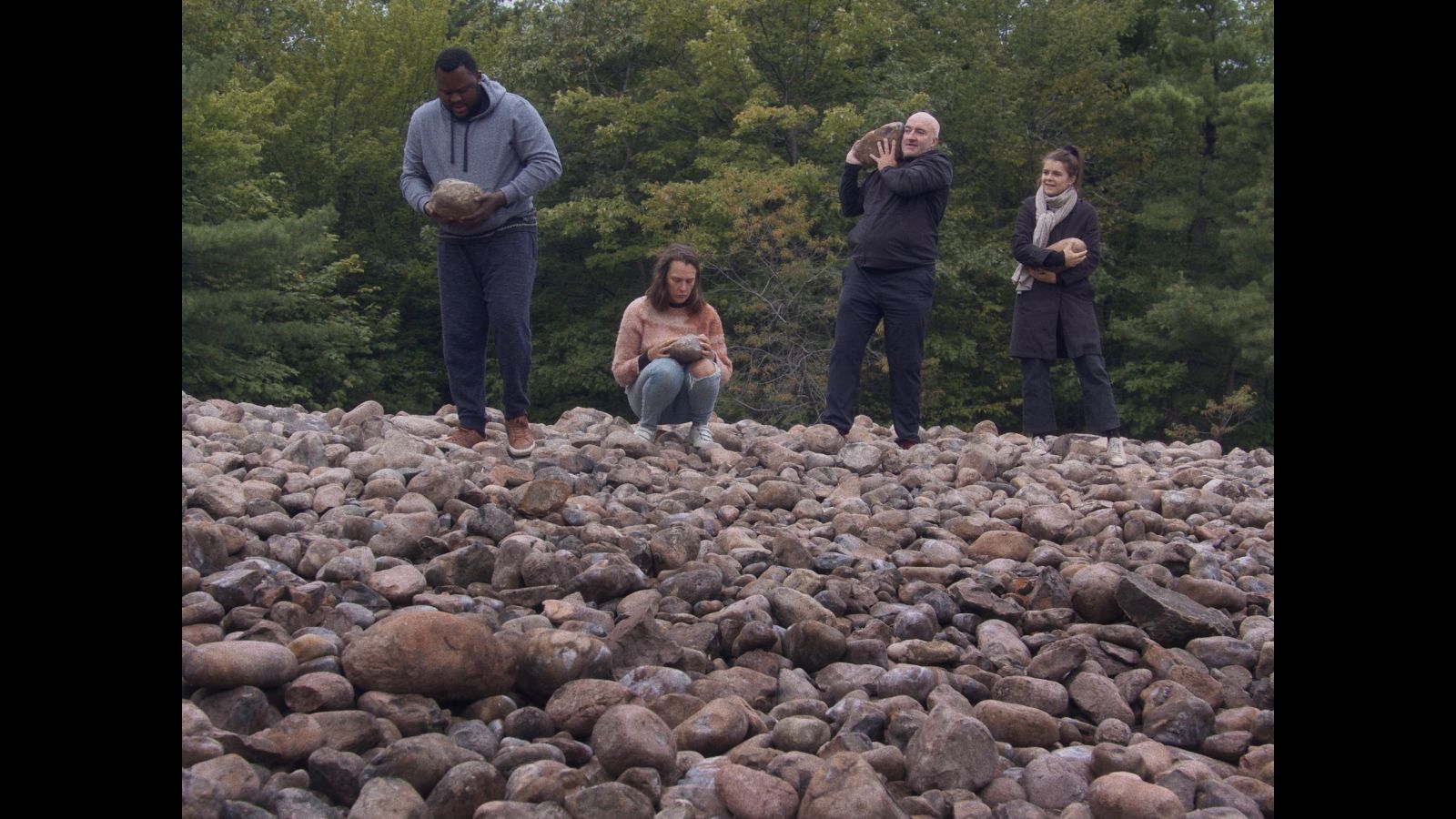
Gabriel agrees to allow Marcotte to document every step of his creative process. They begin by setting off to Côte-Nord to look at rocks — appropriate given the myth Charlebois Plante has his sights on. Rocks factor often in the film, and with that, some gorgeous shots of Canada’s glorious landscapes, especially the great Canadian Shield. Marcotte intersperses these naturalistic scenes with the intimate process of Gabriel rehearsal process in a black box theatre, with only a spotlight illuminating his cast grunting and wailing while clinging to rocks of various sizes.
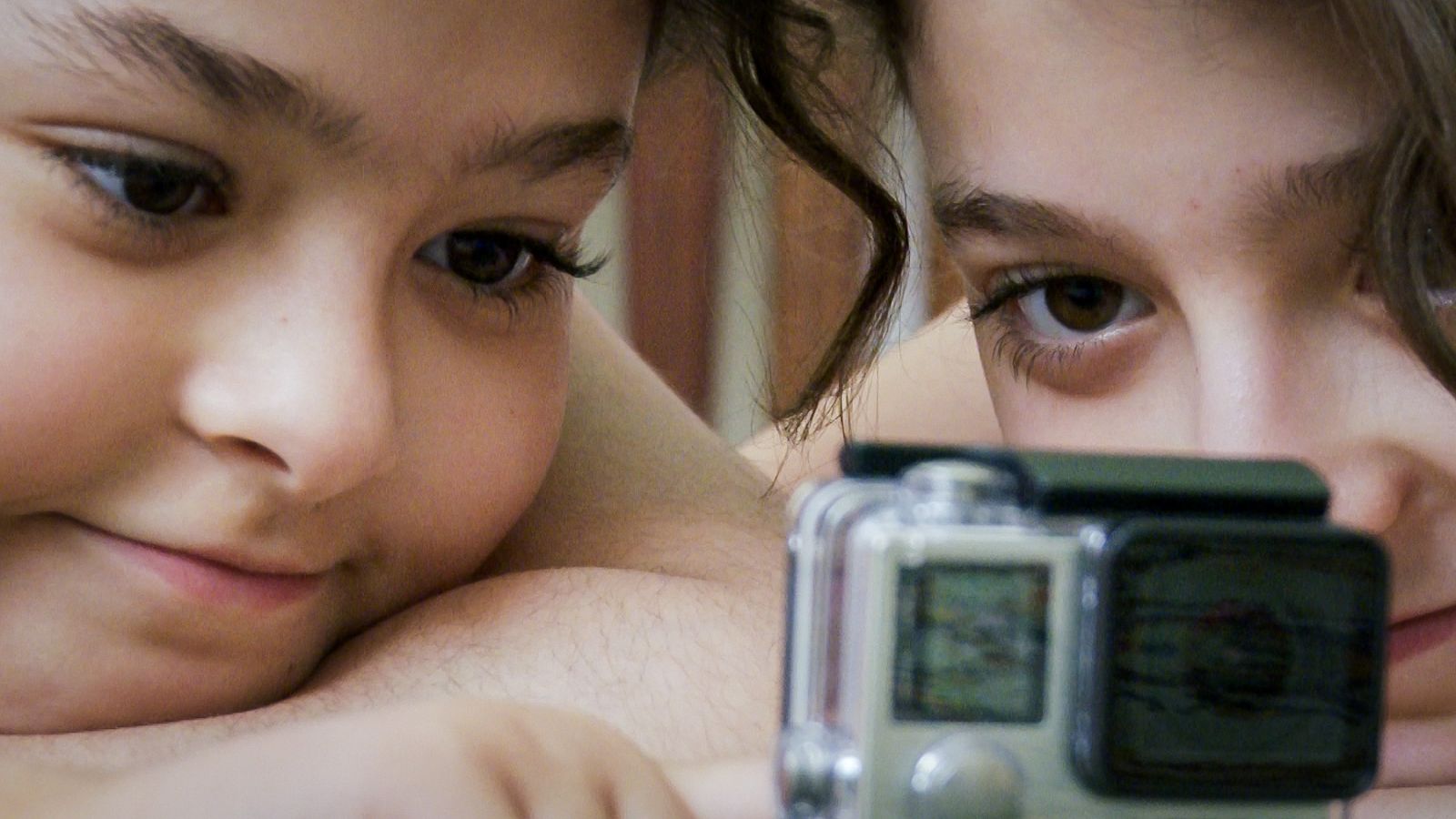
In keeping with the creative journey that serves as the through-line of the film, Marcotte includes moments of the filmmaking process that most directors would leave on the cutting room floor. Whether it’s removing a television from appearing in a shot, awkwardly trying to record the sound of a serene landscape, or wondering aloud how to capture a hole to be more than a hole, Marcotte allows us to take in her creative process while simultaneously observing Charlebois Plante’s own approach. What could render as a hat-on-a-hat effect results in the continuation and emphasis of Marcotte’s theme: embracing the precarious line between art and life.
I Lost Sight of the Landscape celebrates this grey area the most when allowing audiences to witness her growing relationship with Gabriel. As the film progresses, we see the two individuals fall in love and begin a family. I Lost Sight of the Landscape becomes less a documentation of Charlebois Plante’s play as it evolves into a memory box for their child: “I’d recently started shooting my film again, about the work of a theatre artist who started out as my neighbour but who ended up becoming your dad,” Marcotte narrates.
By ending far from where she originally intended, Marcotte finds a rather lyrical poetry to documentary as a medium. Too often we watch non-fiction films with a clear agenda and a narrative that the director and editor clearly attempt to drive home. We’re fed a tapestry of images and interviews that express an answer to a thesis already determined before a camera sets up for its first shot. Marcotte, perhaps because of the wayward phase of life she found herself in at the beginning, sees through a documentary in its purest form.
I Lost Sight of the Landscape achieves Marcotte’s goal of creating a film where reality guides her. A film that captures the challenges and, more importantly, the passion involved in making art, from both her and Charlebois Plante’s perspectives, Marcotte also gives credence to Allen Saunders’ quote, popularized by John Lennon: “Life’s what happens to us while we’re making other plans.”
The title of Marcotte’s film initially sounds like a negative attribution to losing focus. But by film’s end, we come to understand that by losing sight, Marcotte was able to see the forest for the trees. By allowing the film to exist with Marcotte showing her work to get to this end, she allows us to see ourselves a little more clearly as well. Like Sisyphus, we may sometimes find ourselves in moments that feel like a futile pursuit, but we should trust that life’s twists and turns will take us to where we’re meant to be and with whom we’re meant to be.
I Lost Sight of the Landscape has its North American premiere at RIDM.