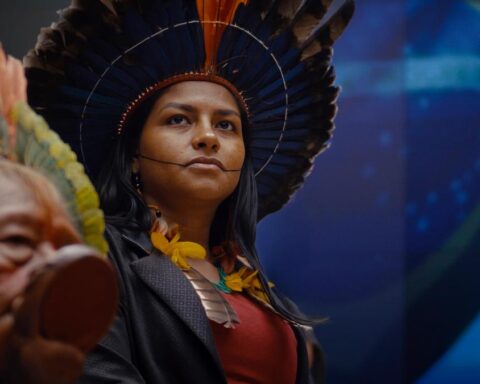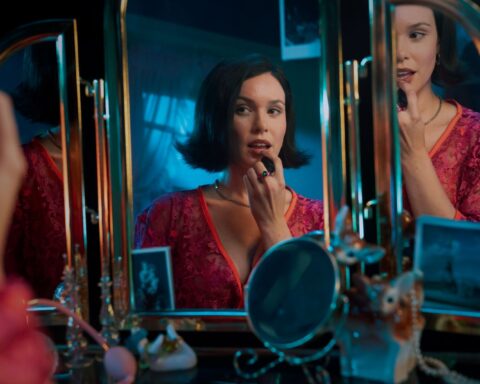






“For me, going to the archive first is about going to our humanity,” says True North director Michèle Stephenson, speaking to POV from Brooklyn. “Not as victims, but as full-fledged people with complicated lives and where we can see ourselves. We can see actually our daily lives represented on the screen.”
True North, which premieres at the 2025 Toronto International Film Festival, makes vivid use of the archives by representing a tapestry of Black experiences in both Montreal and Haiti. The film revisits the 1969 protest at Montreal’s Sir George Williams University (now Concordia) where students occupied the ninth floor computer lab to draw attention to systemic racism at the institution. Stephenson presents a jazzy and propulsive account of the occupation, mixing archival footage with new interviews with participants who lived it. But she significantly buttresses the story of the occupation with images of Black life both here and abroad, showing domestic scenes, images of children playing, and the homelands both departed and adopted.
The dexterous interplay with the archives speaks to the experiences of members of the Black diaspora, including Haitians who fled their country amid the authoritarian regime of François Duvalier. Contrasts and parallels in the images evoke an idyll land that was promised in Canada, but an awful reality where newcomers faced centuries’ worth of systemic discrimination. Although the Sir George Williams event has been chronicled in docs like Mina Shum’s Ninth Floor (2015), True North situates the occupation amid a wider appetite for change.
Stephenson says she was initially approached by producer Leslie Norville to do an episode for her series Black Life: Untold Stories (2023-). “I was immediately drawn to the Black Power movement of ’68-’69 because it falls close to home. The people who were involved, certainly the Haitian exilees who were involved, were friends of my family. Some of them actually gave me my first job in Montreal when I was in college,” says Stephenson, whose family left Haiti when she was a baby, landing in Canada via New York.
“While we were doing the episode, we came across such rich, nuanced, amazing archival footage,” she notes. “Both Leslie and I were convinced that a feature film needed to be told as a chapter in Canada’s history. But as a chapter that is told from the perspective of those who lived it. Not any expert voices/historians, but leaving the platform to them to really speak to their experiences. In a way, we were making a historical archive with their testimonials.”
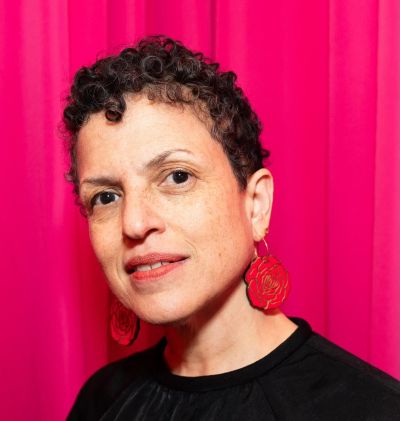
The director says those family friends who got her the first job—a literacy supporter in the Haitian cultural centre Maison d’Haïti—included co-founder Adeline Chancy and Marjorie Villefranche. “I will always remember that it was a transformative experience for me and it was a welcoming place in Montreal coming from the Eastern Townships,” says Stephenson. “It was, I would say, part of my political awakening too.”
While the family friends who sparked the initial connection don’t make the final cut, True North finds gripping accounts of community solidarity from participants like Dr. Norman Cook, Brenda Dash, Josette Elysée Pierre-Louis, Philippe Fils-Aimé, and Dr. Rodney John, some of whom were among the 97 students who were arrested or faced deportation for their participation in the occupation.
Stephenson says that the violence of the occupation, which saw police and RCMP officers bring an assaultive level of force down upon protesters, is among the reasons why the events at Sir George Williams serves as a flashpoint in Canadian history. “It’s quite significant what happened: the torture, the police brutality,” she observes.
She notes that it also echoes a progressive force alongside the growth of the Quebec leftist solidarity independence movement and the subsequent uprisings that the occupation partly inspired in Trinidad and independence movements in Africa. “That desire to reconnect with the solidarity that existed across racial lines was there. And then in some ways, Canada was never the same after that. The RCMP became even more of a surveillance state, which led to the McDonald Commission, which led to the separation of the intelligence security organization, and we can trace that back even to the Black Writers Conference. But really the turning point being the Sir George Williams affair was so significant that the university changed its name to Concordia!” Stephenson says.
“Also, ’68-’69 globally, there was something in the air, but it was something in the air that the state apparatuses across the world were adamant to shut down. And they did to a certain extent,” she continues. “When we think about Black Atlantic Canada, when we think about Black diaspora or the impact of slavery or the afterlife of slavery, Canada is not in the picture. This is an attempt to bring it into the picture and understanding that the Afro descendant presence in Canada was there since the Europeans arrived, and their story is part of the Canadian fabric throughout.”
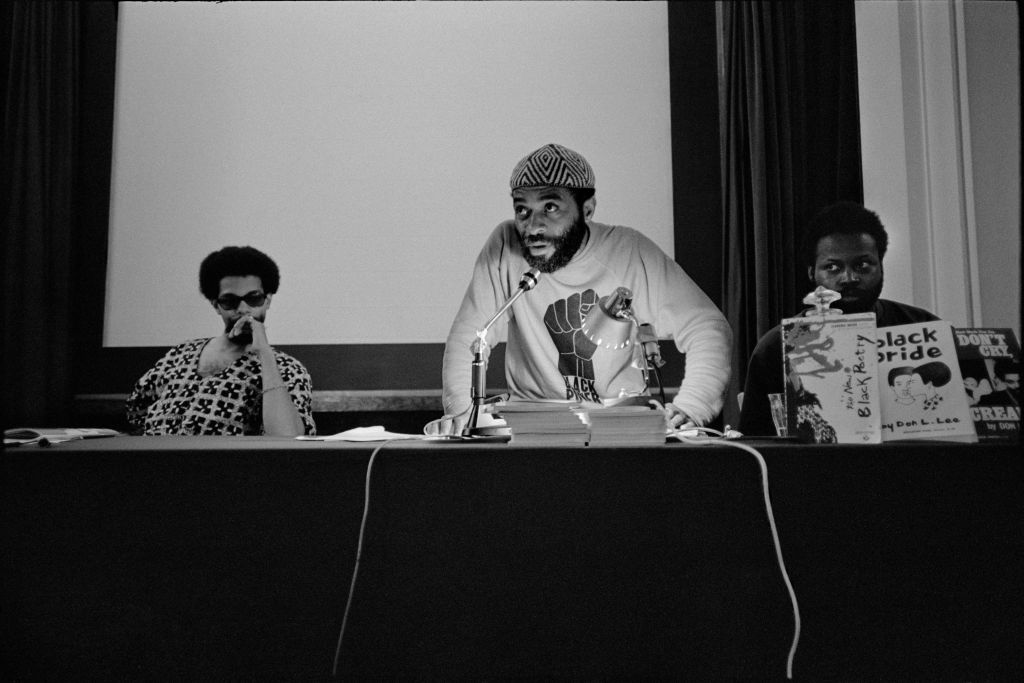
True North juggles a considerable scope of history as the Sir George Williams occupation serves as the focal point while editors Shannon Kennedy and Sarah Enid Hagey weave together many complementary strands, voices, and historical beats. There are remarkable images of Black life in the 1940s, ’50s, and ’60s, much of which come from the NFB and CBC archives, although often with commentary that very much speaks to the time. In one jaw-dropper clip of reportage, an interviewer questions passersby on the street about their haircuts. When he asks a Black man about the complexion of his barber, he lets an N-word slip. The interviewee quickly corrects him that he sees a “Negro barber.” It’s a telling snapshot of commonplace racism in Canada. Alternatively, images of Black joy from Rockhead’s Paradise, the Little Burgundy music club, share sites for community and political mobilization.
“There’s something about the cinematography of that period that is just beautiful, which was hence also the choice for us to stay in black and white. But for me, I have a very strong intentionality in my practice and in our practice with my creative partner [Joe Brewster], which you see even somewhat in the work of Stateless (2020). But in my more recent work with Going to Mars: The Nikki Giovanni Project (2023), it’s really what the scholar Saidiya Hartman talks about: critical fabulation in terms of where history has left us invisible. How can we fill that as artists, as creatives?” asks Stephenson.
Meanwhile, crosscutting from Haiti to Montreal contextualizes the occupation within the larger story of migration and what it means for Canada’s racist past. “We provide text to help people understand what migration means: You don’t leave out of happiness, you leave and you’re being torn apart from your foundation. There’s something in that foundation that you love that many immigrants will always feel a nostalgia for.”
As True North presents this tapestry of images, counter-narratives, and committed voices finally getting their dues, it resonates with a sense of absence even though it’s an archive-rich film. Ask Stephenson about the role that absence plays in True North, though, and she situates the dynamic within a larger historical framework and efforts to correct it.
“We’ve been absented so much. It’s like we’re a living denial of the absences in some ways,” says Stephenson. “The history of Black Canada is not in our traditional history books in high school, but doesn’t mean that there isn’t research and academics who haven’t done the work.” Stephenson says she leaned into the work of writers like David Austin, Deborah Thompson, and Afua Cooper among the voices who’ve chronicled Canada’s history of racism and the politics of belonging.
“It fed what was important to us, like understanding Africville was something important that some people know, but other people don’t know. I didn’t learn about Africville in high school. It’s not part of our collective Canadian consciousness, for example, like Selma is for the United States,” says Stephenson. “But we know those historical moments, the petite histories that they talk about, whether it’s Rockhead’s Paradise and these clubs. We relied on the accounts of our elders. I truly believe that these interviews that we’ve done, the full length of them, should be part of our Canadian national archive.”
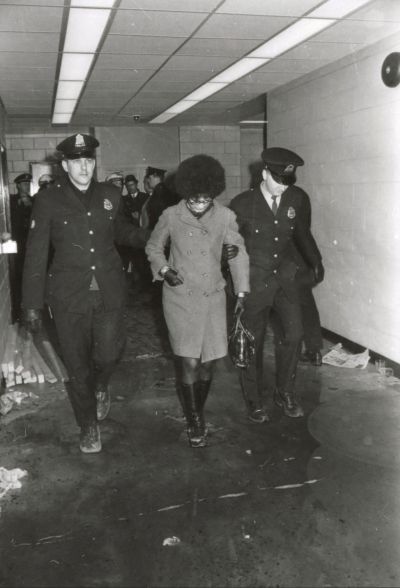
Of particular note is the voice of Brenda Dash, who reluctantly participated in the film and isn’t adequately represented in some accounts of the Sir George Williams affair even though she paid considerably for her activism. “The lack of a historical record around her work is extremely absent, to use the term,” says Stephenson. “We really wanted to flesh out her, but we couldn’t find photographs of her. We couldn’t find her in speeches because the attention was all being grabbed by these men who were picking up the mic.”
Dash’s voice proves a highlight within a decidedly feminist account of the occupation, as male activists like Rosie Douglas and Kwame Ture (Stokely Carmichael at the time) generally got all the airtime. “I think as women, we’ve internalized certain ways of being on the sideline. Doing all the work, but being okay with being on the sideline—but knowing that there’s a level of control there. That was one thing that pained me quite a bit, so I feel like [Dash’s] interview is even more important,” says Stephenson. She cites that dynamic in an archival clip in which Dash appears in panel with Ture and Douglas, but never gets to speak. Alternatively, Stephenson finds a great clip with Rocky Jones’ wife, Joan Jones, in conversation with their daughter.
“There was no way we were going to cut that out!” says Stephenson. “We looked for ways to incorporate those voices and for them to play a powerful role and have space in the archive, but be a statement in our history. I think the film itself plays a historical role in terms of whose voices are centred and how the story is told of a part of our history that is not known enough by our communities in Canada.”
These alternate voices illustrate Stephenson’s radically political cinema and commitment to exploring issues of systemic racism, whether in her Hot Docs award winner Stateless about an attorney leading a grassroots campaign for the 200,000 people in the Dominican Republic whose rights were stripped because they had Haitian parents, or in the Sundance Grand Jury Prize winner Going to Mars: The Nikki Giovanni Project about the titular poet whose words find continued resonance from the civil rights movement to Black Lives Matter protests. .
“The work that I do is all about counter narratives, re-looking at the archive in a different way, looking at these missing pieces that help complicate our lives and our narratives. It’s a counter narrative to this mythology of the Underground Railroad and what that meant,” says Stephenson. “As a filmmaker, I don’t look to the conventional narratives that are pushing me to internalize about who I am, whether it’s the zombie trope or the Vodou tropes around what it means to be Haitian, for example. I look to those who were creating their counter narratives, however small they were. I look to those as the source of inspiration and hopefully the lineage that I continue, but we have to do the digging.”
Stephenson says she can relate to this desire to find oneself in the archives, and hopes that True North offers a corrective to larger conversations about access, belonging, and representation. “In terms of my own migration, I left Eastern Townships immediately after high school to join larger communities in Montreal. But when I did the research here, there’s something very sad for me that came up in relationship to my own relationship to Canada,” she notes. “If I had known this history, if I had learned this history in high school or even in college, to a certain extent, my relationship to Canada would’ve been different. Maybe I wouldn’t have left. Maybe I would have found more grounding and rootedness there.”